Treasury bond prices showed little reaction Tuesday to the Federal Reserve's widely expected decision to leave short-term interest rates unchanged, but still closed down as investors moved money out of bonds to take part in a big rally on Wall Street.
The Fed kept the rate that banks charge each other for overnight loans at 2 percent as it tries to hold prices in check without hurting an already weak economy by making borrowing more expensive.
The central bank's decision not to sound an alarm about inflation helped calm some investors, observers said.
"There's not a lot of movement," said John Spinello, bond strategist at Jefferies & Co., said of the reaction in Treasurys. He said some investors now think it's less likely policymakers will soon raise rates to combat inflation.
"I think the market is probably taking a little bit out of the tightening probabilities," he said. "I think the consensus is the Fed will probably be at 2 percent for some time now."
While the central bank said in the statement accompanying its decision that "some indicators of inflation expectations have been elevated" and that it is a "significant" concern to policymakers, the Fed appeared to strike a balanced approach, said Bruce McCain, chief investment strategist at Key Private Bank.
"I think if anything the tilt of the Fed announcement was a little bit more toward the weakness in the economy than most had expected. That may have been the only surprise," he said. "That probably might have been part of the reassurance for the bond market."
Inflation can make bonds, particularly those with longer durations, less attractive if rising prices eat into returns.
"Probably the best hope that everybody has is that oil and commodity prices will come down fast enough to take the pressure off inflation," McCain said.
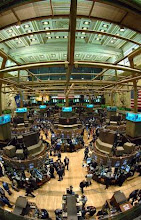
But the Fed did make investors feel better about the stock market, and the major indexes all shot higher, including the Dow Jones industrials, rising 330 points. That took money out of the government bond market.
The 10-year Treasury note fell 13/32 to 98 26/32. Its yield rose to 4.02 percent from 3.97 percent late Monday, according to BGCantor Market Data. Yields move in the opposite direction from prices.
The 30-year long bond fell 26/32 to 95 22/32. Its yield rose to 4.64 percent from 4.59 percent Monday.
The 2-year note, which is most sensitive to interest rate changes, slipped 1/32 to 100 12/32, and yielded 2.56 percent, up from 2.54 percent.
The 3-month Treasury bill's yield was 1.73 compared with 1.86 percent Monday, and its discount rate was 1.71 percent compared to 1.84 percent.
Josh Stiles, a fixed-income analyst at IDEAGlobal.com, said Treasurys held up well considering the gains by stocks Tuesday, and said that auctions expected this week could be keeping investors from making bigger moves.
"I think Treasurys have been fairly resilient considering how well the stock market has done today but what we're seeing is pressure in the 10- and 30-year sector where the supply is going to be in the next two days."
The Treasury Department plans to auction $17 billion in 10-year notes on Wednesday and $10 billion in 30-year bonds on Thursday.
That is leaving some investors cautious as they try to determine whether adequate demand exists for the fresh debt.

Subscribe to:
Post Comments (Atom)


No comments:
Post a Comment