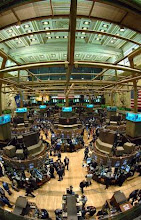
Stocks ended weaker for the second day running yesterday, led south by banks ahead of the interest rates verdict later in the week, while negative sentiment overseas added to selling pressures.
The all share index closed 0.66% lower at 31,487.150. Resources added 0.26%, the gold mining index was up 1.34% but the platinum mining index fell 1.58%. Banks tumbled 3.08%, financials fell 1.88% and industrials were down 1.53%.
The rand was last trading at R7.84/$ from R7.83/$ when the JSE closed on Friday, while gold was quoted at $895.65/oz from $896.35/oz at the JSE's last close.
Traders said the market was under pressure from a range of factors that included Friday's sell off on Wall Street, shaky European markets and uncertainty about the size of the interest rate hike locally later in the week.
"Oil has come back a little bit and that's the season for early gains in New York," a Johannesburg-based trader said.
Concerns over inflation and a global economic slowdown as the price of crude moves within sight of $150 per barrel have been dominating investor sentiment for months. However, the losses on the local bourse were limited by firm commodity prices, with gold regaining its appeal as a hedge against inflation due to the rising price of crude oil, traders said.
Banks were in charge of the blue chips' loser board on the weaker rand and ahead of this week's interest rate decision, with some investors already pricing in a 100 basis point hike, while other see a softer 50 basis point rate increase.
Standard Bank slumped R3.36, or 3.96%, to R81.39, Nedbank was down R3.10, or 3.15%, to R95.30, FirstRand eased 30 cents, or 2.07%, to R14.18 and Absa fell R1.25, or 1.41%, to R87.30.
On the resource index, Anglo American was up R11.89, or 2.36%, to R515.39 but BHP Billiton dipped R1.06 to R294.19. Sasol was off R6.56, or 1.36%, to R475.44. AngloGold Ashanti was up R1.99 to R275.99, Gold Fields added 70 cents to R99.20 and Harmony gained R3.80, or 4.09%, to R96.80. Anglo Platinum was up R9 to R1 339 while Impala Platinum fell R10, or 3.13%, to R310.
Telkom was down R1.49, or 1.00%, to R147.01. It earlier reported year-end results that traders described as disappointing in general, but was somewhat boosted by its 50% interest in cellphone group Vodacom. It reported that its operating revenue was up 9% to R56.3 billion in the year to March 31 2008. Operating profit, however, gained just 0.1% to R14.5 billion, with headline earnings per share falling 4.4% to 1 634.8 cents.
MTN slumped R5.85, or 4.15%, to R135. India's Reliance Communications and MTN have agreed "broad contours" of a deal to create a global telecoms powerhouse, but are still working out share swap details, a report in India's Economic Times said yesterday.

Market turns lackluster
Markets are trading flat in the afternoon trades as key indices are struggling to find any specific direction. Even inflation figures barely had any impact on the market sentiments, India's Inflation rate was at 8.24% in week ended May 24.
However, on the positive side, the equity markets across Europe have started off with a positive bias, the FTSE index was up by 1.2% and the CAC index was down 1.2%.
Among the 30-scrips of Sensex 14 stocks are in green while 16 stocks are in red. ICICI Bank, RCom and BHEL are among the major gainers, on the other side, ITC, HDFC and Tata Steel are among the major laggards. At 1:06 pm (IST), the BSE 30-share Sensex was flat at 15,782 and NSE Nifty was flat at 4,685.
Era Infra is trading flat at Rs601. The company announced that it bagged a contract worth Rs852mn from Mumbai Railway Vikas Corporation Ltd. for the construction of EMU Maintenance Car Shed between Nallasopara & Virar stations of Western Railway through International Competitive Bidding (ICB).
The project being funded by International Bank for Reconstruction Development (IBRD) is part of Mumbai Urban Transport Project. The scrip has touched an intra-day high of Rs607 and a low of Rs596 and has recorded volumes of over 11,000 shares on NSE.
Tata Comm has gained by a percent to Rs493. The company announced that that it has successfully attained the International Organization for Standardization (ISO) 20000-1:2005 and 27001:2005 certifications for its Global Managed Services Operations in the areas of Managed Hosting, Managed Storage Services and Hosted Messaging Services. The scrip has touched an intra-day high of Rs510 and a low of Rs485 and has recorded volumes of over 47,000 shares on NSE.
Nettlinx Ltd has surged 8.5% to Rs19 after the company announced that a meeting of the Board of Directors would be held on June 16, 2008, to consider acquiring 100% capital of Anchor Systems Pty Ltd, Sydney, Australia. The scrip has touched an intra-day high of Rs19 and a low of Rs17 and has recorded volumes of over 6,000 shares on NSE.
Decolight Ceramics has gained by 1.2% to Rs19 after the company said that it started commercial production of its Aluminium Composite Panel (ACP) Unit in the last week of May 2008. The present Installed capacity of the unit is 25,000 Sq. Ft. per day and presently it started giving a production of about 40% of the installed capacity. The scrip has touched an intra-day high of Rs19 and a low of Rs18 and has recorded volumes of over 6,000 shares on NSE.
However, on the positive side, the equity markets across Europe have started off with a positive bias, the FTSE index was up by 1.2% and the CAC index was down 1.2%.
Among the 30-scrips of Sensex 14 stocks are in green while 16 stocks are in red. ICICI Bank, RCom and BHEL are among the major gainers, on the other side, ITC, HDFC and Tata Steel are among the major laggards. At 1:06 pm (IST), the BSE 30-share Sensex was flat at 15,782 and NSE Nifty was flat at 4,685.
Era Infra is trading flat at Rs601. The company announced that it bagged a contract worth Rs852mn from Mumbai Railway Vikas Corporation Ltd. for the construction of EMU Maintenance Car Shed between Nallasopara & Virar stations of Western Railway through International Competitive Bidding (ICB).
The project being funded by International Bank for Reconstruction Development (IBRD) is part of Mumbai Urban Transport Project. The scrip has touched an intra-day high of Rs607 and a low of Rs596 and has recorded volumes of over 11,000 shares on NSE.
Tata Comm has gained by a percent to Rs493. The company announced that that it has successfully attained the International Organization for Standardization (ISO) 20000-1:2005 and 27001:2005 certifications for its Global Managed Services Operations in the areas of Managed Hosting, Managed Storage Services and Hosted Messaging Services. The scrip has touched an intra-day high of Rs510 and a low of Rs485 and has recorded volumes of over 47,000 shares on NSE.
Nettlinx Ltd has surged 8.5% to Rs19 after the company announced that a meeting of the Board of Directors would be held on June 16, 2008, to consider acquiring 100% capital of Anchor Systems Pty Ltd, Sydney, Australia. The scrip has touched an intra-day high of Rs19 and a low of Rs17 and has recorded volumes of over 6,000 shares on NSE.
Decolight Ceramics has gained by 1.2% to Rs19 after the company said that it started commercial production of its Aluminium Composite Panel (ACP) Unit in the last week of May 2008. The present Installed capacity of the unit is 25,000 Sq. Ft. per day and presently it started giving a production of about 40% of the installed capacity. The scrip has touched an intra-day high of Rs19 and a low of Rs18 and has recorded volumes of over 6,000 shares on NSE.
London Stock Exchange's Low Latency Performance Channels Service Goes Live
Performance Channels, the London Stock Exchange's new high speed delivery mechanism for Infolect data delivered over 100 megabyte lines, goes live today. This service ensures that even during the highest peaks in trading activity market data is delivered at industry leading speed.
Commenting on the new service, David Lester, the Exchange's Chief Information Officer, said:
"The introduction of Performance Channels sets a new benchmark for customers requiring the lowest latency connectivity to the London Stock Exchange during peak trading periods. The introduction 12 months ago of TradElect, our new electronic trading system, has facilitated record volume growth on our markets. The Performance Channels service gives member firms using algorithmic trading models greater visibility of the spikes and events that occur during periods of high trading activity. The immediate delivery of price data during these peaks creates additional trading opportunities.
"With TradElect and Infolect underpinning our markets, trading participants can be confident of receiving world leading performance, enhanced functionality and more efficient trading."
Over 40 customers, including the largest member firms, hedge funds and market data vendors have signed up to the Performance Channels service, with more orders in the pipeline. Clients can continue to use the existing Service Channel configuration whereby data peaks are managed during periods of high trading activity to ensure that client systems are not overloaded. Performance Channels are only available through 100 megabyte Extranex lines which cut the average round trip network latency within the City to below 1 millisecond.
Performance Channels has been introduced in response to increases in trading capacity and market data volumes which were expected with the introduction of the London Stock Exchange's new electronic trading platform, TradElect. The launch of Performance Channels follows the completion of a successful pilot that has been running since the TradElect go-live date on 18 June 2007. Customers participated in a series of conformance tests to ensure that their network infrastructure could cope with the strain generated by higher peaks in data volumes.
Commenting on the new service, David Lester, the Exchange's Chief Information Officer, said:
"The introduction of Performance Channels sets a new benchmark for customers requiring the lowest latency connectivity to the London Stock Exchange during peak trading periods. The introduction 12 months ago of TradElect, our new electronic trading system, has facilitated record volume growth on our markets. The Performance Channels service gives member firms using algorithmic trading models greater visibility of the spikes and events that occur during periods of high trading activity. The immediate delivery of price data during these peaks creates additional trading opportunities.
"With TradElect and Infolect underpinning our markets, trading participants can be confident of receiving world leading performance, enhanced functionality and more efficient trading."
Over 40 customers, including the largest member firms, hedge funds and market data vendors have signed up to the Performance Channels service, with more orders in the pipeline. Clients can continue to use the existing Service Channel configuration whereby data peaks are managed during periods of high trading activity to ensure that client systems are not overloaded. Performance Channels are only available through 100 megabyte Extranex lines which cut the average round trip network latency within the City to below 1 millisecond.
Performance Channels has been introduced in response to increases in trading capacity and market data volumes which were expected with the introduction of the London Stock Exchange's new electronic trading platform, TradElect. The launch of Performance Channels follows the completion of a successful pilot that has been running since the TradElect go-live date on 18 June 2007. Customers participated in a series of conformance tests to ensure that their network infrastructure could cope with the strain generated by higher peaks in data volumes.
Strong start by market after US gains
The New Zealand sharemarket started strongly today, following a near 2 per cent rise in US equities.
Around 10.15am the benchmark NZSX-50 index was up 22.57 points to 3578.54.
Yesterday the index closed down 1.7 points, gaining support from the Reserve Bank's signal that interest rates could fall by the end of the year, but under pressure from a weaker Australian market.
Today Australian shares are expected to bounce when the market opens, following the rise on Wall Street.
In this country top stock Telecom was up 3c early to 394, while dual-listed banking stock ANZ added 76c, or 3 per cent, to 2600.
Among other leading stocks Contact Energy was up 8c early to 899, while Fletcher Building lifted 10c to 780.
Fisher & Paykel Healthcare was up 3c early to 251, after yesterday rising 14c as it led gains by export stocks on the back of interest rate cut expectations. F&P Appliances was also up 3c early today, to 233.
Other stocks to rise early included retailer Hallenstein Glasson, up 2c to 323, fishing company Sanford up 11c to 511, Sky City up 4c to 370, and Tourism Holdings up 2c to 164.
Stocks to fall early included Trustpower, down 3c to 847, and Pumpkin Patch down 1c to 170.
US stocks rose the most in more than a month after Wal-Mart and other retailers posted stronger-than-expected May sales and data showed a surprising fall in weekly jobless claims, spurring optimism about the economy's health.
Energy stocks gave the biggest boost to the Dow and the S&P 500. The price of oil roared back from a three-week low as a big drop in the dollar forced traders to backtrack from bets that crude had further to fall.
The Dow Jones industrial average rose 1.73 per cent to close at 12,604.45, while the Standard & Poor's 500 Index gained 1.95 per cent to 1404.05. The Nasdaq Composite Index jumped 1.87 per cent to finish the day at 2549.94.
For the Dow and the S&P, it was the best daily percentage change since mid-April, while it was the Nasdaq's best day since May 1.
Around 10.15am the benchmark NZSX-50 index was up 22.57 points to 3578.54.
Yesterday the index closed down 1.7 points, gaining support from the Reserve Bank's signal that interest rates could fall by the end of the year, but under pressure from a weaker Australian market.
Today Australian shares are expected to bounce when the market opens, following the rise on Wall Street.
In this country top stock Telecom was up 3c early to 394, while dual-listed banking stock ANZ added 76c, or 3 per cent, to 2600.
Among other leading stocks Contact Energy was up 8c early to 899, while Fletcher Building lifted 10c to 780.
Fisher & Paykel Healthcare was up 3c early to 251, after yesterday rising 14c as it led gains by export stocks on the back of interest rate cut expectations. F&P Appliances was also up 3c early today, to 233.
Other stocks to rise early included retailer Hallenstein Glasson, up 2c to 323, fishing company Sanford up 11c to 511, Sky City up 4c to 370, and Tourism Holdings up 2c to 164.
Stocks to fall early included Trustpower, down 3c to 847, and Pumpkin Patch down 1c to 170.
US stocks rose the most in more than a month after Wal-Mart and other retailers posted stronger-than-expected May sales and data showed a surprising fall in weekly jobless claims, spurring optimism about the economy's health.
Energy stocks gave the biggest boost to the Dow and the S&P 500. The price of oil roared back from a three-week low as a big drop in the dollar forced traders to backtrack from bets that crude had further to fall.
The Dow Jones industrial average rose 1.73 per cent to close at 12,604.45, while the Standard & Poor's 500 Index gained 1.95 per cent to 1404.05. The Nasdaq Composite Index jumped 1.87 per cent to finish the day at 2549.94.
For the Dow and the S&P, it was the best daily percentage change since mid-April, while it was the Nasdaq's best day since May 1.
Fed’s Geithner wants ’shock absorbers’
Federal Reserve Bank of New York President Timothy Geithner said Monday that regulators are working to add "shock absorbers" to the financial system in response to the mortgage mess that nearly brought down Bear Stearns. "This crisis exposed very significant problems in the financial systems of the United States and some other major economies," Geithner said in a lunchtime speech at The Economic Club of New York. "Innovation got too far out in front of the knowledge of risk."
Geithner says the crisis offers an opportunity for comprehensive reform. "Our current system has evolved into a confusing mix of diffused accountability, regulatory competition, an enormously complex web of rules that create perverse incentives and leave huge opportunities for arbitrage and evasion, and creates the risk of large gaps in our knowledge and authority," he said. "This crisis gives us the opportunity to bring about fundamental change in the direction of a more streamlined and consolidated system with more clarity around responsibility for the prudential safeguards in the system."
Geithner and Treasury Secretary Henry Paulson led the mid-March rescue of Bear Stearns, which has come in for criticism from some unusual corners in recent weeks. Last week, two top Fed officials - Richmond Fed President Jeffrey Lacker and Philadelphia Fed President Charles Plosser - questioned the decision to step in to prevent Bear Stearns from collapsing. They said that by doing so, the Fed could feed future bad investments by reassuring investors that they too will be rescued. Geithner says he believes the Bear Stearns rescue answered those concerns by leaving Bear shareholders with heavy losses, though he stresses he views moral risk as a serious question that must be dealt with in any remake of the financial regulatory system.
Geithner's comments come as investors digest the latest sour developments in the financial sector. Lehman Brothers (LEH) plunged as much as 13% Monday after the firm raised $6 billion in new capital and surprised Wall Street with a $2.8 billion second-quarter loss. Finance chief Erin Callan said on a conference call that the firm is done trimming the size of its balance sheet and is ready to turn its focus back to making money. But fairly or otherwise, the specter of Bear Stearns will continue to loom over the brokerage sector for some time.
Geithner says the crisis offers an opportunity for comprehensive reform. "Our current system has evolved into a confusing mix of diffused accountability, regulatory competition, an enormously complex web of rules that create perverse incentives and leave huge opportunities for arbitrage and evasion, and creates the risk of large gaps in our knowledge and authority," he said. "This crisis gives us the opportunity to bring about fundamental change in the direction of a more streamlined and consolidated system with more clarity around responsibility for the prudential safeguards in the system."
Geithner and Treasury Secretary Henry Paulson led the mid-March rescue of Bear Stearns, which has come in for criticism from some unusual corners in recent weeks. Last week, two top Fed officials - Richmond Fed President Jeffrey Lacker and Philadelphia Fed President Charles Plosser - questioned the decision to step in to prevent Bear Stearns from collapsing. They said that by doing so, the Fed could feed future bad investments by reassuring investors that they too will be rescued. Geithner says he believes the Bear Stearns rescue answered those concerns by leaving Bear shareholders with heavy losses, though he stresses he views moral risk as a serious question that must be dealt with in any remake of the financial regulatory system.
Geithner's comments come as investors digest the latest sour developments in the financial sector. Lehman Brothers (LEH) plunged as much as 13% Monday after the firm raised $6 billion in new capital and surprised Wall Street with a $2.8 billion second-quarter loss. Finance chief Erin Callan said on a conference call that the firm is done trimming the size of its balance sheet and is ready to turn its focus back to making money. But fairly or otherwise, the specter of Bear Stearns will continue to loom over the brokerage sector for some time.
Airlines roll back fare hike
A number of major airlines rolled back a weekend fare increase Monday, the first time in more than half a dozen attempts that a widespread price hike failed to take hold across the struggling industry.
Carriers declined to say whether the shift signaled concerns about falling customer demand. Still, the decision served as a reminder that passengers - many reeling from financial worries of their own - may be nearing a tipping point in terms of how much they will pay to fly.
"This could be the first sign that demand is softening," said Graeme Wallace, chief technology officer of airfare research site FareCompare.com. "Up until now, the [airlines'] statements have been that they expect demand to stay high."
AMR Corp.'s (AMR, Fortune 500) American Airlines launched the $20 roundtrip increases across much of its domestic network Saturday. That move was quickly matched by many of its closest competitors, including Delta Air Lines Inc. (DAL, Fortune 500) UAL Corp.'s (UAUA, Fortune 500) United Airlines.
Continental Airlines Inc. (CAL, Fortune 500) was among the carriers that matched the increase over the weekend, but it rolled back the higher prices Monday morning, putting pressure on other carriers to do the same.
Spokeswoman Julie King said the Houston carrier rescinded the increase "for competitive reasons."
Carriers are prohibited from collectively agreeing to raise or lower fares, but nothing stops them from following a rival's lead. As a result, most major airlines tend to jockey for position when filing fares to a central booking system, which is updated three times daily.
Cost-cutting measures: Airlines have been scrambling to cut costs and increase revenue as the price of jet fuel has soared by about 77% more than it did a year ago.
A number of airlines recently laid out sweeping plans to cut jobs, slash flights and ground dozens of less-efficient planes. Carriers hope they can push fares even higher by reducing the number of available seats in the air.
The industry has been generally successful in raising prices and fuel surcharges in recent months.
Twelve out of 17 increases have taken hold since the start of the year, with six of the successful increases coming in just the last two months, according to a FareCompare tally.
Because the airline industry is so price-sensitive, carriers typically keep airfare increases in place only if competitors match the prices on the same routes. That has prompted airlines to look for other ways to boost revenue.
Baggage charges: American, the biggest U.S. carrier, last month raised the stakes when it became the first major carrier to say it would start charging some fliers $15 to check the first bag. The Fort Worth, Texas-based airline also raised a number of other charges.
"Even when we raised fees a couple of weeks ago, we said that wasn't the only thing we were doing, that we would still be trying to recoup fuel costs through fare increases," spokesman Tim Wagner said. "The [fuel cost] increase is so incredible, we have to find a way to pass it on."
American's new baggage charge is scheduled to take effect on tickets bought on or after June 15. The carrier last week said the $15 fee would affect fewer than one in four customers this summer, and won't lengthen lines at boarding gates.
Other major carriers, many of which already charge to check a second bag, have not said they will begin charging passengers to stow a first bag in the cargo hold, although they are not ruling it out either.
"We are still studying that very carefully," said Robin Urbanski, spokeswoman for Chicago-based United, the No. 2 U.S. carrier.
Carriers declined to say whether the shift signaled concerns about falling customer demand. Still, the decision served as a reminder that passengers - many reeling from financial worries of their own - may be nearing a tipping point in terms of how much they will pay to fly.
"This could be the first sign that demand is softening," said Graeme Wallace, chief technology officer of airfare research site FareCompare.com. "Up until now, the [airlines'] statements have been that they expect demand to stay high."
AMR Corp.'s (AMR, Fortune 500) American Airlines launched the $20 roundtrip increases across much of its domestic network Saturday. That move was quickly matched by many of its closest competitors, including Delta Air Lines Inc. (DAL, Fortune 500) UAL Corp.'s (UAUA, Fortune 500) United Airlines.
Continental Airlines Inc. (CAL, Fortune 500) was among the carriers that matched the increase over the weekend, but it rolled back the higher prices Monday morning, putting pressure on other carriers to do the same.
Spokeswoman Julie King said the Houston carrier rescinded the increase "for competitive reasons."
Carriers are prohibited from collectively agreeing to raise or lower fares, but nothing stops them from following a rival's lead. As a result, most major airlines tend to jockey for position when filing fares to a central booking system, which is updated three times daily.
Cost-cutting measures: Airlines have been scrambling to cut costs and increase revenue as the price of jet fuel has soared by about 77% more than it did a year ago.
A number of airlines recently laid out sweeping plans to cut jobs, slash flights and ground dozens of less-efficient planes. Carriers hope they can push fares even higher by reducing the number of available seats in the air.
The industry has been generally successful in raising prices and fuel surcharges in recent months.
Twelve out of 17 increases have taken hold since the start of the year, with six of the successful increases coming in just the last two months, according to a FareCompare tally.
Because the airline industry is so price-sensitive, carriers typically keep airfare increases in place only if competitors match the prices on the same routes. That has prompted airlines to look for other ways to boost revenue.
Baggage charges: American, the biggest U.S. carrier, last month raised the stakes when it became the first major carrier to say it would start charging some fliers $15 to check the first bag. The Fort Worth, Texas-based airline also raised a number of other charges.
"Even when we raised fees a couple of weeks ago, we said that wasn't the only thing we were doing, that we would still be trying to recoup fuel costs through fare increases," spokesman Tim Wagner said. "The [fuel cost] increase is so incredible, we have to find a way to pass it on."
American's new baggage charge is scheduled to take effect on tickets bought on or after June 15. The carrier last week said the $15 fee would affect fewer than one in four customers this summer, and won't lengthen lines at boarding gates.
Other major carriers, many of which already charge to check a second bag, have not said they will begin charging passengers to stow a first bag in the cargo hold, although they are not ruling it out either.
"We are still studying that very carefully," said Robin Urbanski, spokeswoman for Chicago-based United, the No. 2 U.S. carrier.
Lehman posts $2.8 billion loss
Lehman Brothers confirmed Monday much of the speculation that has swirled around the Wall Street firm in recent days, booking a $2.8 billion loss and announcing plans to raise $6 billion in fresh capital by selling stock.
The announcements, which was largely aimed at dispelling fears about the underlying health of the firm, did little to soothe nervous investors, however, as Lehman (LEH, Fortune 500) shares down more than 9% in afternoon trade.
"It is hard to see the positives," wrote analyst Jeff Harte, who covers Lehman and other financial services firms for Sandler O'Neill & Partners, in a research note Monday.
Maybe the biggest surprise was the magnitude of the loss that Lehman suffered. Announcing its preliminary results a week ahead of schedule, the company said it expected to report a loss of $5.14 per share, during the second quarter - its first quarterly loss since the firm went public in 1994.
Analysts had been expecting the company to report a loss of 22 cents a share on revenue of $2.62 billion, according to analysts surveyed by earnings tracker Thomson Reuters.
Lehman Chairman and CEO Richard Fuld Jr. said he was "very disappointed" in the firm's quarterly results, but added that attempts to strengthen the company's balance sheet and improvements in the markets since March have the firm "well positioned."
While the company was dinged by sluggish investment banking activity and a sharp slowdown in its fixed income business, Lehman's biggest problems were hedging strategies that backfired and a series of writedowns on the company's mortgage portfolio.
Lehman took the writedowns so it could reduce exposure to the most troubled assets on its balance sheet. Doing this became more crucial, but also more challenging, following the March collapse of Bear Stearns.
That made it more difficult to fetch a fair price for the residential and commercial real estate assets it sold, said Lehman chief financial officer Erin Callan in a conference call with analysts Monday morning.
The grisly results prompted the credit rating agency Moody's to cut its outlook for Lehman to "negative" from "stable." Fitch Ratings followed by downgrading Lehman's debt rating.
These cuts came just a week after the company got caught up in Standard & Poor's sweeping downgrade of the banking and brokerage sector, which sent shares of Lehman, among others, reeling.
A capital plan
The New York City-based investment bank also said it would raise $6 billion in capital. Two-thirds would come from the sale of common stock at an implied price of about $28 a share, a 13% discount to Friday's closing price of $32.29, according to a company filing. The remaining amount would be raised through the sale of preferred stock.
Lehman had reportedly lined up commitments from several investors, including the New Jersey Division of Investment, which manages the state's pension fund, The Wall Street Journal reported late Sunday. The paper said a sizeable foreign investment also remained a possibility, but the firm did not provide any details about potential investors.
Callan said the bigger-than-expected fundraising, which adds to the $4 billion the company collected through a convertible stock sale in April, leaves Lehman "extremely well capitalized" to take advantage of some of the current opportunities in the market.
Rumor troubles
Last week, Lehman found itself in the center of a rumor maelstrom. At first, there were reports that the 158-year old firm would have to raise as much as $4 billion of dollars in capital to deal with an expected loss in the second quarter.
Hedge fund manager David Einhorn of Greenlight Capital made headlines after he questioned the company's accounting, saying it hadn't reserved for losses on its portfolio of collateralized debt obligations.
There was also talk that the company may have to sell part or even all of itself to another financial firm. The only instance in which the company responded was amid rumors that it tapped the Fed's lending facility for emergency borrowing, saying it hadn't borrowed from the central bank since mid-April.
By Friday, Lehman stock had fallen about 12% from the beginning of last week. Over the past month, Lehman shares have lost nearly a third of their value.
A cleaner balance sheet?
During Monday's conference call, Callan provided a detailed view of the firm's holdings and its liquidity position and took pains to draw distinctions between Lehman and Bear Stearns.
While more details are expected when the company officially release its results on June 16, the company said it grew its liquidity pool grew to $45 billion from $34 billion from the first quarter.
Lehman said it also cleared up some trouble spots in its portfolio. The company it shrank its leverage loan portfolio by about 35% and its non-investment grade inventory by 20%.
At the same time, Lehman said it reduced its exposure to residential and commercial mortgages and real estate investments by as much as 20%. Callan said the assets that were sold tended to be riskier assets and had plenty of interested buyers.
The announcements, which was largely aimed at dispelling fears about the underlying health of the firm, did little to soothe nervous investors, however, as Lehman (LEH, Fortune 500) shares down more than 9% in afternoon trade.
"It is hard to see the positives," wrote analyst Jeff Harte, who covers Lehman and other financial services firms for Sandler O'Neill & Partners, in a research note Monday.
Maybe the biggest surprise was the magnitude of the loss that Lehman suffered. Announcing its preliminary results a week ahead of schedule, the company said it expected to report a loss of $5.14 per share, during the second quarter - its first quarterly loss since the firm went public in 1994.
Analysts had been expecting the company to report a loss of 22 cents a share on revenue of $2.62 billion, according to analysts surveyed by earnings tracker Thomson Reuters.
Lehman Chairman and CEO Richard Fuld Jr. said he was "very disappointed" in the firm's quarterly results, but added that attempts to strengthen the company's balance sheet and improvements in the markets since March have the firm "well positioned."
While the company was dinged by sluggish investment banking activity and a sharp slowdown in its fixed income business, Lehman's biggest problems were hedging strategies that backfired and a series of writedowns on the company's mortgage portfolio.
Lehman took the writedowns so it could reduce exposure to the most troubled assets on its balance sheet. Doing this became more crucial, but also more challenging, following the March collapse of Bear Stearns.
That made it more difficult to fetch a fair price for the residential and commercial real estate assets it sold, said Lehman chief financial officer Erin Callan in a conference call with analysts Monday morning.
The grisly results prompted the credit rating agency Moody's to cut its outlook for Lehman to "negative" from "stable." Fitch Ratings followed by downgrading Lehman's debt rating.
These cuts came just a week after the company got caught up in Standard & Poor's sweeping downgrade of the banking and brokerage sector, which sent shares of Lehman, among others, reeling.
A capital plan
The New York City-based investment bank also said it would raise $6 billion in capital. Two-thirds would come from the sale of common stock at an implied price of about $28 a share, a 13% discount to Friday's closing price of $32.29, according to a company filing. The remaining amount would be raised through the sale of preferred stock.
Lehman had reportedly lined up commitments from several investors, including the New Jersey Division of Investment, which manages the state's pension fund, The Wall Street Journal reported late Sunday. The paper said a sizeable foreign investment also remained a possibility, but the firm did not provide any details about potential investors.
Callan said the bigger-than-expected fundraising, which adds to the $4 billion the company collected through a convertible stock sale in April, leaves Lehman "extremely well capitalized" to take advantage of some of the current opportunities in the market.
Rumor troubles
Last week, Lehman found itself in the center of a rumor maelstrom. At first, there were reports that the 158-year old firm would have to raise as much as $4 billion of dollars in capital to deal with an expected loss in the second quarter.
Hedge fund manager David Einhorn of Greenlight Capital made headlines after he questioned the company's accounting, saying it hadn't reserved for losses on its portfolio of collateralized debt obligations.
There was also talk that the company may have to sell part or even all of itself to another financial firm. The only instance in which the company responded was amid rumors that it tapped the Fed's lending facility for emergency borrowing, saying it hadn't borrowed from the central bank since mid-April.
By Friday, Lehman stock had fallen about 12% from the beginning of last week. Over the past month, Lehman shares have lost nearly a third of their value.
A cleaner balance sheet?
During Monday's conference call, Callan provided a detailed view of the firm's holdings and its liquidity position and took pains to draw distinctions between Lehman and Bear Stearns.
While more details are expected when the company officially release its results on June 16, the company said it grew its liquidity pool grew to $45 billion from $34 billion from the first quarter.
Lehman said it also cleared up some trouble spots in its portfolio. The company it shrank its leverage loan portfolio by about 35% and its non-investment grade inventory by 20%.
At the same time, Lehman said it reduced its exposure to residential and commercial mortgages and real estate investments by as much as 20%. Callan said the assets that were sold tended to be riskier assets and had plenty of interested buyers.
Dollar down vs. euro
The euro rose Monday against the U.S. dollar, which continued to be brought down by record-high oil prices and bad economic news from Washington.
The 15-nation euro rose to $1.5825 in morning European trading, from $1.5768 in late New York trading Friday.
On Friday, the U.S. Labor Department reported the unemployment rate rose to 5.5% in May from 5% in April in the biggest monthly jump since February 1986.
Meanwhile, crude futures made their biggest single-day leap ever the same day, soaring nearly $11 to $138.54 a barrel.
In after-hours trading Friday oil hit $139.12 - a trading record, though it was down slightly Monday to $137.65 a barrel.
In other currencies, the British pound fell slightly to $1.9709, from $1.9713 late Friday, while the dollar bought ¥105.13, up from ¥105.10 in New York.
The 15-nation euro rose to $1.5825 in morning European trading, from $1.5768 in late New York trading Friday.
On Friday, the U.S. Labor Department reported the unemployment rate rose to 5.5% in May from 5% in April in the biggest monthly jump since February 1986.
Meanwhile, crude futures made their biggest single-day leap ever the same day, soaring nearly $11 to $138.54 a barrel.
In after-hours trading Friday oil hit $139.12 - a trading record, though it was down slightly Monday to $137.65 a barrel.
In other currencies, the British pound fell slightly to $1.9709, from $1.9713 late Friday, while the dollar bought ¥105.13, up from ¥105.10 in New York.
Asian stocks tumble
Asian stock markets fell sharply Monday, tracking Wall Street's losses amid growing concern over record oil prices and sluggishness in the U.S. economy.
Japan's Nikkei 225 index dropped 308.06, or 2.1%, to 14,181.38. Markets in South Korea, Taiwan, Thailand and New Zealand were all down 1 percent or more.
Indian shares were hardest hit, with the benchmark Sensex falling as much as 4.4% before recovering some. By midday, it was down 3.6% at 15,023.21.
Investors were spooked after figures released Friday showed the U.S. jobless rate jumped from 5% to 5.5% in May, the biggest gain in more than 20 years - stoking fears about the health of the world's largest economy and a vital Asian export market.
Oil prices were more alarming still. Crude oil surged late last week, with the July contract on the New York Mercantile Exchange jumping 8% Friday to $138.54 a barrel, a record close. In Asian trading Monday, oil was down 96 cents at $137.57.
"It's anybody's guess where the oil prices will go. Nobody can call the price," said Gul Tekchandani, a Mumbai-based investment adviser. "Clearly nobody will venture close to the market. The sentiment is negative."
In India, Reliance Industries Ltd. sank 3.2%. Banking stocks also dropped, with ICICI bank falling 3.3%.
Last week, India cut government subsidies on gasoline, cooking gas and diesel fuel, raising retail prices. The move triggered angry demonstrations in several parts of the country.
Gasoline prices were raised 5 rupees, or 13 cents, a liter. In New Delhi, that meant an 11% increase to the equivalent of $4.56 a gallon. Fuel prices vary between states, which also impose their own taxes.
In Tokyo trading, Nissan Motor Co. sank 3.4% and Sony Corp. dropped 3.7%.
Markets in Hong Kong, mainland China and Australia were closed for public holidays.
Japan's Nikkei 225 index dropped 308.06, or 2.1%, to 14,181.38. Markets in South Korea, Taiwan, Thailand and New Zealand were all down 1 percent or more.
Indian shares were hardest hit, with the benchmark Sensex falling as much as 4.4% before recovering some. By midday, it was down 3.6% at 15,023.21.
Investors were spooked after figures released Friday showed the U.S. jobless rate jumped from 5% to 5.5% in May, the biggest gain in more than 20 years - stoking fears about the health of the world's largest economy and a vital Asian export market.
Oil prices were more alarming still. Crude oil surged late last week, with the July contract on the New York Mercantile Exchange jumping 8% Friday to $138.54 a barrel, a record close. In Asian trading Monday, oil was down 96 cents at $137.57.
"It's anybody's guess where the oil prices will go. Nobody can call the price," said Gul Tekchandani, a Mumbai-based investment adviser. "Clearly nobody will venture close to the market. The sentiment is negative."
In India, Reliance Industries Ltd. sank 3.2%. Banking stocks also dropped, with ICICI bank falling 3.3%.
Last week, India cut government subsidies on gasoline, cooking gas and diesel fuel, raising retail prices. The move triggered angry demonstrations in several parts of the country.
Gasoline prices were raised 5 rupees, or 13 cents, a liter. In New Delhi, that meant an 11% increase to the equivalent of $4.56 a gallon. Fuel prices vary between states, which also impose their own taxes.
In Tokyo trading, Nissan Motor Co. sank 3.4% and Sony Corp. dropped 3.7%.
Markets in Hong Kong, mainland China and Australia were closed for public holidays.
October 1929 – Stock Market Crash: Markets Suffer the Worst Losses in Canadian History
In the late 1920s, Canada's economy and stock exchanges were booming. From 1921 to the autumn of 1929, the level of stock prices increased more than three times. But these heady days came to a swift end with the stock market crash on Black Tuesday, October 29, 1929, in New York, Toronto, Montréal and other financial centres in the world. Shareholders panicked and sold their stock for whatever they could get.
Overnight, individuals and companies were ruined. It was estimated that Canadian stocks lost a total value of $5 billion on paper in 1929. By mid-1930, the value of stocks for the 50 leading Canadian companies had fallen by over 50% from their peaks in 1929.
The stock market collapse affected all investors—individuals who had been persuaded to buy shares as well as speculators looking to make a fast dollar. Despite the market crash, 1929 was a good year for banks, mines, manufacturing and construction in Canada. All reported record profits at year-end.
Although the crash was sudden and deep, there were signs that it was coming. Earlier in 1929, stock prices had been volatile. Economic slowdowns in May and June hinted that the booming economy was heading for a recession. Export earnings were declining and the price of wheat plummeted.
Economists and historians are still debating what caused the crash. At the time of the crash, Canada had no monetary policy or central bank, so there was little government intervention in the market.Canadian firms had healthy profits and did not expect the boom to end. Corporate profit expectations were inflated. Canadian corporations took advantage of the bull market to issue new stock, which overheated the supply. Banks gave out easy and cheap credit, and let people buy stocks on margin: buyers paid only a fraction of the share price and borrowed the rest. Speculation was rampant: bidding drove up the value of stocks as much as 40 times the companies' annual earnings. Investors seemed to pay less attention to corporate earnings than to how much their shares would appreciate in value.
The economy could not sustain its rapid growth and the bubble burst. Investors lost confidence in the market. In the United States, the government was blamed for not controlling the speculative frenzy. Because Canada's economy was so closely tied to that of the United States, the New York crash brought down Canadian markets, too.
It is widely felt that the stock market collapse started a chain of events that plunged Canada and the Western world into the decade-long Great Depression, which ended only with the outbreak of the Second World War.
Overnight, individuals and companies were ruined. It was estimated that Canadian stocks lost a total value of $5 billion on paper in 1929. By mid-1930, the value of stocks for the 50 leading Canadian companies had fallen by over 50% from their peaks in 1929.
The stock market collapse affected all investors—individuals who had been persuaded to buy shares as well as speculators looking to make a fast dollar. Despite the market crash, 1929 was a good year for banks, mines, manufacturing and construction in Canada. All reported record profits at year-end.
Although the crash was sudden and deep, there were signs that it was coming. Earlier in 1929, stock prices had been volatile. Economic slowdowns in May and June hinted that the booming economy was heading for a recession. Export earnings were declining and the price of wheat plummeted.
Economists and historians are still debating what caused the crash. At the time of the crash, Canada had no monetary policy or central bank, so there was little government intervention in the market.Canadian firms had healthy profits and did not expect the boom to end. Corporate profit expectations were inflated. Canadian corporations took advantage of the bull market to issue new stock, which overheated the supply. Banks gave out easy and cheap credit, and let people buy stocks on margin: buyers paid only a fraction of the share price and borrowed the rest. Speculation was rampant: bidding drove up the value of stocks as much as 40 times the companies' annual earnings. Investors seemed to pay less attention to corporate earnings than to how much their shares would appreciate in value.
The economy could not sustain its rapid growth and the bubble burst. Investors lost confidence in the market. In the United States, the government was blamed for not controlling the speculative frenzy. Because Canada's economy was so closely tied to that of the United States, the New York crash brought down Canadian markets, too.
It is widely felt that the stock market collapse started a chain of events that plunged Canada and the Western world into the decade-long Great Depression, which ended only with the outbreak of the Second World War.
French navy cancels 3 missions because of soaring fuel prices
PARIS - A French military official says soaring fuel prices have forced the French navy to cancel three of its scheduled summer missions.
Navy spokesman Pascal Subtil says missions "that were the least crucial" were cut.
He says one involved naval exercises in the U.S.
The French warship De Grasse was slated to sail alongside American ships in an exercise off the U.S. east coast and in the Gulf of Mexico in July. It includes training in preventing drug trafficking.
Subtil said Monday that another canceled mission was a courtesy visit to the port of Le Havre by the warship Le Mistral slated for France's Bastille Day celebrations July 14.
Navy spokesman Pascal Subtil says missions "that were the least crucial" were cut.
He says one involved naval exercises in the U.S.
The French warship De Grasse was slated to sail alongside American ships in an exercise off the U.S. east coast and in the Gulf of Mexico in July. It includes training in preventing drug trafficking.
Subtil said Monday that another canceled mission was a courtesy visit to the port of Le Havre by the warship Le Mistral slated for France's Bastille Day celebrations July 14.
Saudi Arabia will attempt to rein in oil price surge
RIYADH, Saudi Arabia - Saudi Arabia says it will call for a meeting of oil producing countries and consumers to discuss soaring oil prices and work to prevent unjustified rise in prices.
Information and Culture Minister Iyad Madani says the kingdom will work with OPEC to "guarantee the availability of oil supplies now and in the future."
In a statement following the weekly Cabinet meeting, Monday, the minister said Saudi Arabia will also work to control "unwarranted and unnatural" price hikes.
He said that the current price of oil is unjustified.
Information and Culture Minister Iyad Madani says the kingdom will work with OPEC to "guarantee the availability of oil supplies now and in the future."
In a statement following the weekly Cabinet meeting, Monday, the minister said Saudi Arabia will also work to control "unwarranted and unnatural" price hikes.
He said that the current price of oil is unjustified.
US stocks mostly lower amid financial jitters; crude oil's retreat met with skepticism
NEW YORK - Wall Street traded mostly lower Monday on top of last week's hefty losses, with investors doubtful that a pullback in oil prices from record levels would last.
Jitters about the struggling financial sector — not to mention pure exhaustion from Friday's swoon — added to the stock market's weakness.
"It's hard for anyone to jump in whole hog after Friday," said Thomas J. Lee, equities analyst at JPMorgan. Soaring energy prices, as well as a huge jump in the unemployment rate, sent the Dow Jones industrial average plunging nearly 400 points on Friday.
"I think everyone's going to watch oil, and I think it's going to paralyze us for a while," Lee said.
Crude prices dipped by about $4 to $135 a barrel on the New York Mercantile Exchange Monday, but only after Friday's $11-a-barrel surge to a new record of $139.12. With US gasoline topping $4 a gallon, consumers' ballooning energy bills could force them to keep paring back spending on other items.
The cost of energy, driven partly by the weakening dollar, has been raising worries about inflation. Dallas Federal Reserve President Richard Fisher and New York Fed President Timothy Geithner in speeches Monday cited rising costs and the declining dollar as big concerns, while European Central Bank President Jean-Claude Trichet reiterated that the ECB might hike rates at its July meeting to control inflation.
Also giving Wall Street pause was Lehman Brothers Holdings Inc.'s unexpectedly large quarterly loss of $2.8 billion — the investment bank's first loss since it spun off from American Express Co. in 1994. The poor performance added to uncertainty about how long it will take the ailing financial sector to recover from the mortgage market's near collapse.
"The financials are a key factor in today's market. It almost seems we're stuck in this range, trying to figure out when the end of this whole financial crisis is over," said Anthony Conroy, managing director and head trader for BNY ConvergEx Group. With the economic outlook unclear, investors leaned toward buying the stocks of large companies; blue-chip stocks tend to be more stable when the economy is weak.
The Dow rose 29.47, or 0.24 percent, to 12,239.28 after Friday's rout, which was the worst tumble on Wall Street in 15 months. Earlier Monday, the blue chip index rose more than 100 points.
Broader stock indicators declined. The Standard & Poor's 500 index fell 5.12, or 0.38 percent, to 1,355.56, while the Nasdaq composite index fell 34.55, or 1.40 percent, to 2,440.01.
Choppiness in the markets was aggravated by low trading volumes. Declining issues outnumbered advancers by about 2 to 1 on the New York Stock Exchange, where volume amounted to a light 777.5 million shares.
Bond prices fell on better-than-expected housing data, as well as ongoing jitters about inflation. The yield on the benchmark 10-year Treasury note, which moves opposite its price, rose to 4.02 percent from 3.91 percent late Friday.
The Dow initially got a lift from robust data on pending home sales and McDonald's sales, but then shrugged them off due to overriding concerns about inflation and the banking industry.
The National Association of Realtors said pending sales of existing homes rose more than 6 percent in April to the highest level since October, while the world's largest hamburger chain said global sales at locations open at least a year rose 7.7 percent in May.
McDonald's, one of the 30 components of the Dow, rose $2.43, or 4.3 percent, to $59.38.
Alcoa was another strong stock among the Dow Jones industrials, after the aluminum producer got a positive mention by Barron's. Alcoa rose $1.63, or 4.2 percent, to $40.84.
Apple Inc. weighed on the technology-dominated Nasdaq, falling $5.15, or 2.8 percent, to $180.49.
And Lehman, which plans to raise $6 billion in new capital through a stock offering, saw its shares fall $3.48, or 10.8 percent, to $28.81. Other weak financial stocks were Washington Mutual Inc., which tumbled 80 cents, or 10.6 percent, to $6.73, and Wachovia Corp., which dropped $1.17, or 5.8 percent, to $18.96.
The dollar rose against most other major currencies, while gold prices rose.
The Russell 2000 index of smaller companies fell 8.55, or 1.15 percent, to 731.82.
Jitters about the struggling financial sector — not to mention pure exhaustion from Friday's swoon — added to the stock market's weakness.
"It's hard for anyone to jump in whole hog after Friday," said Thomas J. Lee, equities analyst at JPMorgan. Soaring energy prices, as well as a huge jump in the unemployment rate, sent the Dow Jones industrial average plunging nearly 400 points on Friday.
"I think everyone's going to watch oil, and I think it's going to paralyze us for a while," Lee said.
Crude prices dipped by about $4 to $135 a barrel on the New York Mercantile Exchange Monday, but only after Friday's $11-a-barrel surge to a new record of $139.12. With US gasoline topping $4 a gallon, consumers' ballooning energy bills could force them to keep paring back spending on other items.
The cost of energy, driven partly by the weakening dollar, has been raising worries about inflation. Dallas Federal Reserve President Richard Fisher and New York Fed President Timothy Geithner in speeches Monday cited rising costs and the declining dollar as big concerns, while European Central Bank President Jean-Claude Trichet reiterated that the ECB might hike rates at its July meeting to control inflation.
Also giving Wall Street pause was Lehman Brothers Holdings Inc.'s unexpectedly large quarterly loss of $2.8 billion — the investment bank's first loss since it spun off from American Express Co. in 1994. The poor performance added to uncertainty about how long it will take the ailing financial sector to recover from the mortgage market's near collapse.
"The financials are a key factor in today's market. It almost seems we're stuck in this range, trying to figure out when the end of this whole financial crisis is over," said Anthony Conroy, managing director and head trader for BNY ConvergEx Group. With the economic outlook unclear, investors leaned toward buying the stocks of large companies; blue-chip stocks tend to be more stable when the economy is weak.
The Dow rose 29.47, or 0.24 percent, to 12,239.28 after Friday's rout, which was the worst tumble on Wall Street in 15 months. Earlier Monday, the blue chip index rose more than 100 points.
Broader stock indicators declined. The Standard & Poor's 500 index fell 5.12, or 0.38 percent, to 1,355.56, while the Nasdaq composite index fell 34.55, or 1.40 percent, to 2,440.01.
Choppiness in the markets was aggravated by low trading volumes. Declining issues outnumbered advancers by about 2 to 1 on the New York Stock Exchange, where volume amounted to a light 777.5 million shares.
Bond prices fell on better-than-expected housing data, as well as ongoing jitters about inflation. The yield on the benchmark 10-year Treasury note, which moves opposite its price, rose to 4.02 percent from 3.91 percent late Friday.
The Dow initially got a lift from robust data on pending home sales and McDonald's sales, but then shrugged them off due to overriding concerns about inflation and the banking industry.
The National Association of Realtors said pending sales of existing homes rose more than 6 percent in April to the highest level since October, while the world's largest hamburger chain said global sales at locations open at least a year rose 7.7 percent in May.
McDonald's, one of the 30 components of the Dow, rose $2.43, or 4.3 percent, to $59.38.
Alcoa was another strong stock among the Dow Jones industrials, after the aluminum producer got a positive mention by Barron's. Alcoa rose $1.63, or 4.2 percent, to $40.84.
Apple Inc. weighed on the technology-dominated Nasdaq, falling $5.15, or 2.8 percent, to $180.49.
And Lehman, which plans to raise $6 billion in new capital through a stock offering, saw its shares fall $3.48, or 10.8 percent, to $28.81. Other weak financial stocks were Washington Mutual Inc., which tumbled 80 cents, or 10.6 percent, to $6.73, and Wachovia Corp., which dropped $1.17, or 5.8 percent, to $18.96.
The dollar rose against most other major currencies, while gold prices rose.
The Russell 2000 index of smaller companies fell 8.55, or 1.15 percent, to 731.82.
Stocks finish widely mixed after Friday's sell-off
NEW YORK - Stocks closed mixed Monday, with Wall Street exhausted from last week's swoon and still nervous about losses at banks and elevated energy costs.
A pullback in crude oil prices provided only limited relief to investors, who largely stuck to the stocks of large companies. Blue chips are are regarded as safer assets during times of economic uncertainty.
"It's hard for anyone to jump in whole hog after Friday," said Thomas J. Lee, equities analyst at JPMorgan. Soaring energy prices, as well as a huge jump in the unemployment rate, sent the Dow Jones industrial average plunging nearly 400 points on Friday.
"I think everyone's going to watch oil, and I think it's going to paralyze us for a while," Lee said.
Crude prices dipped about $4 below $135 a barrel on the New York Mercantile Exchange Monday, but only after Friday's $11-a-barrel surge to a new record. With US gasoline topping $4 a gallon, consumers' ballooning energy bills could force them to keep paring back spending on other items.
The financial sector was particularly weak Monday, after Lehman Brothers Holdings Inc. posted an unexpectedly large quarterly loss of $2.8 billion — the investment bank's first since it spun off from American Express Co. in 1994. The poor performance added to uncertainty about how long it will take the ailing financial sector to recover from the mortgage market's near collapse.
"The financials are a key factor in today's market. It almost seems we're stuck in this range, trying to figure out when the end of this whole financial crisis is over," said Anthony Conroy, managing director and head trader for BNY ConvergEx Group.
The Dow rose 70.51, or 0.58 percent, to 12,280.32 after Friday's rout, which was the worst tumble on Wall Street in 15 months. During trading Monday, the blue chip index rose more than 100 points, fell briefly into negative territory, and then rebounded again.
Broader stock indicators finished mixed. The Standard & Poor's 500 index rose 1.08, or 0.08 percent, to 1,361.76, while the Nasdaq composite index fell 15.10, or 0.61 percent, to 2,459.46.
Choppiness in the markets was aggravated by low trading volumes.
Declining issues outnumbered advancers by about 2 to 1 on the New York Stock Exchange, where volume amounted to a light 1.35 billion shares.
A pullback in crude oil prices provided only limited relief to investors, who largely stuck to the stocks of large companies. Blue chips are are regarded as safer assets during times of economic uncertainty.
"It's hard for anyone to jump in whole hog after Friday," said Thomas J. Lee, equities analyst at JPMorgan. Soaring energy prices, as well as a huge jump in the unemployment rate, sent the Dow Jones industrial average plunging nearly 400 points on Friday.
"I think everyone's going to watch oil, and I think it's going to paralyze us for a while," Lee said.
Crude prices dipped about $4 below $135 a barrel on the New York Mercantile Exchange Monday, but only after Friday's $11-a-barrel surge to a new record. With US gasoline topping $4 a gallon, consumers' ballooning energy bills could force them to keep paring back spending on other items.
The financial sector was particularly weak Monday, after Lehman Brothers Holdings Inc. posted an unexpectedly large quarterly loss of $2.8 billion — the investment bank's first since it spun off from American Express Co. in 1994. The poor performance added to uncertainty about how long it will take the ailing financial sector to recover from the mortgage market's near collapse.
"The financials are a key factor in today's market. It almost seems we're stuck in this range, trying to figure out when the end of this whole financial crisis is over," said Anthony Conroy, managing director and head trader for BNY ConvergEx Group.
The Dow rose 70.51, or 0.58 percent, to 12,280.32 after Friday's rout, which was the worst tumble on Wall Street in 15 months. During trading Monday, the blue chip index rose more than 100 points, fell briefly into negative territory, and then rebounded again.
Broader stock indicators finished mixed. The Standard & Poor's 500 index rose 1.08, or 0.08 percent, to 1,361.76, while the Nasdaq composite index fell 15.10, or 0.61 percent, to 2,459.46.
Choppiness in the markets was aggravated by low trading volumes.
Declining issues outnumbered advancers by about 2 to 1 on the New York Stock Exchange, where volume amounted to a light 1.35 billion shares.
US stocks mixed as oil prices back off last week's surge
NEW YORK - Wall Street traded mixed Monday as a pullback in oil prices encouraged investors to try to recover some of last week's losses.
Crude prices dipped below $136 a barrel in early trading after shooting above $139 last week. On Friday, soaring energy prices and a huge jump in the unemployment rate sent the Dow Jones industrial average plunging nearly 400 points.
But investors' oil worries are far from alleviated. With crude still near record levels, the big concern for the stock market is that consumers' energy bills will keep rising, and lead them to further pare back their spending on other items.
Also giving Wall Street pause was Lehman Brothers Holdings Inc., which said Monday it plans to raise $6 billion in new capital after posting an unexpectedly large quarterly loss of $2.8 billion. The loss was the first for the investment bank since it spun off from American Express Co. in 1994. Lehman shares fell $2.87, or 8.9 percent, to $29.42.
The Dow added 18.07, or 0.15 percent, to 12,227.88, after Friday's rout.
Broader stock indicators were mixed. The Standard & Poor's 500 index rose 1.14, or 0.08 percent, to 1,361.82, while the Nasdaq composite index fell 10.31, or 0.42 percent, to 2,464.25.
Crude prices dipped below $136 a barrel in early trading after shooting above $139 last week. On Friday, soaring energy prices and a huge jump in the unemployment rate sent the Dow Jones industrial average plunging nearly 400 points.
But investors' oil worries are far from alleviated. With crude still near record levels, the big concern for the stock market is that consumers' energy bills will keep rising, and lead them to further pare back their spending on other items.
Also giving Wall Street pause was Lehman Brothers Holdings Inc., which said Monday it plans to raise $6 billion in new capital after posting an unexpectedly large quarterly loss of $2.8 billion. The loss was the first for the investment bank since it spun off from American Express Co. in 1994. Lehman shares fell $2.87, or 8.9 percent, to $29.42.
The Dow added 18.07, or 0.15 percent, to 12,227.88, after Friday's rout.
Broader stock indicators were mixed. The Standard & Poor's 500 index rose 1.14, or 0.08 percent, to 1,361.82, while the Nasdaq composite index fell 10.31, or 0.42 percent, to 2,464.25.
HK stock market lifted by banks; earthquake impact minimal
HONG KONG - Hong Kong shares rose strongly, lifted by banks, after China's central bank hiked the reserve ratio by a smaller-than-expected amount. Investors seemed to downplay the potential market impact of the earthquake in Sichuan province.
The blue-chip Hang Seng Index rose 489.60 points, or 2 percent, to 25,552.77.
Traders said investors are still bullish and the benchmark index should rise to 26,000 later this week. In a bid to cool the fast-growing economy, the People's Bank of China on Monday said it will require most commercial banks to keep 16.5 percent of their deposits on reserve from May 20, up from 16 percent. It was the fourth increase in the ratio this year.
"The fundamentals of the Chinese economy are looking very good. The hike in the reserve requirement ratio is not a big deal for the banks," said Francis Lun, general manager at Fulbright Securities.
China Construction Bank rose 4.9 percent to HK$7.12, Industrial & Commercial Bank of China was up 3.2 percent at HK$6.10, Bank of China rose 2.8 percent to HK$3.99 and Bank of Communications was up 2.1 percent at HK$10.82.
The market was little affected by Monday's 7.9-magnitude earthquake in Sichuan province that killed an estimated 10,000 people.
"The Sichuan earthquake, although significant in magnitude, will not likely hamper China's economy or listed companies' earnings on a large scale at the market level," Jerry Lou, an analyst at Morgan Stanley, wrote in a research report.
Nan Sheng, an analyst at UOB KayHian, said he expects China Life and Ping An to pay up to a combined 200 million yuan ($28.6 million) as compensation in insurance claims. Sheng said the amount is "tiny" relative to the two insurers' combined forecast net profit of nearly CNY50 billion this year.
"These are very rough estimations but I believe the impact on earnings, and thus on share prices, should be minimal," he added.
China Life rose 1.5 percent to HK$33.20 and Ping An was up 1.4 percent at HK$70.85.
On the mainland Chinese exchanges, the benchmark Shanghai Composite Index fell 1.8 percent to 3,560.24 while the Shenzhen Composite Index slipped 0.2 percent to 1,109.90.
The blue-chip Hang Seng Index rose 489.60 points, or 2 percent, to 25,552.77.
Traders said investors are still bullish and the benchmark index should rise to 26,000 later this week. In a bid to cool the fast-growing economy, the People's Bank of China on Monday said it will require most commercial banks to keep 16.5 percent of their deposits on reserve from May 20, up from 16 percent. It was the fourth increase in the ratio this year.
"The fundamentals of the Chinese economy are looking very good. The hike in the reserve requirement ratio is not a big deal for the banks," said Francis Lun, general manager at Fulbright Securities.
China Construction Bank rose 4.9 percent to HK$7.12, Industrial & Commercial Bank of China was up 3.2 percent at HK$6.10, Bank of China rose 2.8 percent to HK$3.99 and Bank of Communications was up 2.1 percent at HK$10.82.
The market was little affected by Monday's 7.9-magnitude earthquake in Sichuan province that killed an estimated 10,000 people.
"The Sichuan earthquake, although significant in magnitude, will not likely hamper China's economy or listed companies' earnings on a large scale at the market level," Jerry Lou, an analyst at Morgan Stanley, wrote in a research report.
Nan Sheng, an analyst at UOB KayHian, said he expects China Life and Ping An to pay up to a combined 200 million yuan ($28.6 million) as compensation in insurance claims. Sheng said the amount is "tiny" relative to the two insurers' combined forecast net profit of nearly CNY50 billion this year.
"These are very rough estimations but I believe the impact on earnings, and thus on share prices, should be minimal," he added.
China Life rose 1.5 percent to HK$33.20 and Ping An was up 1.4 percent at HK$70.85.
On the mainland Chinese exchanges, the benchmark Shanghai Composite Index fell 1.8 percent to 3,560.24 while the Shenzhen Composite Index slipped 0.2 percent to 1,109.90.
A Stock Exchange
If I am a private citizen who owns a restaurant, and I am selling my restaurant stock to other private citizens in the community, I might do the whole transaction by word-of-mouth, or by placing an ad in the newspaper. This makes selling the stock easy for me. However, it creates a problem down the line for investors who want to sell their stock in the restaurant. The seller has to go out and find a buyer, which can be hard. A "stock market" solves this problem.
Stocks in publicly traded companies are bought and sold at a stock market (also known as a stock exchange). The New York Stock Exchange (NYSE) is an example of such a market. In your neighborhood, you have a "supermarket" that sells food. The reason you go the supermarket is because you can go to one place and buy all of the different types of food that you need in one stop -- it's a lot more convenient than driving around to the butcher, the dairy farmer, the baker, etc. The NYSE is a supermarket for stocks. The NYSE can be thought of as a big room where everyone who wants to buy and sell shares of stocks can go to do their buying and selling.
The exchange makes buying and selling easy. You don't have to actually travel to New York to visit the New York Stock Exchange -- you can call a stock broker who does business with the NYSE, and he or she will go to the NYSE on your behalf to buy or sell your stock. If the exchange did not exist, buying or selling stock would be a lot harder. You would have to place a classified ad in the newspaper, wait for a call and haggle on a price whenever you wanted to sell stock. With an exchange in place, you can buy and sell shares instantly.
The stock exchange has an interesting side effect. Because all the buying and selling is concentrated in one place, it allows the price of a stock to be known every second of the day. Therefore, investors can watch as a stock's price fluctuates based on news from the company, media reports, national economic news and lots of other factors. Buyers and sellers take all of these factors into account. So, for example, when the FAA (Federal Aviation Administration) shut down the company ValuJet for a month in June 1996, the value of the stock plummeted. Investors could not be sure that the airline represented a going concern and began selling, driving the price down. The asset value of the company acted as a floor on the share price.
The price of a stock also reflects the dividend that the stock pays, the projected earnings of the company in the future, the price of tea in China (especially Lipton stock) and so on.
Stocks in publicly traded companies are bought and sold at a stock market (also known as a stock exchange). The New York Stock Exchange (NYSE) is an example of such a market. In your neighborhood, you have a "supermarket" that sells food. The reason you go the supermarket is because you can go to one place and buy all of the different types of food that you need in one stop -- it's a lot more convenient than driving around to the butcher, the dairy farmer, the baker, etc. The NYSE is a supermarket for stocks. The NYSE can be thought of as a big room where everyone who wants to buy and sell shares of stocks can go to do their buying and selling.
The exchange makes buying and selling easy. You don't have to actually travel to New York to visit the New York Stock Exchange -- you can call a stock broker who does business with the NYSE, and he or she will go to the NYSE on your behalf to buy or sell your stock. If the exchange did not exist, buying or selling stock would be a lot harder. You would have to place a classified ad in the newspaper, wait for a call and haggle on a price whenever you wanted to sell stock. With an exchange in place, you can buy and sell shares instantly.
The stock exchange has an interesting side effect. Because all the buying and selling is concentrated in one place, it allows the price of a stock to be known every second of the day. Therefore, investors can watch as a stock's price fluctuates based on news from the company, media reports, national economic news and lots of other factors. Buyers and sellers take all of these factors into account. So, for example, when the FAA (Federal Aviation Administration) shut down the company ValuJet for a month in June 1996, the value of the stock plummeted. Investors could not be sure that the airline represented a going concern and began selling, driving the price down. The asset value of the company acted as a floor on the share price.
The price of a stock also reflects the dividend that the stock pays, the projected earnings of the company in the future, the price of tea in China (especially Lipton stock) and so on.
How Stocks and the Stock Market Work
The stock market appears in the news every day. You hear about it any time it reaches a new high or a new low, and you also hear about it daily in statements like "The Dow Jones Industrial Average rose 2 percent today, with advances leading declines by a margin of..."
Obviously, stocks and the stock market are important, but you may find that you know very little about them. What is a stock? What is a stock market? Why do we need a stock market? Where does the stock come from to begin with, and why do people want to buy and sell it? If you have questions like these, then this article will open your eyes to a whole new world!
Determining Value
Let's say that you want to start a business, and you decide to open a restaurant. You go out and buy a building, buy all the kitchen equipment, tables and chairs that you need, buy your supplies and hire your cooks, servers, etc. You advertise and open your doors.
Let's say that:
* You spend $500,000 buying the building and the equipment.
* In the first year, you spend $250,000 on supplies, food and the payroll for your employees.
* At the end of your first year, you add up all of the money you have received from customers and find that your total income is $300,000.
Since you have made $300,000 and paid out the $250,000 for expenses, your net profit is:
$300,000 (income) - $250,000 (expense) = $50,000 (profit)
At the end of the second year, you bring in $325,000 and your expenses remain the same, for a net profit of $75,000. At this point, you decide that you want to sell the business. What is it worth?
One way to look at it is to say that the business is "worth" $500,000. If you close the restaurant, you can sell the building, the equipment and everything else and get $500,000. This is a simplification, of course -- the building probably went up in value, and the equipment went down because it is now used. Let's just say that things balance out to $500,000. This is the asset value, or book value, of the business -- the value of all of the business's assets if you sold them outright today.
Obviously, stocks and the stock market are important, but you may find that you know very little about them. What is a stock? What is a stock market? Why do we need a stock market? Where does the stock come from to begin with, and why do people want to buy and sell it? If you have questions like these, then this article will open your eyes to a whole new world!
Determining Value
Let's say that you want to start a business, and you decide to open a restaurant. You go out and buy a building, buy all the kitchen equipment, tables and chairs that you need, buy your supplies and hire your cooks, servers, etc. You advertise and open your doors.
Let's say that:
* You spend $500,000 buying the building and the equipment.
* In the first year, you spend $250,000 on supplies, food and the payroll for your employees.
* At the end of your first year, you add up all of the money you have received from customers and find that your total income is $300,000.
Since you have made $300,000 and paid out the $250,000 for expenses, your net profit is:
$300,000 (income) - $250,000 (expense) = $50,000 (profit)
At the end of the second year, you bring in $325,000 and your expenses remain the same, for a net profit of $75,000. At this point, you decide that you want to sell the business. What is it worth?
One way to look at it is to say that the business is "worth" $500,000. If you close the restaurant, you can sell the building, the equipment and everything else and get $500,000. This is a simplification, of course -- the building probably went up in value, and the equipment went down because it is now used. Let's just say that things balance out to $500,000. This is the asset value, or book value, of the business -- the value of all of the business's assets if you sold them outright today.
BOND REPORT: Treasurys Decline As Inflation Moves Up Fed Hike Odds
Treasury prices declined Monday, pushing two-year note yields up the most in two decades, amid further concern that accelerating inflation will pressure central bankers to raise interest rates.
The yield on the 10-year note rose 9 basis points to 4.01%, with the price falling to 98 28/32. A basis point is one 1/100th of a percentage point.
The yield on two-year notes, more sensitive to changing monetary policy expectations, rose 35 basis points to 2.73%. That's the biggest increase since June 1995. The gap between 10- and two-year yields shrunk to 1.27 percentage points, the least since January.
Crude-oil prices stayed near the $139-a-barrel record reached Friday and U.S. gasoline prices passed $4 a gallon Sunday. Such trends of rising prices tend to push bond yields higher as investors demand more compensation for inflation, which erodes the value of fixed-debt payments.
"Treasury yields are not abundantly attractive given where we are with inflation," said Andrew Richman, who helps oversee $10 billion in fixed income for SunTrust's private wealth management group. "The concern right now in the Treasury market is that rates will rise both here and in Europe."
Interest-rate futures traders see a 56% chance that the Federal Reserve will raise its target rate to 2.25% by its Sept. 16 meeting, according to current trading of the October fed funds futures contract. Traders have fully priced in a cut of that size by the Oct. 29 meeting, up from a 48% probability on Friday.
Fed Chairman Ben Bernanke is scheduled to speak at a conference about inflation after the market's close Monday.
Housing data
Treasurys stayed lower after the National Association of Realtors said its index of sales contracts on previously owned U.S. homes rose 6.3% in April from the prior month. Economists expected the index, which is considered a leading indicator of existing-home sales, to decline for a third consecutive month.
"The data has been mostly stronger than consensus," Ajay Rajadhyaksha, head of U.S. fixed income strategy at Barclays Capital, said on a conference call before the report. "There is little upside to being long on two-year notes here."
Retail sales last month are forecast to rise as consumers spend the tax rebates that Congress authorized. Economists surveyed by MarketWatch expect the government report on Thursday will show a gain of 0.5% in overall retail sales, and a 0.7% increase when autos are excluded.
The appeal of Treasurys also diminished as Lehman Brothers Holdings Inc. announced it was raising capital, easing speculation about the bank's financial problems despite expectations for a large loss in its most recent quarter.
The yield on the 10-year note rose 9 basis points to 4.01%, with the price falling to 98 28/32. A basis point is one 1/100th of a percentage point.
The yield on two-year notes, more sensitive to changing monetary policy expectations, rose 35 basis points to 2.73%. That's the biggest increase since June 1995. The gap between 10- and two-year yields shrunk to 1.27 percentage points, the least since January.
Crude-oil prices stayed near the $139-a-barrel record reached Friday and U.S. gasoline prices passed $4 a gallon Sunday. Such trends of rising prices tend to push bond yields higher as investors demand more compensation for inflation, which erodes the value of fixed-debt payments.
"Treasury yields are not abundantly attractive given where we are with inflation," said Andrew Richman, who helps oversee $10 billion in fixed income for SunTrust's private wealth management group. "The concern right now in the Treasury market is that rates will rise both here and in Europe."
Interest-rate futures traders see a 56% chance that the Federal Reserve will raise its target rate to 2.25% by its Sept. 16 meeting, according to current trading of the October fed funds futures contract. Traders have fully priced in a cut of that size by the Oct. 29 meeting, up from a 48% probability on Friday.
Fed Chairman Ben Bernanke is scheduled to speak at a conference about inflation after the market's close Monday.
Housing data
Treasurys stayed lower after the National Association of Realtors said its index of sales contracts on previously owned U.S. homes rose 6.3% in April from the prior month. Economists expected the index, which is considered a leading indicator of existing-home sales, to decline for a third consecutive month.
"The data has been mostly stronger than consensus," Ajay Rajadhyaksha, head of U.S. fixed income strategy at Barclays Capital, said on a conference call before the report. "There is little upside to being long on two-year notes here."
Retail sales last month are forecast to rise as consumers spend the tax rebates that Congress authorized. Economists surveyed by MarketWatch expect the government report on Thursday will show a gain of 0.5% in overall retail sales, and a 0.7% increase when autos are excluded.
The appeal of Treasurys also diminished as Lehman Brothers Holdings Inc. announced it was raising capital, easing speculation about the bank's financial problems despite expectations for a large loss in its most recent quarter.
MARKET SNAPSHOT: U.S. Stocks End Mostly Higher As Crude Oil Slides 3%
Stocks ended mostly higher Monday, rebounding from a sell-off last week, as a steep drop in crude oil prices and upbeat housing data provided some relief to investors worried that surging oil will further weaken an already fragile economy.
Financial shares still weighed on the market on concerns over capitalization needs at investment firm Lehman Brothers Holdings Inc. And technology shares were kept under pressure ahead of a quarterly update from chipmaker Texas Instruments Inc., a bellwether for the tech industry.
The Dow Jones Industrial Average finished up 70 points at 12,280, after dipping in and out of negative territory during the session, and backing off from a morning high of 12,331.
The bounce remained very timid relative to the Dow industrials' nearly 400- point drop Friday. That slide came after news that the U.S. jobless rate jumped up to 5.5%, just as crude surged nearly $11 to approach $140 a barrel.
"There were plenty of places to place the blame for the jump in prices; however, the reality will be ever-higher pump prices over the summer, cutting a bigger hole in consumer's pocketbooks," said Paul Nolte, director of investments at Hinsdale Associates.
Leading the gains on the Dow, shares of Alcoa Inc. gained 7.5% after Barron's highlighted positive fundamentals for aluminum and the stock.
McDonald's Corp. rose 4.1% after the company reported same-store sales rose 7.7% in May.
The S&P 500 Index turned higher in the final hour of the session, adding 1 point to finish at 1,361.
Financial stocks weighed the most on the broad index. Shares of Lehman Brothers dropped 8.7% after the investment bank said it would raise $6 billion in a stock offering. Lehman also expects to report a sizable second-quarter loss of $2.8 billion, or $5.14 a share.
Losses were also seen on the Nasdaq Composite Index , which fell 15 points, or 0.6%, to finish at 2,459.
Technology shares were pressured ahead of a key second-quarter update from Texas Instruments , which is due to provide its mid-quarter update for the second quarter after the close.
Separately, Apple shares fell 2.2%, after CEO Steve Jobs unveiled a new version of the iPhone wireless handset at the firm's annual developer conference in San Francisco.
Shares of Yahoo rose 0.5% after billionaire investor Carl Icahn fired another salvo in his attempts to take control of the company's board.
Housing reprieve
In a sign that the U.S. housing market may gain some strength in coming months, an index of sales contracts on previously owned U.S. homes rose 6.3% in April from the prior month, the National Association of Realtors reported Monday.
The dollar was higher following the report, rising to 106.29 yen, while the euro dipped to $1.5633.
In the broad market, the energy sector of the S&P 500 was the leading sector, rising 2.5%, with refiners and other purchasers of crude rising on oil's drop. The consumer-discretionary and consumer-staples sectors turned negative, though.
Crude for July delivery fell $4.19, or 3%, to close at $134.35 a barrel, after hitting a record above $139 Friday.
But keeping alive concerns about consumer spending, average retail prices in the United States for a gallon of regular gasoline surpassed $4 on Sunday for the first time. Prices rose to $4.023 on Monday, up from Sunday's level of $ 4.005 and 30.2% higher than a year ago, according to AAA's Daily Fuel Gauge Report.
Trading volumes were light with 1.35 billion shares trading on the New York Stock Exchange, where declining issues topped decliners by a ratio of 2 to 1. On the Nasdaq stock market, 924 million shares traded, with decliners topping gainers by 19 to 9.
In other news, Lehman Brothers shifted its stance on European stocks Monday to underweight from overweight and increased its exposure to U.S. equities, which it upgraded to overweight from underweight.
The broker said it's also adding to its already overweight position in the Japanese market. Lehman said that the changes were due to the European Central Bank's hawkish stance on rates and the implications of that on stocks for the region, as well as by contrasting the central bank's approach with the stance of the U.S. Federal Reserve.
European markets finished the session mostly flat to begin the week, with oil companies stocks helping to overcome weakness in financials. In Asian trading, Japan's Nikkei 225 Average fell 2.1% overnight to 14,181.3.
Financial shares still weighed on the market on concerns over capitalization needs at investment firm Lehman Brothers Holdings Inc. And technology shares were kept under pressure ahead of a quarterly update from chipmaker Texas Instruments Inc., a bellwether for the tech industry.
The Dow Jones Industrial Average finished up 70 points at 12,280, after dipping in and out of negative territory during the session, and backing off from a morning high of 12,331.
The bounce remained very timid relative to the Dow industrials' nearly 400- point drop Friday. That slide came after news that the U.S. jobless rate jumped up to 5.5%, just as crude surged nearly $11 to approach $140 a barrel.
"There were plenty of places to place the blame for the jump in prices; however, the reality will be ever-higher pump prices over the summer, cutting a bigger hole in consumer's pocketbooks," said Paul Nolte, director of investments at Hinsdale Associates.
Leading the gains on the Dow, shares of Alcoa Inc. gained 7.5% after Barron's highlighted positive fundamentals for aluminum and the stock.
McDonald's Corp. rose 4.1% after the company reported same-store sales rose 7.7% in May.
The S&P 500 Index turned higher in the final hour of the session, adding 1 point to finish at 1,361.
Financial stocks weighed the most on the broad index. Shares of Lehman Brothers dropped 8.7% after the investment bank said it would raise $6 billion in a stock offering. Lehman also expects to report a sizable second-quarter loss of $2.8 billion, or $5.14 a share.
Losses were also seen on the Nasdaq Composite Index , which fell 15 points, or 0.6%, to finish at 2,459.
Technology shares were pressured ahead of a key second-quarter update from Texas Instruments , which is due to provide its mid-quarter update for the second quarter after the close.
Separately, Apple shares fell 2.2%, after CEO Steve Jobs unveiled a new version of the iPhone wireless handset at the firm's annual developer conference in San Francisco.
Shares of Yahoo rose 0.5% after billionaire investor Carl Icahn fired another salvo in his attempts to take control of the company's board.
Housing reprieve
In a sign that the U.S. housing market may gain some strength in coming months, an index of sales contracts on previously owned U.S. homes rose 6.3% in April from the prior month, the National Association of Realtors reported Monday.
The dollar was higher following the report, rising to 106.29 yen, while the euro dipped to $1.5633.
In the broad market, the energy sector of the S&P 500 was the leading sector, rising 2.5%, with refiners and other purchasers of crude rising on oil's drop. The consumer-discretionary and consumer-staples sectors turned negative, though.
Crude for July delivery fell $4.19, or 3%, to close at $134.35 a barrel, after hitting a record above $139 Friday.
But keeping alive concerns about consumer spending, average retail prices in the United States for a gallon of regular gasoline surpassed $4 on Sunday for the first time. Prices rose to $4.023 on Monday, up from Sunday's level of $ 4.005 and 30.2% higher than a year ago, according to AAA's Daily Fuel Gauge Report.
Trading volumes were light with 1.35 billion shares trading on the New York Stock Exchange, where declining issues topped decliners by a ratio of 2 to 1. On the Nasdaq stock market, 924 million shares traded, with decliners topping gainers by 19 to 9.
In other news, Lehman Brothers shifted its stance on European stocks Monday to underweight from overweight and increased its exposure to U.S. equities, which it upgraded to overweight from underweight.
The broker said it's also adding to its already overweight position in the Japanese market. Lehman said that the changes were due to the European Central Bank's hawkish stance on rates and the implications of that on stocks for the region, as well as by contrasting the central bank's approach with the stance of the U.S. Federal Reserve.
European markets finished the session mostly flat to begin the week, with oil companies stocks helping to overcome weakness in financials. In Asian trading, Japan's Nikkei 225 Average fell 2.1% overnight to 14,181.3.
Stock Market
The expression "stock market" refers to the market that enables the trading of company stocks collective shares, other Security finance|securities, and Derivative finance|derivatives. Bonds are still traditionally traded in an informal, Over-the-counter finance|over-the-counter market known as the bond market. Commodities are traded in commodities markets, and derivatives are traded in a variety of markets but, like bonds, mostly 'over-the-counter.
The size of the worldwide "bond market" is estimated at $45 trillion. The size of the stock market is estimated at about $51 trillion. The world derivatives market has been estimated at about $480 trillion face or nominal value, 30 times the size of the U.S. economy…and 12 times the size of the entire world economy. It must be noted though that the value of the derivatives market, because it is stated in terms of Notional amount|notional values, cannot be directly compared to a stock or a fixed income security, which traditionally refers to an Actual cash value|actual value. Many such relatively illiquid securities are valued as mark to model|marked to model, rather than an actual market price.
The stocks are listed and traded on stock exchanges which are entities a corporation or mutual organization specialized in the business of bringing buyers and sellers of stocks and securities together. The stock market in the United States includes the trading of all securities listed on the New York Stock Exchange|NYSE, the NASDAQ, the American Stock Exchange|Amex, as well as on the many regional exchanges, e.g. OTC Bulletin Board|OTCBB and Pink Sheets. European examples of stock exchanges include the Paris Bourse now part of Euronext, the London Stock Exchange and the Deutsche Borse.
The size of the worldwide "bond market" is estimated at $45 trillion. The size of the stock market is estimated at about $51 trillion. The world derivatives market has been estimated at about $480 trillion face or nominal value, 30 times the size of the U.S. economy…and 12 times the size of the entire world economy. It must be noted though that the value of the derivatives market, because it is stated in terms of Notional amount|notional values, cannot be directly compared to a stock or a fixed income security, which traditionally refers to an Actual cash value|actual value. Many such relatively illiquid securities are valued as mark to model|marked to model, rather than an actual market price.
The stocks are listed and traded on stock exchanges which are entities a corporation or mutual organization specialized in the business of bringing buyers and sellers of stocks and securities together. The stock market in the United States includes the trading of all securities listed on the New York Stock Exchange|NYSE, the NASDAQ, the American Stock Exchange|Amex, as well as on the many regional exchanges, e.g. OTC Bulletin Board|OTCBB and Pink Sheets. European examples of stock exchanges include the Paris Bourse now part of Euronext, the London Stock Exchange and the Deutsche Borse.
Subscribe to:
Posts (Atom)