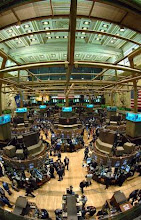
Legend has it that Joseph Kennedy sold all the stock he owned the day before "Black Thursday," the start of the catastrophic 1929 stock market crash. Many investors suffered enormous losses in the crash, which became one of the hallmarks of the Great Depression.
What made Kennedy sell? According to the story, he got a stock tip from a shoeshine boy. In the 1920s, the stock market was the realm of the rich and powerful. Kennedy thought that if a shoeshine boy could own stock, something must have gone terribly wrong.
Now, plenty of "common" people own stock. Online trading has given anyone who has a computer, enough money to open an account and a reasonably good financial history the ability to invest in the market. You don't have to have a personal broker or a disposable fortune to do it, and most analysts agree that average people trading stock is no longer a sign of impending doom.
The market has become more accessible, but that doesn't mean you should take online trading lightly. In this article, we'll look at the different types of online trading accounts, as well as how to choose an online brokerage, make trades and protect yourself from fraud.
Review of Stocks & Markets
Before we look at the world of online trading, let's take a quick look at the basics of the stock market. If you've already read How Stocks and the Stock Market Work, you can go on to the next section.
A share of stock is basically a tiny piece of a corporation. Shareholders -- people who buy stock -- are investing in the future of a company for as long as they own their shares. The price of a share varies according to economic conditions, the performance of the company and investors' attitudes. The first time a company offers its stock for public sale is called an initial public offering (IPO), also known as "going public."
When a business makes a profit, it can share that money with its stockholders by issuing a dividend. A business can also save its profit or re-invest it by making improvements to the business or hiring new people. Stocks that issue frequent dividends are income stocks. Stocks in companies that re-invest their profits are growth stocks.
Brokers buy and sell stocks through an exchange, charging a commission to do so. A broker is simply a person who is licensed to trade stocks through the exchange. A broker can be on the trading floor or can make trades by phone or electronically.
An exchange is like a warehouse in which people buy and sell stocks. A person or computer must match each buy order to a sell order, and vice versa. Some exchanges work like auctions on an actual trading floor, and others match buyers to sellers electronically. Some examples of major stock exchanges are:
* The New York Stock Exchange, which trades stocks auction-style on a trading floor
* The NASDAQ, an electronic stock exchange
* The Tokyo Stock Exchange, a Japanese stock exchange
Worldwide Stock Exchanges has a list of major exchanges. Over-the-counter (OTC) stocks are not listed on a major exchange, and you can look up information on them at the OTC Bulletin Board or PinkSheets.
When you buy and sell stocks online, you're using an online broker that largely takes the place of a human broker. You still use real money, but instead of talking to someone about investments, you decide which stocks to buy and sell, and you request your trades yourself. Some online brokerages offer advice from live brokers and broker-assisted trades as part of their service.
If you need a broker to help you with your trades, you'll need to choose a firm that offers that service. We'll look at other qualities to look for in an online brokerage next.

How To Buy Stocks Online
With easy access to the Internet, life has become more comfortable. Sitting at home, you can gather a repository of information, especially on how to invest money online. Sometimes, it seems like a dream but it has become a real truth. Internet has become a hub particularly for people who are into online business - an easiest way to become richer. Things that were done manually are being done online via Internet. If you talk about stock trading system, Internet stock trading is one of the easiest options one can opt for investing money online.
Conventionally, stock trading is done through different channels: through stockbrokers, personally, or through telephones. In the last few years, there has been a subsequent increase in stock traders trying their luck in the stock market. As a result, some issues like busy phone lines, miss communication, etc., have arisen among stockbrokers and traders. Internet stock trading has solved these problems.
Easy steps to do online stock trading
Buying stocks online has become fairly straightforward. To buy stocks online, you need to open an account with your preferred online brokerage firm. Choosing online brokers or financial advisors need a lot of research to avoid risks. When you log into your account, you can buy stocks online. You should be well aware of the company and its standing in the business world before you invest in stocks.
Following are some of the important steps and points that need to be followed for online investment:
* Buying online stocks is quite easy once you have decided to buy a particular company stocks and have a brokerage account with you.
* Get yourself informed fully before purchasing online stocks.
* Check out the things that you need in a brokerage account. Do you need to meet with someone in person or a telephone conversation is enough? Do you want to buy stocks or also sell stocks?
* Stockbrokers can provide platform for you to buy stocks in the market. Therefore, you need to contact online brokers. Choose online brokers who charge minimum commission for their services.
* Contact firms or online brokers and request an application. Fill out the form and open your account. Once your account gets activated, begin buying and selling stocks online.
Keeping all these things in mind, you can look forward into online stock trading business. Stock market investing comes with risk, but there is no success without risk. On the other hand, a sound knowledge of any business is the key to success. Gather information, discuss with friends and relatives who are into online stock trading or consult financial adviser regarding your online investment plan and invest accordingly.
People from every corner are investing in stocks and gaining profits. If your strategy is good and then you could surely gain with your online investment. Online trading is the easiest and hassle free mode of communication with your brokers. Plan, invest, earn and become richer.
Conventionally, stock trading is done through different channels: through stockbrokers, personally, or through telephones. In the last few years, there has been a subsequent increase in stock traders trying their luck in the stock market. As a result, some issues like busy phone lines, miss communication, etc., have arisen among stockbrokers and traders. Internet stock trading has solved these problems.
Easy steps to do online stock trading
Buying stocks online has become fairly straightforward. To buy stocks online, you need to open an account with your preferred online brokerage firm. Choosing online brokers or financial advisors need a lot of research to avoid risks. When you log into your account, you can buy stocks online. You should be well aware of the company and its standing in the business world before you invest in stocks.
Following are some of the important steps and points that need to be followed for online investment:
* Buying online stocks is quite easy once you have decided to buy a particular company stocks and have a brokerage account with you.
* Get yourself informed fully before purchasing online stocks.
* Check out the things that you need in a brokerage account. Do you need to meet with someone in person or a telephone conversation is enough? Do you want to buy stocks or also sell stocks?
* Stockbrokers can provide platform for you to buy stocks in the market. Therefore, you need to contact online brokers. Choose online brokers who charge minimum commission for their services.
* Contact firms or online brokers and request an application. Fill out the form and open your account. Once your account gets activated, begin buying and selling stocks online.
Keeping all these things in mind, you can look forward into online stock trading business. Stock market investing comes with risk, but there is no success without risk. On the other hand, a sound knowledge of any business is the key to success. Gather information, discuss with friends and relatives who are into online stock trading or consult financial adviser regarding your online investment plan and invest accordingly.
People from every corner are investing in stocks and gaining profits. If your strategy is good and then you could surely gain with your online investment. Online trading is the easiest and hassle free mode of communication with your brokers. Plan, invest, earn and become richer.
How to Buy Stocks
Buying stocks is not difficult, but you'll need a few days lead time if you haven't done it before!
On the other hand making money consistently from buying stock is very difficult - the fact that most managed professional funds do not beat the index, tells you that even professionals dont find this easy. So take everything you read with a grain of salt.
Steps
1. Do nothing until you have chosen a system, rules for buying and rules for selling. So read widely and study. Watch the market and then paper trade ( that is pretending on paper you bought the stocks!) : prove you can make money at stock speculation before you ever part with a single dime. Once money is in your account, the temptation is too high to spend without careful thought.
2. Decide on a system. And then decide on the best vehicle to trade. If stock speculation, not long term investment is what you are after, maybe contracts for difference , spreadbetting or binary betting could be a better way - depending on local laws and tax rules - and how quickly you intend to get in and out of the market. Investigate all of the options.
3. Then if you have decided on trading raw stocks. Sign up with a stock broker on their website. A broker is registered with one or more "stock exchanges" (e.g. NYSE, NASDAQ, etc.) to execute stock trades on your behalf within that exchange's market.
4. Send the broker an initial deposit of funds. (Your broker needs this money to purchase your stocks.) The usual minimum is $2000. But can be as little as $500.00. Some websites don't require a deposit at all.
5. Your broker must report your stock trades to the IRS. You will need to fill out the required forms and mail them back to the broker, possibly even before they will allow you to make your first trade. (Your broker will send you the forms.)
6. Select your stock, notifying your broker of the company's "symbol" (a 3-4-letter code), the price you're willing to pay per share, and the length of time for which your offer will be valid.
Tips
* Before you buy anything - stop. Watch. Learn. Paper trade. Don't trust anyones advice until you have confirmed that what they say works consistently. If you are considering buying a trading system from anyone, look at some of the reputable financial forums such as trade2win or moneytec. You will find most of them there....and a heap of dissatisfied customers.
* Decide before every trade on a stop loss. And exercise it ruthlessly. Don't make decisions on the fly!
* so be able to deal with temporary setbacks; balanced portfolios increase in value in the long-term.
* Index funds provide a balanced, low-cost (low/no management fees) way of investing, and have consistent long-term gains.
* Instead of offering a specific amount (and a timeframe) for the stock, you may purchase the stock "at market value", which executes immediately.
* Although you should "diversify" your stock portfolio by owning stock in several industries, buy stock primarily in industries you are familar with. (tech stocks if you're a geek, auto stocks if you read a lot of car magazines, etc.)
* Search for "online discount brokers" on a search engine to find a list of brokers that you can use to buy and sell stocks online. Scottrade, Etrade, and TD Waterhouse are just a few of the many options. Be sure to compare their fees and see if they have any hidden fees before signing up.
* "If in doubt, do nought".
* Before buying stocks, make sure you have a decent idea of how to choose which stocks to buy.
* There is plenty of free advice from reputable people. There is also plenty of free and seemingly credible advice that is both misleading and wrong.
* Many of the established text books and bibles on trading - particularly on technical analysis - contain assumptions repeated so often they have gained the status of fact without ever being proven! If you find that hard to believe then download a stock price into a spreadsheet and test the moving average crossing methods repeated in every book on technical analysis and shudder at how much money you would have lost! It just aint as simple as it is painted.
* Make sure your broker is registered with the SEC. Stick to the brokers advertising on network TV if you are unfamiliar with the industry.
* Depending on the brokerage fees, it will be difficult (or take a long time) to recoup an investment of less than $1500 on any single stock purchase.
* In addition to the price-per-share that you offer for the stock, your broker will charge you a flat transaction fee, as well as an SEC insurance fee. The SEC fee is about $5. You pay these extra fees when both buying AND selling a stock.
* Realise that people who promote a stock often do so because they want to sell it. In other words they hype a product in order to sell it. This way of looking at things is called "Contrarianism". So when people say "BUY", its actually time to "SELL", or if you don't hold stock already, it maybe not the time to buy at all! Always DYOR (Do Your Own Research) and then some.
* Most day traders lose money, and very few fund managers beat the indexes over any length of time. Stock trading is easy. Making money is hard. So look for a system, prove it to yourself, and then dont deviate!
On the other hand making money consistently from buying stock is very difficult - the fact that most managed professional funds do not beat the index, tells you that even professionals dont find this easy. So take everything you read with a grain of salt.
Steps
1. Do nothing until you have chosen a system, rules for buying and rules for selling. So read widely and study. Watch the market and then paper trade ( that is pretending on paper you bought the stocks!) : prove you can make money at stock speculation before you ever part with a single dime. Once money is in your account, the temptation is too high to spend without careful thought.
2. Decide on a system. And then decide on the best vehicle to trade. If stock speculation, not long term investment is what you are after, maybe contracts for difference , spreadbetting or binary betting could be a better way - depending on local laws and tax rules - and how quickly you intend to get in and out of the market. Investigate all of the options.
3. Then if you have decided on trading raw stocks. Sign up with a stock broker on their website. A broker is registered with one or more "stock exchanges" (e.g. NYSE, NASDAQ, etc.) to execute stock trades on your behalf within that exchange's market.
4. Send the broker an initial deposit of funds. (Your broker needs this money to purchase your stocks.) The usual minimum is $2000. But can be as little as $500.00. Some websites don't require a deposit at all.
5. Your broker must report your stock trades to the IRS. You will need to fill out the required forms and mail them back to the broker, possibly even before they will allow you to make your first trade. (Your broker will send you the forms.)
6. Select your stock, notifying your broker of the company's "symbol" (a 3-4-letter code), the price you're willing to pay per share, and the length of time for which your offer will be valid.
Tips
* Before you buy anything - stop. Watch. Learn. Paper trade. Don't trust anyones advice until you have confirmed that what they say works consistently. If you are considering buying a trading system from anyone, look at some of the reputable financial forums such as trade2win or moneytec. You will find most of them there....and a heap of dissatisfied customers.
* Decide before every trade on a stop loss. And exercise it ruthlessly. Don't make decisions on the fly!
* so be able to deal with temporary setbacks; balanced portfolios increase in value in the long-term.
* Index funds provide a balanced, low-cost (low/no management fees) way of investing, and have consistent long-term gains.
* Instead of offering a specific amount (and a timeframe) for the stock, you may purchase the stock "at market value", which executes immediately.
* Although you should "diversify" your stock portfolio by owning stock in several industries, buy stock primarily in industries you are familar with. (tech stocks if you're a geek, auto stocks if you read a lot of car magazines, etc.)
* Search for "online discount brokers" on a search engine to find a list of brokers that you can use to buy and sell stocks online. Scottrade, Etrade, and TD Waterhouse are just a few of the many options. Be sure to compare their fees and see if they have any hidden fees before signing up.
* "If in doubt, do nought".
* Before buying stocks, make sure you have a decent idea of how to choose which stocks to buy.
* There is plenty of free advice from reputable people. There is also plenty of free and seemingly credible advice that is both misleading and wrong.
* Many of the established text books and bibles on trading - particularly on technical analysis - contain assumptions repeated so often they have gained the status of fact without ever being proven! If you find that hard to believe then download a stock price into a spreadsheet and test the moving average crossing methods repeated in every book on technical analysis and shudder at how much money you would have lost! It just aint as simple as it is painted.
* Make sure your broker is registered with the SEC. Stick to the brokers advertising on network TV if you are unfamiliar with the industry.
* Depending on the brokerage fees, it will be difficult (or take a long time) to recoup an investment of less than $1500 on any single stock purchase.
* In addition to the price-per-share that you offer for the stock, your broker will charge you a flat transaction fee, as well as an SEC insurance fee. The SEC fee is about $5. You pay these extra fees when both buying AND selling a stock.
* Realise that people who promote a stock often do so because they want to sell it. In other words they hype a product in order to sell it. This way of looking at things is called "Contrarianism". So when people say "BUY", its actually time to "SELL", or if you don't hold stock already, it maybe not the time to buy at all! Always DYOR (Do Your Own Research) and then some.
* Most day traders lose money, and very few fund managers beat the indexes over any length of time. Stock trading is easy. Making money is hard. So look for a system, prove it to yourself, and then dont deviate!
I'm new to this. Can I sell or buy stock by myself?
In order to buy stocks, you need the assistance of a stock broker since you cannot just phone up a company and ask to buy their shares yourself. For inexperienced investors, there are two basic categories of brokers to choose from - a full-service broker or a online/discount broker.
Full-service brokers are what most people visualize when they think about investing - well-dressed, friendly business people sitting in an office chatting with clients. These are the traditional stock brokers who will take the time to get to know you personally and financially. They will look at factors such as: marital status, lifestyle, personality, risk tolerance, age (time horizon), income, assets, debts, etc. By getting to know as much about you as they can, these full-service brokers can then help you develop a long-term financial plan.
Not only can these brokers help you with your investment needs, but they can also provide assistance with estate planning, tax advice, retirement planning, budgeting and any other type of financial advice, hence the term "full-service". They can help you manage all of your financial needs now and long into the future and are for investors who want everything in one package. In terms of fees, full-service brokers are more expensive than discount brokers but the value in having a professional investment advisor by your side can be well worth the additional costs - accounts can be set up with as little as $1,000. Most people, especially beginners, would fall under this category in terms of what type of broker they require.
Online/discount brokers, on the other hand, do not provide any investment advice and are basically just order takers. They are much less expensive than full-service brokers since there is typically no office to visit and no certified investment advisors to help you. Cost is usually based on a per-transaction basis and you can typically open an account over the internet with little or no money. Once you have an account with an online broker, you can usually just log on to its website and into your account and be able to buy and sell stocks instantly.
Just remember, since these types of brokers provide absolutely no investment advice, stock tips or any type of investment help, you're on your own to manage your investments. The only assistance you will usually receive is technical support. Online (discount) brokers do offer investment-related links, research and resources that can be useful. If you feel you are knowledgeable enough to take on the responsibilities of managing your own investments or you don't know anything about investing but want to teach yourself, then this is the way to go.
The bottom line is that your choice of broker should be based on your individual needs. Full-service brokers are great for those who are willing to pay a premium for someone else to look after their finances. Online/discount brokers, on the other hand, are great for people with little start-up money and who would like to take on the risks and rewards of investing upon themselves, without any professional assistance.
Full-service brokers are what most people visualize when they think about investing - well-dressed, friendly business people sitting in an office chatting with clients. These are the traditional stock brokers who will take the time to get to know you personally and financially. They will look at factors such as: marital status, lifestyle, personality, risk tolerance, age (time horizon), income, assets, debts, etc. By getting to know as much about you as they can, these full-service brokers can then help you develop a long-term financial plan.
Not only can these brokers help you with your investment needs, but they can also provide assistance with estate planning, tax advice, retirement planning, budgeting and any other type of financial advice, hence the term "full-service". They can help you manage all of your financial needs now and long into the future and are for investors who want everything in one package. In terms of fees, full-service brokers are more expensive than discount brokers but the value in having a professional investment advisor by your side can be well worth the additional costs - accounts can be set up with as little as $1,000. Most people, especially beginners, would fall under this category in terms of what type of broker they require.
Online/discount brokers, on the other hand, do not provide any investment advice and are basically just order takers. They are much less expensive than full-service brokers since there is typically no office to visit and no certified investment advisors to help you. Cost is usually based on a per-transaction basis and you can typically open an account over the internet with little or no money. Once you have an account with an online broker, you can usually just log on to its website and into your account and be able to buy and sell stocks instantly.
Just remember, since these types of brokers provide absolutely no investment advice, stock tips or any type of investment help, you're on your own to manage your investments. The only assistance you will usually receive is technical support. Online (discount) brokers do offer investment-related links, research and resources that can be useful. If you feel you are knowledgeable enough to take on the responsibilities of managing your own investments or you don't know anything about investing but want to teach yourself, then this is the way to go.
The bottom line is that your choice of broker should be based on your individual needs. Full-service brokers are great for those who are willing to pay a premium for someone else to look after their finances. Online/discount brokers, on the other hand, are great for people with little start-up money and who would like to take on the risks and rewards of investing upon themselves, without any professional assistance.
Market volatility worries experts
Some investment experts grew cautious Thursday as stock markets plunged in the face of high oil prices and warning signs in the automotive, financial and high-tech industries.
"It is worrisome in terms of where do we go from here,'' said Philip Mead, chief investment officer at Feltz WealthPlan in Omaha.
Ron Carson, president of Carson Wealth Management Group in Omaha, said the slumping housing market and rising prices for fuel and food were hurting the economy.
"You can't have economic growth unless you have a stable housing market,'' Carson said. "Right now, we're nowhere close to stable; we're continuing to deteriorate.''
Mead and Carson said further stock market drops were possible.
Roland Manarin of Manarin Investment Counsel Ltd. in Omaha said the markets appeared to be driven primarily by the latest headlines and that fundamentals of the economy remained positive.
"The quantity of money is huge, the price is low,'' Manarin said. "I think (investors) should break the cookie jar and buy more.''
Russ Kaplan of Kaplan Investments in Omaha said the stock markets were bearish and nervous and a recovery might take longer than he had thought earlier this year. But he wasn't panicking.
"I'm certainly not selling and I'm buying selected positions,'' Kaplan said.
Mead suggested that people with long-term investment horizons and balanced portfolios should sit tight, while people wanting to retain current earnings could consider moving money out of the markets and into more stable investment vehicles such as municipal bonds or inflation indexed Treasury notes.
Carson said the volatile stock markets make more active investment decisions a higher priority than in years past and most people would do well to seek advice from investment managers.
"The days are gone when people can just buy, hold and forget about their portfolios,'' Carson said. "You've got to work with someone who will reallocate at least once a quarter.''
"It is worrisome in terms of where do we go from here,'' said Philip Mead, chief investment officer at Feltz WealthPlan in Omaha.
Ron Carson, president of Carson Wealth Management Group in Omaha, said the slumping housing market and rising prices for fuel and food were hurting the economy.
"You can't have economic growth unless you have a stable housing market,'' Carson said. "Right now, we're nowhere close to stable; we're continuing to deteriorate.''
Mead and Carson said further stock market drops were possible.
Roland Manarin of Manarin Investment Counsel Ltd. in Omaha said the markets appeared to be driven primarily by the latest headlines and that fundamentals of the economy remained positive.
"The quantity of money is huge, the price is low,'' Manarin said. "I think (investors) should break the cookie jar and buy more.''
Russ Kaplan of Kaplan Investments in Omaha said the stock markets were bearish and nervous and a recovery might take longer than he had thought earlier this year. But he wasn't panicking.
"I'm certainly not selling and I'm buying selected positions,'' Kaplan said.
Mead suggested that people with long-term investment horizons and balanced portfolios should sit tight, while people wanting to retain current earnings could consider moving money out of the markets and into more stable investment vehicles such as municipal bonds or inflation indexed Treasury notes.
Carson said the volatile stock markets make more active investment decisions a higher priority than in years past and most people would do well to seek advice from investment managers.
"The days are gone when people can just buy, hold and forget about their portfolios,'' Carson said. "You've got to work with someone who will reallocate at least once a quarter.''
Volatile Market, U.S. Slowdown, Credit Crunch Batters IPOs, PwC Survey Says
Ottawa - Initial Public Offerings (IPOs) on Canadian equity markets fell to a new record low in the second quarter of 2008, according to the latest PricewaterhouseCoopers (PwC) survey of Canadian equity markets.
Canadian exchanges saw 18 IPOs from April 1-June 30, 2008, attracting only $466 million in new equity, compared to the 20 IPOs worth $555 million in the second quarter of 2007, PwC reported. The TSX had seven of the second quarter's new issues for a total value of $434 million, but in the same period a year ago the TSX had eight IPOs worth $453 million.
"To put these results in context, the 2007 results were already among the lowest on record," said Ross Sinclair, national leader of PwC's IPO and income trust services.
There were a total of 38 new issues on all exchanges in the first half of 2008, down from 41 in the same period of 2007. A total value of $614 million in the first half of this year was off almost one-third from the $855 million in the first half of 2007. The TSX saw 10 new issues in the first half of this year for a value of $547 million, down from 13 IPOs valued at $644 million during the same period last year.
At its current pace, Sinclair said, the market will struggle to reach half the value of the slowest period of the decade when just 46 new issues worth $2.07 billion reached the market in 2001. 2005 was the best year for IPOs, when 119 new issues worth more than $6.9 billion came to market.
"The IPO market in Canada is in the centre of a perfect storm of negative factors that are pushing the market into record low territory," said Sinclair. "The extreme volatility of the market, with large swings and relatively low valuations for any company that is not in commodities or oil and gas, is just one factor. A slowdown in the US economy, continued uncertainty in credit markets, concern in the financial services sector, the disappearance of income trusts and the impact of higher oil prices have all contributed to an environment where it is hard to see any optimism."
Sinclair said that to complete an offering in the current market firms need to have "a really compelling story," which he said would include showing that a firm is a quality company with a strong track record that has "flair and growth."
"The only company that brought that combination to the market in the second quarter was Sprott Inc." Sprott completed the largest IPO on the TSX in the quarter, a $200 million issue in April, 2008, he said.
While the second quarter of 2008 was an improvement from the first quarter, Sinclair says he sees no significant upward trend that would lift the IPO market before this fall.
"Even the TSX Venture exchange, which can sometimes show some interesting trends, has little good news," he said. PwC's survey found just nine IPOs with a value of $30 million made it to the junior exchange in the second quarter, less than a third of the $99 million that was placed on the TSX Venture in the same period of 2007.
Canadian exchanges saw 18 IPOs from April 1-June 30, 2008, attracting only $466 million in new equity, compared to the 20 IPOs worth $555 million in the second quarter of 2007, PwC reported. The TSX had seven of the second quarter's new issues for a total value of $434 million, but in the same period a year ago the TSX had eight IPOs worth $453 million.
"To put these results in context, the 2007 results were already among the lowest on record," said Ross Sinclair, national leader of PwC's IPO and income trust services.
There were a total of 38 new issues on all exchanges in the first half of 2008, down from 41 in the same period of 2007. A total value of $614 million in the first half of this year was off almost one-third from the $855 million in the first half of 2007. The TSX saw 10 new issues in the first half of this year for a value of $547 million, down from 13 IPOs valued at $644 million during the same period last year.
At its current pace, Sinclair said, the market will struggle to reach half the value of the slowest period of the decade when just 46 new issues worth $2.07 billion reached the market in 2001. 2005 was the best year for IPOs, when 119 new issues worth more than $6.9 billion came to market.
"The IPO market in Canada is in the centre of a perfect storm of negative factors that are pushing the market into record low territory," said Sinclair. "The extreme volatility of the market, with large swings and relatively low valuations for any company that is not in commodities or oil and gas, is just one factor. A slowdown in the US economy, continued uncertainty in credit markets, concern in the financial services sector, the disappearance of income trusts and the impact of higher oil prices have all contributed to an environment where it is hard to see any optimism."
Sinclair said that to complete an offering in the current market firms need to have "a really compelling story," which he said would include showing that a firm is a quality company with a strong track record that has "flair and growth."
"The only company that brought that combination to the market in the second quarter was Sprott Inc." Sprott completed the largest IPO on the TSX in the quarter, a $200 million issue in April, 2008, he said.
While the second quarter of 2008 was an improvement from the first quarter, Sinclair says he sees no significant upward trend that would lift the IPO market before this fall.
"Even the TSX Venture exchange, which can sometimes show some interesting trends, has little good news," he said. PwC's survey found just nine IPOs with a value of $30 million made it to the junior exchange in the second quarter, less than a third of the $99 million that was placed on the TSX Venture in the same period of 2007.
Stocks Near Bear Market Territory
Anxiety lessened only slightly on Wall Street today following the Dow's dismal drop Thursday of nearly 360 points. Selling continued in major indexes as traders weighed whether the U.S. consumer can endure another round of record-setting energy cost increases.
Friday's declines were less pronounced thanks to a bit of good news on U.S. income and spending, which rose in May in part because of some $48 billion in government stimulus checks issued so far. Incomes rose 1.9 percent, the best since September 2005, while personal spending climbed 0.8 percent, a bit above forecasts.
Consumer spending remains solid despite heightened uncertainty about jobs, inflation, and the economy. The latest Reuters/University of Michigan's consumer confidence index fell to a 28-year low in June, led by worries about inflation. Rising food prices coupled with energy costs mean that inflation-adjusted income growth is now basically flat compared with a year ago. The question remains whether consumers' grumbling will translate into a deeper downturn in sales.
"There's still a lot of concern we could have a slowdown in the economy given all the headwinds against the consumer," says Michelle Meyer, an economist at Lehman Bros.
Still, the economy appears to be in less dire shape than many had feared. Revised gross domestic product data show the economy expanded by 1 percent in the first quarter.
But that seems to be little comfort to investors as the latest round of red floods their portfolios.
So are we in a bear market? It's close. At its Thursday close of 11,453, the Dow Jones industrial average was down 19 percent from its October threshold and as of late this morning was just 60 points away from being down 20 percent. That's the typical point at which most investors agree a bear market has begun. By now, though, the distinction is fairly arbitrary.
"To me a bear market is an extended period of time where it's hard to make money in stocks. I think this qualifies," says Ken Tower, chief market strategist with Covered Bridge Tactical.
More attention is being given to the S&P 500, which is heavy with bank stocks, to see if the index can hold on. The S&P is still testing March lows near the 1273 level. If that level is breached, the next leg is likely to be down, analysts say.
"If yesterday was a capitulation, where are the buyers today?" asks Peter Boockvar, equity strategist at Miller Tabak. "They're scared because we're breaking important levels. The path of least resistance is lower. This is not irrational behavior. It's what happens when you're in a major economic dislocation like we're in."
Thursday's brutal sell-off was largely a continuation of the same problems that have hampered stocks all year: falling home prices, soaring oil prices, and looming trouble in the banking sector.
Oil: Oil rose again today after topping $140 a barrel this week. It added another dollar per barrel at the opening on the New York Mercantile Exchange, reacting to threats Libya might cut production and to continued weakness in the dollar. Oil is up more than 45 percent so far this year, triggering higher costs for everything from jet fuel to gasoline.
Housing: This week two big builders, KB Home and Lennar, issued abysmal earnings reports, and the latest Case/Shiller 20-city home price index showed a 15.3 percent yearly decline.
Banks: It's downgrade season among the big investment houses. Analysts are scrambling to slash their outlooks on one another's firms. Today, Lehman Bros. said Merrill Lynch will suffer $5.4 billion in second-quarter writedowns from its exposure to insurers recently hit with credit downgrades. Goldman Sachs predicted writedowns and losses for Merrill and also advised clients to sell Citigroup.
The Federal Reserve isn't offering stocks any more help. Central bankers ended almost a year of rate cutting this week, leaving the federal funds rate at 2 percent. That removes another pillar of support for stocks, which benefit from lower borrowing costs. In its statement, the Fed hinted that it is shifting more of its attention back to fighting inflation, a hint that the next move in rates is likely to be a hike. Also, even if the Fed decides more cuts are warranted, stocks won't see much benefit. Any more rate cuts this year will signal that the already slow economy has gotten much worse.
At the company level, earnings misses and disappointing news from key parts of the market threaten to keep stocks in the red. Wall Street darling Research In Motion missed earnings expectations, while its struggling rival Palm saw sales plummet 26 percent. But General Motors, beset by tanking sales of trucks and SUVs, might take the prize: Goldman Sachs urged investors to sell the struggling auto giant, and GM shares are at their lowest level in more than 30 years.
Still, all the bad news may include some signs of a bottom. Covered Bridge Tactical's Tower says stocks could hit bottom over the next few trading days, but he adds that there's little reason to hope for a big rebound this year. More than 10 percent of all New York Stock Exchange stocks made new 52-week lows on Thursday. That same thing happened on Tuesday. That sort of market behavior often means a market bottom within the next seven trading days. Investor sentiment is also just about as bad as it can be.
"There's just not a single bullish person around anymore," Tower says. "That's the kind of sentiment that occurs at market lows. We've reached a level where investors are very discouraged."
Friday's declines were less pronounced thanks to a bit of good news on U.S. income and spending, which rose in May in part because of some $48 billion in government stimulus checks issued so far. Incomes rose 1.9 percent, the best since September 2005, while personal spending climbed 0.8 percent, a bit above forecasts.
Consumer spending remains solid despite heightened uncertainty about jobs, inflation, and the economy. The latest Reuters/University of Michigan's consumer confidence index fell to a 28-year low in June, led by worries about inflation. Rising food prices coupled with energy costs mean that inflation-adjusted income growth is now basically flat compared with a year ago. The question remains whether consumers' grumbling will translate into a deeper downturn in sales.
"There's still a lot of concern we could have a slowdown in the economy given all the headwinds against the consumer," says Michelle Meyer, an economist at Lehman Bros.
Still, the economy appears to be in less dire shape than many had feared. Revised gross domestic product data show the economy expanded by 1 percent in the first quarter.
But that seems to be little comfort to investors as the latest round of red floods their portfolios.
So are we in a bear market? It's close. At its Thursday close of 11,453, the Dow Jones industrial average was down 19 percent from its October threshold and as of late this morning was just 60 points away from being down 20 percent. That's the typical point at which most investors agree a bear market has begun. By now, though, the distinction is fairly arbitrary.
"To me a bear market is an extended period of time where it's hard to make money in stocks. I think this qualifies," says Ken Tower, chief market strategist with Covered Bridge Tactical.
More attention is being given to the S&P 500, which is heavy with bank stocks, to see if the index can hold on. The S&P is still testing March lows near the 1273 level. If that level is breached, the next leg is likely to be down, analysts say.
"If yesterday was a capitulation, where are the buyers today?" asks Peter Boockvar, equity strategist at Miller Tabak. "They're scared because we're breaking important levels. The path of least resistance is lower. This is not irrational behavior. It's what happens when you're in a major economic dislocation like we're in."
Thursday's brutal sell-off was largely a continuation of the same problems that have hampered stocks all year: falling home prices, soaring oil prices, and looming trouble in the banking sector.
Oil: Oil rose again today after topping $140 a barrel this week. It added another dollar per barrel at the opening on the New York Mercantile Exchange, reacting to threats Libya might cut production and to continued weakness in the dollar. Oil is up more than 45 percent so far this year, triggering higher costs for everything from jet fuel to gasoline.
Housing: This week two big builders, KB Home and Lennar, issued abysmal earnings reports, and the latest Case/Shiller 20-city home price index showed a 15.3 percent yearly decline.
Banks: It's downgrade season among the big investment houses. Analysts are scrambling to slash their outlooks on one another's firms. Today, Lehman Bros. said Merrill Lynch will suffer $5.4 billion in second-quarter writedowns from its exposure to insurers recently hit with credit downgrades. Goldman Sachs predicted writedowns and losses for Merrill and also advised clients to sell Citigroup.
The Federal Reserve isn't offering stocks any more help. Central bankers ended almost a year of rate cutting this week, leaving the federal funds rate at 2 percent. That removes another pillar of support for stocks, which benefit from lower borrowing costs. In its statement, the Fed hinted that it is shifting more of its attention back to fighting inflation, a hint that the next move in rates is likely to be a hike. Also, even if the Fed decides more cuts are warranted, stocks won't see much benefit. Any more rate cuts this year will signal that the already slow economy has gotten much worse.
At the company level, earnings misses and disappointing news from key parts of the market threaten to keep stocks in the red. Wall Street darling Research In Motion missed earnings expectations, while its struggling rival Palm saw sales plummet 26 percent. But General Motors, beset by tanking sales of trucks and SUVs, might take the prize: Goldman Sachs urged investors to sell the struggling auto giant, and GM shares are at their lowest level in more than 30 years.
Still, all the bad news may include some signs of a bottom. Covered Bridge Tactical's Tower says stocks could hit bottom over the next few trading days, but he adds that there's little reason to hope for a big rebound this year. More than 10 percent of all New York Stock Exchange stocks made new 52-week lows on Thursday. That same thing happened on Tuesday. That sort of market behavior often means a market bottom within the next seven trading days. Investor sentiment is also just about as bad as it can be.
"There's just not a single bullish person around anymore," Tower says. "That's the kind of sentiment that occurs at market lows. We've reached a level where investors are very discouraged."
Auto sector, record oil price drags down stocks
New York - GM lost more than 15% of its share price Wednesday reaching its lowest level in over 50 years after Merrill Lynch cut General Motors rating to 'underperform'. Combined with record oil prices, investors lost confidence in stocks with Dow giving up 166 points at the close.
General Motors (NYSE: GM) reported US auto sales fell 18.2% in June, though less than analysts had expected. While in Canada, GM auto sales fell 23.8% and light truck sales were down 35%. Yesterday, Ford Motor Co. (NYSE: F) reported a 27.9% drop in June US auto sales which sent Ford's stock tumbling as the first US automaker to report June sales.
Toyota Motor Co. (NYSE: TM) reported a 21.4% drop in June US auto sales as well and the worst decline came from Chrysler LLC with a 35.9% drop in June auto sales in the United States. The entire sector fell. But after Merrill Lynch lowered its rating on General Motors, doubt over whether GM could muster the financing to weather the economic downturn took hold on Wall Street and with it grew doubts over the US economy as a whole after crude oil futures reached a record high of over $144 a barrel largely due to a greater-than-expected drop in US stockpiles.
The Dow, which had traded up early in the session Wednesday lost ground and by the closing bell had given up 166 points to finish the day at 11,215 for a loss of 1.46%. The broader S&P 500 index finished down 23 points, or 1.82 percent, at 1,261. Even the Nasdaq national Market Index gave up ground, losing 53 points, or 2.32 percent, to close at 2,251, despite a rally in Yahoo! Corp. (Nasdaq: YHOO) shares this morning on speculation that Microsoft Corp. (Nasdaq: MSFT) had renewed its interest in acquiring the search provider.
This morning the Energy Department reported that for the week ending June 27, 2008 US oil stocks were down by 2 million barrels, which was 800,000 more-than-expected by energy pundits who track oil. On the NYMEX, crude oil futures for August delivery traded up into record territory on the news. With stocks near a bear market signal of a 20% drop on the S&P 500 Index, electronic trading is near a selloff and many investors moved into the dollar denominated positions in energy futures as a hedge against the equities market.
Gold futures continued rising Wednesday as well, closing up $2.00 an ounce at $946.50. September Silver contracts followed gold higher, rising 14 cents to close at $18.83 an ounce. In base metals, copper futures for September delivery shot up 15 cents a pound to close at $4.06 after having traded as high as $4.08 a pound.
Corn and soybean futures rose as well after weather patterns revealed potentially lower acreage than the latest USDA forecast. December corn rose 28.5 cents to $7.80 a bushel while November beans closed up 20 cents at $16.30 per bushel on the Chicago exchange.
General Motors (NYSE: GM) reported US auto sales fell 18.2% in June, though less than analysts had expected. While in Canada, GM auto sales fell 23.8% and light truck sales were down 35%. Yesterday, Ford Motor Co. (NYSE: F) reported a 27.9% drop in June US auto sales which sent Ford's stock tumbling as the first US automaker to report June sales.
Toyota Motor Co. (NYSE: TM) reported a 21.4% drop in June US auto sales as well and the worst decline came from Chrysler LLC with a 35.9% drop in June auto sales in the United States. The entire sector fell. But after Merrill Lynch lowered its rating on General Motors, doubt over whether GM could muster the financing to weather the economic downturn took hold on Wall Street and with it grew doubts over the US economy as a whole after crude oil futures reached a record high of over $144 a barrel largely due to a greater-than-expected drop in US stockpiles.
The Dow, which had traded up early in the session Wednesday lost ground and by the closing bell had given up 166 points to finish the day at 11,215 for a loss of 1.46%. The broader S&P 500 index finished down 23 points, or 1.82 percent, at 1,261. Even the Nasdaq national Market Index gave up ground, losing 53 points, or 2.32 percent, to close at 2,251, despite a rally in Yahoo! Corp. (Nasdaq: YHOO) shares this morning on speculation that Microsoft Corp. (Nasdaq: MSFT) had renewed its interest in acquiring the search provider.
This morning the Energy Department reported that for the week ending June 27, 2008 US oil stocks were down by 2 million barrels, which was 800,000 more-than-expected by energy pundits who track oil. On the NYMEX, crude oil futures for August delivery traded up into record territory on the news. With stocks near a bear market signal of a 20% drop on the S&P 500 Index, electronic trading is near a selloff and many investors moved into the dollar denominated positions in energy futures as a hedge against the equities market.
Gold futures continued rising Wednesday as well, closing up $2.00 an ounce at $946.50. September Silver contracts followed gold higher, rising 14 cents to close at $18.83 an ounce. In base metals, copper futures for September delivery shot up 15 cents a pound to close at $4.06 after having traded as high as $4.08 a pound.
Corn and soybean futures rose as well after weather patterns revealed potentially lower acreage than the latest USDA forecast. December corn rose 28.5 cents to $7.80 a bushel while November beans closed up 20 cents at $16.30 per bushel on the Chicago exchange.
What's next for Blockbuster and Circuit City?
In a not-so-stunning announcement last night, Blockbuster announced that it has withdrawn its bid for Circuit City due to concerns over the viability of the big box retailer.
"Based on market conditions and the completion of our initial due diligence process, we have determined that it is not in the best interest of Blockbuster's shareholders to proceed with an acquisition of Circuit City," said Jim Keyes, Blockbuster Chairman and CEO. "We continue to believe in the strategic merits of a consumer retail proposition that would bring media content and electronic devices together under one brand. We will pursue this strategy through our Blockbuster stores as a way to diversify the business and better serve the entertainment retail segment."
Ever since this deal was announced, I've said it would never happen and was one of the few that said it wasn't worth the trouble. First off, Blockbuster didn't even have the funds to acquire Circuit City, and secondly, I simply didn't understand why a company with its own financial woes would want to be involved with another facing extreme pressure.
Evidently the shareholders agreed with my evaluation. Even though Blockbuster offered $6 per share -- a 54 percent premium -- Circuit City stock hasn't seen $6 since December of last year. In other words, no one was excited about this deal and they quickly realized that Blockbuster was bidding far too much for a company that's worth far too little.
But what happens next for these companies? Will Blockbuster try something new? Will Circuit City be swallowed up by a different company?
Here's what I think:
Blockbuster
Blockbuster is an abandoned ship floating along the ocean on its way to a crash course with land. What does this company have going for it? It's not only getting killed by Netflix in the rental space, but its foray into retail hasn't proven too popular and it's barely turning a profit.
According to its latest figures, Blockbuster's stock price is hovering at a pathetic $2.85, but in the last two quarters, it has been able to turn its loss of $38 million around to a $42 million profit. But why haven't shareholders realized what's going on? Usually, when a company turns a loss into a profit, shareholders are more than willing to invest in the company in the hopes that the trend will continue. But for Blockbuster, that necessary cash inflow isn't coming from investment and I'm sure the Board isn't too pleased.
Of course, the reason why is quite obvious. This company has no prospects for growth. It's surviving in a business that's dying each day, it can't make it in the rental-by-mail market, and now it's trying to make its way into retail? It strikes me as a desperate move by a company that has been backed into a corner.
Then again, some speculation suggests Blockbuster is attempting to load content into portable media players, and we already know that it's trying to establish a networked media hub for its Movielink service. It might also try to get in-store kiosks up and running in an attempt to take Netflix out of the equation and give people movies before they have the time to update their queues.
I commend Blockbuster for trying, but really, does it honestly believe in-store kiosks and loading content onto portable media players is the way to go?
Note to Blockbuster: the only way to save your company is to spend as much cash as possible on Movielink, partner with as many studios as possible, and make sure that when we're asking for movie downloads instead of media, you're the leader by a long-shot. And until then, keep squeaking out your slight profits and hope for the best. If that means you need to downsize each year to do it, so be it -- by the time movie downloads are here, rental chains will be dead anyway.
Circuit City
There's only one way to save Circuit City: sell it to the highest bidder and be done with it.
Circuit City is nothing more than the next CompUSA -- a company that made sense at one point, but now, is nothing more than a barely-trafficked store that can't stand up to Best Buy.
Circuit City's stock price is currently $2.12, its latest fiscal year revenue figure dropped by $700 million, and its net loss in that time was almost $320 million. That doesn't sound like a company that will stay afloat much longer.
The way I see it, Circuit City's issues are two-fold: it's competing against a company in Best Buy that has a superior team of executives, a superior brand name, and a superior store with better customer service, better prices, and a far better experience. Secondly, the company's financial woes are so bad, it has little chance of turning things around and its only solution is to hope someone, anyone, will come along and buy it for what it's really worth: $2 per share.
And maybe that's what Blockbuster will do. By backing out of this deal now, it leaves itself the opportunity to come back in a few months and offer something more logical. If it wants to offer a premium (but why should it?), it shouldn't go higher than $3 per share.
If Blockbuster doesn't come back, look for Circuit City to continue performing poorly and flatten under pressure from its many competitors.
Circuit City is doomed. Based on its financial health, I give it a few years before it's forced to do something drastic to keep itself afloat. It's sad, but true.
"Based on market conditions and the completion of our initial due diligence process, we have determined that it is not in the best interest of Blockbuster's shareholders to proceed with an acquisition of Circuit City," said Jim Keyes, Blockbuster Chairman and CEO. "We continue to believe in the strategic merits of a consumer retail proposition that would bring media content and electronic devices together under one brand. We will pursue this strategy through our Blockbuster stores as a way to diversify the business and better serve the entertainment retail segment."
Ever since this deal was announced, I've said it would never happen and was one of the few that said it wasn't worth the trouble. First off, Blockbuster didn't even have the funds to acquire Circuit City, and secondly, I simply didn't understand why a company with its own financial woes would want to be involved with another facing extreme pressure.
Evidently the shareholders agreed with my evaluation. Even though Blockbuster offered $6 per share -- a 54 percent premium -- Circuit City stock hasn't seen $6 since December of last year. In other words, no one was excited about this deal and they quickly realized that Blockbuster was bidding far too much for a company that's worth far too little.
But what happens next for these companies? Will Blockbuster try something new? Will Circuit City be swallowed up by a different company?
Here's what I think:
Blockbuster
Blockbuster is an abandoned ship floating along the ocean on its way to a crash course with land. What does this company have going for it? It's not only getting killed by Netflix in the rental space, but its foray into retail hasn't proven too popular and it's barely turning a profit.
According to its latest figures, Blockbuster's stock price is hovering at a pathetic $2.85, but in the last two quarters, it has been able to turn its loss of $38 million around to a $42 million profit. But why haven't shareholders realized what's going on? Usually, when a company turns a loss into a profit, shareholders are more than willing to invest in the company in the hopes that the trend will continue. But for Blockbuster, that necessary cash inflow isn't coming from investment and I'm sure the Board isn't too pleased.
Of course, the reason why is quite obvious. This company has no prospects for growth. It's surviving in a business that's dying each day, it can't make it in the rental-by-mail market, and now it's trying to make its way into retail? It strikes me as a desperate move by a company that has been backed into a corner.
Then again, some speculation suggests Blockbuster is attempting to load content into portable media players, and we already know that it's trying to establish a networked media hub for its Movielink service. It might also try to get in-store kiosks up and running in an attempt to take Netflix out of the equation and give people movies before they have the time to update their queues.
I commend Blockbuster for trying, but really, does it honestly believe in-store kiosks and loading content onto portable media players is the way to go?
Note to Blockbuster: the only way to save your company is to spend as much cash as possible on Movielink, partner with as many studios as possible, and make sure that when we're asking for movie downloads instead of media, you're the leader by a long-shot. And until then, keep squeaking out your slight profits and hope for the best. If that means you need to downsize each year to do it, so be it -- by the time movie downloads are here, rental chains will be dead anyway.
Circuit City
There's only one way to save Circuit City: sell it to the highest bidder and be done with it.
Circuit City is nothing more than the next CompUSA -- a company that made sense at one point, but now, is nothing more than a barely-trafficked store that can't stand up to Best Buy.
Circuit City's stock price is currently $2.12, its latest fiscal year revenue figure dropped by $700 million, and its net loss in that time was almost $320 million. That doesn't sound like a company that will stay afloat much longer.
The way I see it, Circuit City's issues are two-fold: it's competing against a company in Best Buy that has a superior team of executives, a superior brand name, and a superior store with better customer service, better prices, and a far better experience. Secondly, the company's financial woes are so bad, it has little chance of turning things around and its only solution is to hope someone, anyone, will come along and buy it for what it's really worth: $2 per share.
And maybe that's what Blockbuster will do. By backing out of this deal now, it leaves itself the opportunity to come back in a few months and offer something more logical. If it wants to offer a premium (but why should it?), it shouldn't go higher than $3 per share.
If Blockbuster doesn't come back, look for Circuit City to continue performing poorly and flatten under pressure from its many competitors.
Circuit City is doomed. Based on its financial health, I give it a few years before it's forced to do something drastic to keep itself afloat. It's sad, but true.
AP Business NewsBrief at 7:18 a.m. EDT
Oil prices near $146 Oil prices neared $146 a barrel Thursday for the first time ever on reports of declining U.S. stockpiles and the threat of conflict with Iran. Comments by Saudi Arabia's oil minister suggesting his country had no immediate plans to boost production also lifted prices.
French judge orders Continental to trial PARIS (AP) _ A French judge has ordered Continental Airlines and five people to stand trial for manslaughter in connection with the 2000 crash of a Concorde jet that killed 113 people. The prosecutor in the Paris suburb of Pontoise says two of the people to be tried are employees of the U.S. carrier.
ECB expected to raise interest rates FRANKFURT, Germany (AP) _ Analysts widely expect the European Central Bank to raise its main interest rate Thursday for the first time in a year in an effort to rein in escalating inflation, but whether such a move will help or hurt is still in question. ECB President Jean-Claude Trichet said at the bank's last monthly meeting June 5 that the bank is in a state of "heightened alertness" on inflation and could raise the main rate "by a small amount." He said at that meeting that members of the ECB's governing council had already made a case for raising rates even then.
US stocks head for mixed open ahead of jobs data NEW YORK (AP) _ Stocks headed for a mixed open Thursday ahead of the government's report on June employment that could offer insights into how well the economy is likely to fare in the coming months. The price of oil neared $146 for the first time, adding pressure to the stock market. An interest rate decision from the European Central Bank will also cap a holiday-shortened week for Wall Street.
Bush's final G-8 summit may be harmonious WASHINGTON (AP) _ The issues are as difficult as ever, but the conditions are likely to be more conducive to agreement as President Bush attends his eighth and final economic summit of industrial democracies. The annual Group of Eight meeting, which begins Monday on the northern Japanese island of Hokkaido, comes amid economic turmoil in most of the member nations, as well as political uncertainty for many of the leaders. Oil prices are hitting new record highs and worries about inflation are mounting. Like the United States, most of the nation's major trading partners are experiencing slow growth and market declines.
French judge orders Continental to trial PARIS (AP) _ A French judge has ordered Continental Airlines and five people to stand trial for manslaughter in connection with the 2000 crash of a Concorde jet that killed 113 people. The prosecutor in the Paris suburb of Pontoise says two of the people to be tried are employees of the U.S. carrier.
ECB expected to raise interest rates FRANKFURT, Germany (AP) _ Analysts widely expect the European Central Bank to raise its main interest rate Thursday for the first time in a year in an effort to rein in escalating inflation, but whether such a move will help or hurt is still in question. ECB President Jean-Claude Trichet said at the bank's last monthly meeting June 5 that the bank is in a state of "heightened alertness" on inflation and could raise the main rate "by a small amount." He said at that meeting that members of the ECB's governing council had already made a case for raising rates even then.
US stocks head for mixed open ahead of jobs data NEW YORK (AP) _ Stocks headed for a mixed open Thursday ahead of the government's report on June employment that could offer insights into how well the economy is likely to fare in the coming months. The price of oil neared $146 for the first time, adding pressure to the stock market. An interest rate decision from the European Central Bank will also cap a holiday-shortened week for Wall Street.
Bush's final G-8 summit may be harmonious WASHINGTON (AP) _ The issues are as difficult as ever, but the conditions are likely to be more conducive to agreement as President Bush attends his eighth and final economic summit of industrial democracies. The annual Group of Eight meeting, which begins Monday on the northern Japanese island of Hokkaido, comes amid economic turmoil in most of the member nations, as well as political uncertainty for many of the leaders. Oil prices are hitting new record highs and worries about inflation are mounting. Like the United States, most of the nation's major trading partners are experiencing slow growth and market declines.
Stock Market Drops to Lowest June Numbers Since Great Depression
It is sure going to be interesting to watch what happens in this country over the next few years. Stocks on Wall Street tumbled today, sending the Dow Jones Industrial Average to its worst June since the Great Depression. Record oil prices, credit-market writedowns and a slowing economy increase the likelihood of a yearlong profit slump.
Americans have allowed corporate business to completely undermine the nation's economy, and our slow progress at turning toward natural and renewable sources of energy are likely to haunt us for many years to come.
All too many people in the U.S. live on credit card debt, always diversifying and borrowing from one line of credit to take care of another. What would happen to these people if the banks suddenly call their loans and stop providing credit?
Food prices are surging and the cost of oil based fuels like gasoline is out of hand to the point that people are frosted when looking for answers in this land that is turning colder by the second in terms of economical success.
For those who have stood shoulder to shoulder in recent years, denouncing the GOP politics that have led us from a balanced budget under President Clinton to a land teetering on the brink of total financial disaster... it is doubtful that having been right all along will mean much. For some, the fact that America abandoned its rightful ideals and "went with Bush" was something that they never would have predicted, or forget.
Missing the Mark
It is equally interesting to note that antiquated federal laws that prevent farmers from cultivating Cannabis or marijuana alone, are likely contributors to our national financial crisis. After all, this is a land where thinking out of the box can lead a business person to prison.
But for those growers who stay out of the federal spotlights, there are probably many fruitful years ahead. Authorities in Oregon frequently tout the latest "pot bust" but in reality, they are simply jailing people for non violent crimes and it does not help our economy. The authorities refuse to recognize that it matters, and each time they sweep a few thousand plants in places like the Willamette Valley and southern Oregon, they take a significant toll on that region's economy, legal or illegal.
Nothing is gained under the current laws, and your tax dollars and mine pay for the very lives and existence of people charged with marijuana crimes, once they are incarcerated. Marijuana was outlawed because two American companies, Dow and DuPont Chemicals, wanted to introduce synthetic rope on the marketplace and they had to get rid of the world's strongest natural fiber in order to accomplish that. Therefore, marijuana was villainized and demonized with propaganda and the rest is history.
I fail to see how locking up people for growing a natural plant benefits this society, especially when that plant has the ability to replace so many unnatural products today like rope, medicines, clothing, even building materials and an endless list of things the hemp or marijuana plant potentially generates.
Falling to Record Lows
In the meanwhile, investors are pulling back from the stock market and groups like General Motors Corp. are taking the big hit, plunging farther than ever during the last three years, as Goldman Sachs Group Inc. advised selling the stock and crude rose by $5 a barrel.
Bloomberg reports that, "The Standard & Poor's 500 Index plunged 38.82, or 2.9 percent, to 1,283.15, its biggest drop in three weeks. The Dow decreased 358.41, or 3 percent, to 11,453.42, its lowest since September 2006. The Nasdaq Composite Index sank 79.89, or 3.3 percent, to 2,321.37, its worst loss since January. Almost nine stocks fell for each that rose on the New York Stock Exchange."
Citigroup Inc. is approaching a 10-year low as Goldman Sachs said the lender may report an $8.9 billion second-quarter charge and cut its dividend. The manufacturer of the Blackberry, Research In Motion Ltd., posted its biggest drop since 2001 on concern competition with Apple Inc.'s iPhone is reducing earnings.
Bloomberg also reports that company earnings in the S&P 500 slid an average of 18 percent in the first quarter. Analysts are projecting an 8.9 percent profit drop this quarter, according to a survey conducted by Bloomberg last week.
The Dow itself, has slumped 9.4 percent this month. That is the worst June since 1930 during the Great Depression, when an 18 percent tumble was experienced. Long story short, nearly every company has posted losses in the month over the surge in oil prices, and the rate of unemployment is the highest since 2004.
It isn't good news but it also is not unexpected. Things are going to continue to tighten up and Americans are reminded that sometimes it is better go liquidate early, especially real estate, rather than just watching it move toward eventual foreclosure.
Americans have allowed corporate business to completely undermine the nation's economy, and our slow progress at turning toward natural and renewable sources of energy are likely to haunt us for many years to come.
All too many people in the U.S. live on credit card debt, always diversifying and borrowing from one line of credit to take care of another. What would happen to these people if the banks suddenly call their loans and stop providing credit?
Food prices are surging and the cost of oil based fuels like gasoline is out of hand to the point that people are frosted when looking for answers in this land that is turning colder by the second in terms of economical success.
For those who have stood shoulder to shoulder in recent years, denouncing the GOP politics that have led us from a balanced budget under President Clinton to a land teetering on the brink of total financial disaster... it is doubtful that having been right all along will mean much. For some, the fact that America abandoned its rightful ideals and "went with Bush" was something that they never would have predicted, or forget.
Missing the Mark
It is equally interesting to note that antiquated federal laws that prevent farmers from cultivating Cannabis or marijuana alone, are likely contributors to our national financial crisis. After all, this is a land where thinking out of the box can lead a business person to prison.
But for those growers who stay out of the federal spotlights, there are probably many fruitful years ahead. Authorities in Oregon frequently tout the latest "pot bust" but in reality, they are simply jailing people for non violent crimes and it does not help our economy. The authorities refuse to recognize that it matters, and each time they sweep a few thousand plants in places like the Willamette Valley and southern Oregon, they take a significant toll on that region's economy, legal or illegal.
Nothing is gained under the current laws, and your tax dollars and mine pay for the very lives and existence of people charged with marijuana crimes, once they are incarcerated. Marijuana was outlawed because two American companies, Dow and DuPont Chemicals, wanted to introduce synthetic rope on the marketplace and they had to get rid of the world's strongest natural fiber in order to accomplish that. Therefore, marijuana was villainized and demonized with propaganda and the rest is history.
I fail to see how locking up people for growing a natural plant benefits this society, especially when that plant has the ability to replace so many unnatural products today like rope, medicines, clothing, even building materials and an endless list of things the hemp or marijuana plant potentially generates.
Falling to Record Lows
In the meanwhile, investors are pulling back from the stock market and groups like General Motors Corp. are taking the big hit, plunging farther than ever during the last three years, as Goldman Sachs Group Inc. advised selling the stock and crude rose by $5 a barrel.
Bloomberg reports that, "The Standard & Poor's 500 Index plunged 38.82, or 2.9 percent, to 1,283.15, its biggest drop in three weeks. The Dow decreased 358.41, or 3 percent, to 11,453.42, its lowest since September 2006. The Nasdaq Composite Index sank 79.89, or 3.3 percent, to 2,321.37, its worst loss since January. Almost nine stocks fell for each that rose on the New York Stock Exchange."
Citigroup Inc. is approaching a 10-year low as Goldman Sachs said the lender may report an $8.9 billion second-quarter charge and cut its dividend. The manufacturer of the Blackberry, Research In Motion Ltd., posted its biggest drop since 2001 on concern competition with Apple Inc.'s iPhone is reducing earnings.
Bloomberg also reports that company earnings in the S&P 500 slid an average of 18 percent in the first quarter. Analysts are projecting an 8.9 percent profit drop this quarter, according to a survey conducted by Bloomberg last week.
The Dow itself, has slumped 9.4 percent this month. That is the worst June since 1930 during the Great Depression, when an 18 percent tumble was experienced. Long story short, nearly every company has posted losses in the month over the surge in oil prices, and the rate of unemployment is the highest since 2004.
It isn't good news but it also is not unexpected. Things are going to continue to tighten up and Americans are reminded that sometimes it is better go liquidate early, especially real estate, rather than just watching it move toward eventual foreclosure.
Japanese market opens higher on better-than-expected Tankan survey results
The Japanese stock market opened higher on Tuesday, ending the longest losing streak in seven months, after the market got a boost from better-than-expected results of the much-anticipated Tankan business confidence survey by the Bank of Japan.
At 9.31 pm ET, the benchmark Nikkei 225 Index was gaining 62.60 points or 0.46% to 13,543.98, while the broader Topix index of all First Section Issues was adding 8.88 points to 1,328.98.
The Bank of Japan's latest "Tankan" survey showed that confidence among the nation's largest manufacturers fell less than analysts expected. According to the survey, optimism about business conditions among managers of large-size companies in Japan fell in the April to June quarter compared to the previous quarter. The survey's top-line diffusion index registered a reading of 5, compared to a reading of 11 in March. The figure marks the percentage of companies saying business conditions are good, minus those saying conditions are unfavorable. Most economists were forecasting a decline to 3 in the diffusion index.
The Nikkei 225 Stock Average closed lower for an eighth straight session on Monday, falling by 62.98 points or 0.5% to close at 13,481.38, while the Topix index dropped 0.58 points or 0.04% to settle at 1,320.10. The Nikkei has shed over 970 points in the past eight sessions.
U.S. stocks ended a choppy session mixed on Monday, as investors kept a close watch on the price of oil after it set another record intraday high. The markets saw initial weakness, as the price of oil soared to a new record high in electronic trading. However, buying interest picked up as oil prices pulled back well off of their best levels of the day.
Crude oil prices for August delivery lost US$0.21 to settle at US$140.00 a barrel on the New York Mercantile Exchange on Monday. In early electronic trading, the contract hit a record US$143.67.
In currency trading, the U.S. dollar was trading in the lower 106-yen range on Tuesday. In early trades, the dollar was quoted at 106.15-106.20 yen, up 0.83 yen from Monday's close of 105.32-105.33 yen in Tokyo.
In the auto sector, Honda was up 2.49% after Nomura Holdings raised its rating on the company's stock. Meanwhile, Toyota rose 2.00%, Nissan Motors added 0.80%, Mitsubishi Motors advanced 1.04% and Mazda climbed 1.09%.
The big banks also moved to higher ground, as Sumitomo Mitsui advanced 0.63%, Mizuho Financial gained 0.81% and Mitsubishi UFJ climbed 1.28%.
Most of the tech stocks were trading higher. Fujitsu added 0.63%, Kyocera gained 0.70%, Matsushita Electric Industrial rose 2.18% and NEC advanced 1.26%, while Advantest eased 0.89%. Fanuc lost 3.38% after UBS AG recommended selling shares of the company for the next three months citing a slowing global economy. Electronics giant Sony declined 0.63%, while Canon added 0.37% and Nikon gained 1.29%.
Oil stock Nippon Oil rose 2.10% and Showa Shell improved 0.26%, while Inpex holdings remained unchanged.
At 9.31 pm ET, the benchmark Nikkei 225 Index was gaining 62.60 points or 0.46% to 13,543.98, while the broader Topix index of all First Section Issues was adding 8.88 points to 1,328.98.
The Bank of Japan's latest "Tankan" survey showed that confidence among the nation's largest manufacturers fell less than analysts expected. According to the survey, optimism about business conditions among managers of large-size companies in Japan fell in the April to June quarter compared to the previous quarter. The survey's top-line diffusion index registered a reading of 5, compared to a reading of 11 in March. The figure marks the percentage of companies saying business conditions are good, minus those saying conditions are unfavorable. Most economists were forecasting a decline to 3 in the diffusion index.
The Nikkei 225 Stock Average closed lower for an eighth straight session on Monday, falling by 62.98 points or 0.5% to close at 13,481.38, while the Topix index dropped 0.58 points or 0.04% to settle at 1,320.10. The Nikkei has shed over 970 points in the past eight sessions.
U.S. stocks ended a choppy session mixed on Monday, as investors kept a close watch on the price of oil after it set another record intraday high. The markets saw initial weakness, as the price of oil soared to a new record high in electronic trading. However, buying interest picked up as oil prices pulled back well off of their best levels of the day.
Crude oil prices for August delivery lost US$0.21 to settle at US$140.00 a barrel on the New York Mercantile Exchange on Monday. In early electronic trading, the contract hit a record US$143.67.
In currency trading, the U.S. dollar was trading in the lower 106-yen range on Tuesday. In early trades, the dollar was quoted at 106.15-106.20 yen, up 0.83 yen from Monday's close of 105.32-105.33 yen in Tokyo.
In the auto sector, Honda was up 2.49% after Nomura Holdings raised its rating on the company's stock. Meanwhile, Toyota rose 2.00%, Nissan Motors added 0.80%, Mitsubishi Motors advanced 1.04% and Mazda climbed 1.09%.
The big banks also moved to higher ground, as Sumitomo Mitsui advanced 0.63%, Mizuho Financial gained 0.81% and Mitsubishi UFJ climbed 1.28%.
Most of the tech stocks were trading higher. Fujitsu added 0.63%, Kyocera gained 0.70%, Matsushita Electric Industrial rose 2.18% and NEC advanced 1.26%, while Advantest eased 0.89%. Fanuc lost 3.38% after UBS AG recommended selling shares of the company for the next three months citing a slowing global economy. Electronics giant Sony declined 0.63%, while Canon added 0.37% and Nikon gained 1.29%.
Oil stock Nippon Oil rose 2.10% and Showa Shell improved 0.26%, while Inpex holdings remained unchanged.
China's latest woe: locusts
BEIJING - First there was the freak snowstorm in February. Then the Tibetan riots in March. Then in rapid succession the controversial torch relay, Sichuan earthquake, widespread flooding and an algae bloom that's tarnishing the Olympic sailing venue. Just when it seemed that nothing else could go wrong this year in China, the locusts have arrived.
Locusts? What is going on here? The litany of near-biblical woes would only seem to lack a famine, a plague and smiting of the first born.
The Middle Kingdom's parade of problems has threatened to put a major damper on China's moment of glory less than five weeks before the start of the 2008 Beijing Olympic Games.
Authorities have been working overtime to tackle, contain and spin their way out of each setback. But the sheer volume of calamities would challenge any government, let alone one that has staked so much on pulling off the perfect Olympics.
Last week, China sent out an all-points bulletin for exterminators. About 33,000 professional pest killers were dispatched to Inner Mongolia in hopes of preventing a cloud of locusts from descending on Beijing during the Games.
The vermin have eaten their way through 3.2 million acres of grassland in three areas of the countryside near Beijing. With the Chinese leadership in no mood to take chances, some 200 tons of pesticide, 100,000 sprayers and four aircraft have been thrown into this battle of the bugs.
China is no stranger to disasters, natural and man-made. But such a concentration of woes in this high-profile year has fanned rumors and superstition in a nation where people pay huge sums for lucky license plate numbers and feng shui consultants do a booming business.
China sought in advance of next month's Olympics to bank as much good luck as possible. The opening ceremony begins at 8:08 p.m. on the eighth day of the eighth month of 2008. Eight is considered a lucky number among the Chinese because in the language the number and "prosperity" sound alike.
The government also built the Olympic Village on a meridian directly north of Tiananmen Square and the Forbidden City, consistent with core feng shui principles.
These supplications to the gods of fortune by an officially atheist Communist government, however, apparently weren't enough. This year has also seen rising prices, a falling stock market, a foot-and-mouth disease outbreak and a major train collision.
The slaying of six policemen in Shanghai last week and a riot involving up to 30,000 people in Guizhou province, southwest of Beijing, after the mysterious death of a high school girl have raised fears of more problems to come.
"There's no such thing as luck, these are just natural disasters," said Zhao Shu, a researcher in the Beijing Literature and Historical Research Institute. "These rumors will be disproved over time."
But some say the government may share the blame.
"Even as they decry rumors and superstition surrounding all this bad news, they laid the groundwork with their focus on 8s and by calling the torch a sacred flame," said Zhou Xiaozheng, a sociology professor at People's University in Beijing.
"What can you do?" said Liu Feng, a 39-year old salesman. "Some people are superstitious, and some are not. China always has disasters."
Locusts? What is going on here? The litany of near-biblical woes would only seem to lack a famine, a plague and smiting of the first born.
The Middle Kingdom's parade of problems has threatened to put a major damper on China's moment of glory less than five weeks before the start of the 2008 Beijing Olympic Games.
Authorities have been working overtime to tackle, contain and spin their way out of each setback. But the sheer volume of calamities would challenge any government, let alone one that has staked so much on pulling off the perfect Olympics.
Last week, China sent out an all-points bulletin for exterminators. About 33,000 professional pest killers were dispatched to Inner Mongolia in hopes of preventing a cloud of locusts from descending on Beijing during the Games.
The vermin have eaten their way through 3.2 million acres of grassland in three areas of the countryside near Beijing. With the Chinese leadership in no mood to take chances, some 200 tons of pesticide, 100,000 sprayers and four aircraft have been thrown into this battle of the bugs.
China is no stranger to disasters, natural and man-made. But such a concentration of woes in this high-profile year has fanned rumors and superstition in a nation where people pay huge sums for lucky license plate numbers and feng shui consultants do a booming business.
China sought in advance of next month's Olympics to bank as much good luck as possible. The opening ceremony begins at 8:08 p.m. on the eighth day of the eighth month of 2008. Eight is considered a lucky number among the Chinese because in the language the number and "prosperity" sound alike.
The government also built the Olympic Village on a meridian directly north of Tiananmen Square and the Forbidden City, consistent with core feng shui principles.
These supplications to the gods of fortune by an officially atheist Communist government, however, apparently weren't enough. This year has also seen rising prices, a falling stock market, a foot-and-mouth disease outbreak and a major train collision.
The slaying of six policemen in Shanghai last week and a riot involving up to 30,000 people in Guizhou province, southwest of Beijing, after the mysterious death of a high school girl have raised fears of more problems to come.
"There's no such thing as luck, these are just natural disasters," said Zhao Shu, a researcher in the Beijing Literature and Historical Research Institute. "These rumors will be disproved over time."
But some say the government may share the blame.
"Even as they decry rumors and superstition surrounding all this bad news, they laid the groundwork with their focus on 8s and by calling the torch a sacred flame," said Zhou Xiaozheng, a sociology professor at People's University in Beijing.
"What can you do?" said Liu Feng, a 39-year old salesman. "Some people are superstitious, and some are not. China always has disasters."
Suit maker retailors its approach
CHICAGO - Ranking as the largest maker of men's suits and sport coats in the country at one time was something to crow about. In the era of khakis and open-collar shirts, such status seems irrelevant, even quaint.
Hartmarx, which got its start as a men's clothing store in Chicago in 1872, is still America's biggest men's tailored clothing company. It's also one of the last.
Call it the incredible shrinking suit market. Men's suit sales have never fully recovered since the dot-com era relegated them to the back of the closet. The latest economic downturn isn't helping matters.
"All these people laid off at Bear Stearns, they aren't going out to buy suits any time soon," Homi Patel, chairman and chief executive, said in an interview at Hartmarx's clubby offices in Chicago. "Citigroup just laid off a bunch of people. They aren't going to buy suits."
Patel's answer, not surprisingly, is to cast a wide net in search of pockets of growth outside of the traditional suit market.
In the past 18 months, Hartmarx signed licensing agreements to sell suits to the burgeoning middle classes of China and India, expanded its women's business by acquiring contemporary sweater and jeans lines, and has gone after the young men's market with the purchase of Monarchy, an edgy denim and casual sportswear collection favored by such Hollywood celebs as Ashton Kutcher and Jamie Kennedy.
The apparel manufacturer is also phasing out the $250 suit, where competition is fierce and profits are thin, and pouring more resources into the luxury market. Its suit brands, Hickey Freeman and Hart Schaffner Marx, aren't exactly household names. So, the company is opening showcase stores in major cities, including Chicago, to raise consumer awareness of its more-than-a-century-old tailored clothing brands.
Patel, who owns a 2.1 percent stake in the company, is quick to point out that these branded stores are merely marketing vehicles and he has no intention of returning to the days when Hartmarx reigned over a vast retail realm that almost brought down the company during the recession of the early 1990s. The manufacturer operated hundreds of specialty stores nationwide under a variety of names, including Country Miss, Wallachs, Baskin and Raleighs. It sold the business in 1992 to an investment group.
"The (new) stores aren't meant as a free-standing retail operation," said Patel. "That's not our intent. These are showcase stores, marketing stores, where we can display the product the way we want to."
Hartmarx operates two Hickey Freeman stores in New York and one in San Francisco. Another Hickey Freeman is under construction in Chicago and is slated to open in September. The boutique will mark Hartmarx's first store in the Chicago area since Baskin closed in 1994.
The company also is looking to open stores in New York and Chicago to showcase it namesake Hart Schaffner Marx line, but that idea is on hold for at least three to six months as Hartmarx waits for the economy to get better.
"The retail business is tough right now," Patel said. "We're all going through difficult times."
Hickey Freeman, a Rochester, N.Y.-based division, makes $1,500 suits sold at Neiman Marcus, Barneys, Mark Shale and Nordstrom. Hart Schaffner Marx suits, also sold at Nordstrom, average $700 to $800.
Unfortunately for Hartmarx, a lot of men aren't buying suits these days, even men who could probably afford them. When the stock market drops - and it's recently moved within striking distance of bear market territory - sales of luxury clothing take a hit, Patel said.
"We see it 10 days after they get their quarterly (portfolio) statements," he said. "If it's a good quarter, people shop. If not, they don't."
Industrywide, sales of men's suits fell 9.1 percent for the year through April, according to NPD Group, a Port Washington, N.Y.-based market research group. Men's tailored clothing sales, which include sport coats and trousers, fell 3 percent for the same period.
Sean Egan, who works in the finance industry, one of the last bastions where suits are worn, hasn't bought one in four years.
"I probably own about 12 suits, and they don't wear out very quickly," said Egan, managing director at Egan-Jones Ratings, an independent credit rating agency in Pennsylvania. "I only wear a suit a couple days a week when I have to meet with clients. Other than that I wear a polo shirt and khakis."
Hartmarx posted a loss of $4.2 million, or 12 cents a share, for the fiscal year ended Nov. 30 on a 6 percent drop in revenue to $562.4 million. It had a year-earlier profit of $7.3 million or 20 cents. In the first quarter ended Feb. 29, it posted a loss of $3.5 million, or 10 cents a share, as sales fell 1 percent to $119.1 million. In the year-ago quarter, it lost $3.4 million, or 9 cents. Shares closed at $2.19 July 2, down from a 52-week high of $8.69, reached during trading on July 31 last year.
Retail analyst Steven Platt said it normally would make sense for Hartmarx to focus on the high-end market, but the timing isn't favorable.
"They're taking all the right steps that anyone would take in their position," said Platt, a Hinsdale, Ill.-based market researcher and consultant, "but the bottom line is the economy isn't going to be kind to them."
Commerce Department data shows that 98 percent of men's and boys' suits sold in the U.S. are imported.
While Hartmarx has shuttered many U.S. plants over the years and outsourced production overseas, the company still operates a handful of American apparel factories. The U.S. plants account for about 20 percent of the company's unit sales and 35 percent to 40 percent of the dollar volume, Patel said. He keeps the local factories to maintain control and quality.
"I don't think people will pay $1,000 for a suit made in China," said Patel. "I still think 'Made in the U.S.A.' is worth more than 'Made in China.' "
Hartmarx, which got its start as a men's clothing store in Chicago in 1872, is still America's biggest men's tailored clothing company. It's also one of the last.
Call it the incredible shrinking suit market. Men's suit sales have never fully recovered since the dot-com era relegated them to the back of the closet. The latest economic downturn isn't helping matters.
"All these people laid off at Bear Stearns, they aren't going out to buy suits any time soon," Homi Patel, chairman and chief executive, said in an interview at Hartmarx's clubby offices in Chicago. "Citigroup just laid off a bunch of people. They aren't going to buy suits."
Patel's answer, not surprisingly, is to cast a wide net in search of pockets of growth outside of the traditional suit market.
In the past 18 months, Hartmarx signed licensing agreements to sell suits to the burgeoning middle classes of China and India, expanded its women's business by acquiring contemporary sweater and jeans lines, and has gone after the young men's market with the purchase of Monarchy, an edgy denim and casual sportswear collection favored by such Hollywood celebs as Ashton Kutcher and Jamie Kennedy.
The apparel manufacturer is also phasing out the $250 suit, where competition is fierce and profits are thin, and pouring more resources into the luxury market. Its suit brands, Hickey Freeman and Hart Schaffner Marx, aren't exactly household names. So, the company is opening showcase stores in major cities, including Chicago, to raise consumer awareness of its more-than-a-century-old tailored clothing brands.
Patel, who owns a 2.1 percent stake in the company, is quick to point out that these branded stores are merely marketing vehicles and he has no intention of returning to the days when Hartmarx reigned over a vast retail realm that almost brought down the company during the recession of the early 1990s. The manufacturer operated hundreds of specialty stores nationwide under a variety of names, including Country Miss, Wallachs, Baskin and Raleighs. It sold the business in 1992 to an investment group.
"The (new) stores aren't meant as a free-standing retail operation," said Patel. "That's not our intent. These are showcase stores, marketing stores, where we can display the product the way we want to."
Hartmarx operates two Hickey Freeman stores in New York and one in San Francisco. Another Hickey Freeman is under construction in Chicago and is slated to open in September. The boutique will mark Hartmarx's first store in the Chicago area since Baskin closed in 1994.
The company also is looking to open stores in New York and Chicago to showcase it namesake Hart Schaffner Marx line, but that idea is on hold for at least three to six months as Hartmarx waits for the economy to get better.
"The retail business is tough right now," Patel said. "We're all going through difficult times."
Hickey Freeman, a Rochester, N.Y.-based division, makes $1,500 suits sold at Neiman Marcus, Barneys, Mark Shale and Nordstrom. Hart Schaffner Marx suits, also sold at Nordstrom, average $700 to $800.
Unfortunately for Hartmarx, a lot of men aren't buying suits these days, even men who could probably afford them. When the stock market drops - and it's recently moved within striking distance of bear market territory - sales of luxury clothing take a hit, Patel said.
"We see it 10 days after they get their quarterly (portfolio) statements," he said. "If it's a good quarter, people shop. If not, they don't."
Industrywide, sales of men's suits fell 9.1 percent for the year through April, according to NPD Group, a Port Washington, N.Y.-based market research group. Men's tailored clothing sales, which include sport coats and trousers, fell 3 percent for the same period.
Sean Egan, who works in the finance industry, one of the last bastions where suits are worn, hasn't bought one in four years.
"I probably own about 12 suits, and they don't wear out very quickly," said Egan, managing director at Egan-Jones Ratings, an independent credit rating agency in Pennsylvania. "I only wear a suit a couple days a week when I have to meet with clients. Other than that I wear a polo shirt and khakis."
Hartmarx posted a loss of $4.2 million, or 12 cents a share, for the fiscal year ended Nov. 30 on a 6 percent drop in revenue to $562.4 million. It had a year-earlier profit of $7.3 million or 20 cents. In the first quarter ended Feb. 29, it posted a loss of $3.5 million, or 10 cents a share, as sales fell 1 percent to $119.1 million. In the year-ago quarter, it lost $3.4 million, or 9 cents. Shares closed at $2.19 July 2, down from a 52-week high of $8.69, reached during trading on July 31 last year.
Retail analyst Steven Platt said it normally would make sense for Hartmarx to focus on the high-end market, but the timing isn't favorable.
"They're taking all the right steps that anyone would take in their position," said Platt, a Hinsdale, Ill.-based market researcher and consultant, "but the bottom line is the economy isn't going to be kind to them."
Commerce Department data shows that 98 percent of men's and boys' suits sold in the U.S. are imported.
While Hartmarx has shuttered many U.S. plants over the years and outsourced production overseas, the company still operates a handful of American apparel factories. The U.S. plants account for about 20 percent of the company's unit sales and 35 percent to 40 percent of the dollar volume, Patel said. He keeps the local factories to maintain control and quality.
"I don't think people will pay $1,000 for a suit made in China," said Patel. "I still think 'Made in the U.S.A.' is worth more than 'Made in China.' "
60 Stock Tips For Investment Success
I just finished up William O'Neil's book, 24 Essential Lessons for Investment Success (purchase), and found it to be a great resource of stock tips for beginners. There are tons of great tips which were highlighted at the end of each chapter, and to summarize the book this post will mention 60 of them.
The best thing about the book in my opinion was the simplicity behind the material. Will O'Neil always seems to do a good job of making the read easy and understandable by all investors (something this blog works at achieving on a daily basis), and it really broke down his CANSLIM style which is one of the most famous if not most widely followed and used investor strategy in existence today.
60 Stock Tips For Investment Success:
1. As a new investor, be prepared to take some small losses.
2. Always cut your losses at 8% below your purchase price.
3. Persistence is key when learning to invest. Don't get discouraged.
4. Learning to invest doesn't happen overnight. It takes time and effort to become successful at it.
5. When getting started, it is important that you pick the right full service or discount brokerage. If you use a broker, make sure he or she has a good track record.
6. As a beginner, set up a cash account, not a margin account.
7. It only takes $500 to $1,000 to get started. Experience is a great teacher.
8. Avoid more volatile types of investments, such as futures, options, and foreign stocks.
9. Concentrate on a few, high-quality stocks. There's no need to own twenty or more stocks.
10. Don't get emotionally involved with your stocks. Follow a set of buying and selling rules, and don't let your emotions change your mind (read my post on 50 Ways You Know You Are An Emotional Investor to see if you are an emotional investor)
11. Don't buy a stock under $15 a share. The best companies that are leaders in their fields simply do not come at $5 or $10 per share.
12. Learning from the best stock market winners can guide you to tomorrow's leaders.
13. Always do a post-analysis of your stock market trades so that you can learn from your successes and mistakes.
14. A combination of fundamental and technical investment styles is essential to picking winning stocks.
15. Fundamental analysis looks at a company's earnings, earnings growth, sales, profit margins, and return on equity among other things. It helps narrow down your choices so that you are only dealing with quality stocks.
16. Technical analysis involves learning to read a stock's price and volume chart and timing your decisions properly.
17. To make big money, you have got to buy the very best companies at the right time.
18. Strong sales and earnings are amongst the most important characteristics of winning stocks.
19. Buying a stock as it is coming out of a price consolidation area or base is crucial to making large gains.
20. Always pick stocks from the leading industry groups or sectors. The majority of past market leaders were in the top industry groups and sectors.
21. Many big winning stocks come from sectors such as drugs and medical, computers, communications technology, software, specialty retail, and leisure and entertainment.
22. Volume is the actual number of shares traded by a stock (Find out how to read volume on stock charts).
23. Stocks never go up by accident. There must be large buying, typically from big investors such as mutual funds and pension funds.
24. In studying the greatest stock market winners over the past 45 years, bases formed just before the stock broke out into new high ground in price and then went on to make their biggest gains.
25. The most common pattern is a "cup with handle" names so because it resembles a coffee cup when viewed from the side.
26. The optimal buying point of any stock is the "pivot point".
27. On the day a stock breaks out, volume should increase by 50% or more above its average.
28. A decrease in price on decreased volume indicates no significant selling.
29. Replace the old adage, "buy low and sell high" with "buy high and sell a lot higher."
30. You want to buy a stock at its pivot point. Don't chase a stock up more than 5% past its pivot.
31. Chart price and volume action frequently can help you recognize when a stock has reached its top and should be sold.
32. History always repeats itself in the stock market.
33. Most big stock market leaders breaking out of a sound base will go up 20% in eight weeks or less from the pivot point. Never sell a stock that does this in four weeks or less, you may have a big winner.
34. The general market is represented by leading market indices like the S&P500, Dow Jones Industrials, and the NASDAQ Composite. Tracking the general market is key because most stocks follow the trend of the general market.
35. Ignore personal opinions about the market.
36. A typical bear market will decline 20% to 25% from tis peak price. A negative political or economic environment could cause a more severe decline.
37. Knowing when to both buy a sell a stock is key for success.
38. three out of four stocks , regardless of how "good' will eventually follow the trend of the overall market.
39. After four or five days of distribution within a two to three week period, the general market will normally trend downwards.
40. Bear markets create fear and uncertainty. When stocks hit bottom and turn up to begin the next bull market loaded with opportunities, most people simply don't believe it.
41. At some point on the way down, the indices will attempt to rebound or rally. A rally is an attempt by a stock or the general market to turn up and advance in price after a period of decline.
42. Most technical market indicators are of little value. Psychological indicators like the Put-Call ratio can help confirm changes in the market's direction.
43. Once you determine you are operating in an uptrending general market, you need to pick superior stocks.
44. Potential winners will have strong earnings and sales growth, increasing profit margins and high return on equity (17% or more). They should also be in a leading industry group.
45. Using a chart service can help you determine if the timing is right to buy a stock (I covered the best free stock charts and subscription based charting services previously on this blog).
46. There are two basic types of investors: growth stock investors and value investors.
47. Growth investors seek companies with strong earnings and sals growth, superior profit margins, and a return on equity of over 17%.
48. Value investors search for stocks that are undervalued and have low P/E ratios.
49. When starting to invest, keep it simple. Only invest in domestic stocks or mutual funds (I disagree with this, loads are a scam and fund management fees can be bloated, invest in ETFs instead).
50. You get what you pay for in the market. Low-priced stocks are usually cheap for a good reason.
51. Options are risky because investors do not only have to be right about the direction of the stock but also about the time frame in which they believe the price will go up or down.
52. Futures, due to their highly speculative nature, should be attempted only be people with several years of successful investment experience.
53. Wide diversification and asset allocation are not necessary. Concentrate your eggs in fewer basket, know them well and watch them carefully.
54. If you have less than $5,000 to invest, only own one or two stocks. If you have $10,000-two or three stocks; $25,000-three or four stocks; $50,000-four or five stocks; and, $100,000 or more-own no more than six stocks.
55. If you already own the maximum number of stocks buy want to add a new stock to your portfolio, force yourself to sell the least profitable stock to get money for the new name.
56. When purchasing a stock, only buy half of your desired position at the initial buy point. Buy a small amount more if the price rises 2% or 3% above your first buy. Average up in price, never down.
57. Don't let yourself lose money you had a reasonable profit in.
58. 40% of stocks will pull back to their initial buy point-sometimes on big volume- for one or two days. Don't let this shake you out of your stock.
59. Sell a stock if its earnings per share shows a major deceleration in growth for two quarters in a row.
60. Read Investors Business Daily (investors.com).
The best thing about the book in my opinion was the simplicity behind the material. Will O'Neil always seems to do a good job of making the read easy and understandable by all investors (something this blog works at achieving on a daily basis), and it really broke down his CANSLIM style which is one of the most famous if not most widely followed and used investor strategy in existence today.
60 Stock Tips For Investment Success:
1. As a new investor, be prepared to take some small losses.
2. Always cut your losses at 8% below your purchase price.
3. Persistence is key when learning to invest. Don't get discouraged.
4. Learning to invest doesn't happen overnight. It takes time and effort to become successful at it.
5. When getting started, it is important that you pick the right full service or discount brokerage. If you use a broker, make sure he or she has a good track record.
6. As a beginner, set up a cash account, not a margin account.
7. It only takes $500 to $1,000 to get started. Experience is a great teacher.
8. Avoid more volatile types of investments, such as futures, options, and foreign stocks.
9. Concentrate on a few, high-quality stocks. There's no need to own twenty or more stocks.
10. Don't get emotionally involved with your stocks. Follow a set of buying and selling rules, and don't let your emotions change your mind (read my post on 50 Ways You Know You Are An Emotional Investor to see if you are an emotional investor)
11. Don't buy a stock under $15 a share. The best companies that are leaders in their fields simply do not come at $5 or $10 per share.
12. Learning from the best stock market winners can guide you to tomorrow's leaders.
13. Always do a post-analysis of your stock market trades so that you can learn from your successes and mistakes.
14. A combination of fundamental and technical investment styles is essential to picking winning stocks.
15. Fundamental analysis looks at a company's earnings, earnings growth, sales, profit margins, and return on equity among other things. It helps narrow down your choices so that you are only dealing with quality stocks.
16. Technical analysis involves learning to read a stock's price and volume chart and timing your decisions properly.
17. To make big money, you have got to buy the very best companies at the right time.
18. Strong sales and earnings are amongst the most important characteristics of winning stocks.
19. Buying a stock as it is coming out of a price consolidation area or base is crucial to making large gains.
20. Always pick stocks from the leading industry groups or sectors. The majority of past market leaders were in the top industry groups and sectors.
21. Many big winning stocks come from sectors such as drugs and medical, computers, communications technology, software, specialty retail, and leisure and entertainment.
22. Volume is the actual number of shares traded by a stock (Find out how to read volume on stock charts).
23. Stocks never go up by accident. There must be large buying, typically from big investors such as mutual funds and pension funds.
24. In studying the greatest stock market winners over the past 45 years, bases formed just before the stock broke out into new high ground in price and then went on to make their biggest gains.
25. The most common pattern is a "cup with handle" names so because it resembles a coffee cup when viewed from the side.
26. The optimal buying point of any stock is the "pivot point".
27. On the day a stock breaks out, volume should increase by 50% or more above its average.
28. A decrease in price on decreased volume indicates no significant selling.
29. Replace the old adage, "buy low and sell high" with "buy high and sell a lot higher."
30. You want to buy a stock at its pivot point. Don't chase a stock up more than 5% past its pivot.
31. Chart price and volume action frequently can help you recognize when a stock has reached its top and should be sold.
32. History always repeats itself in the stock market.
33. Most big stock market leaders breaking out of a sound base will go up 20% in eight weeks or less from the pivot point. Never sell a stock that does this in four weeks or less, you may have a big winner.
34. The general market is represented by leading market indices like the S&P500, Dow Jones Industrials, and the NASDAQ Composite. Tracking the general market is key because most stocks follow the trend of the general market.
35. Ignore personal opinions about the market.
36. A typical bear market will decline 20% to 25% from tis peak price. A negative political or economic environment could cause a more severe decline.
37. Knowing when to both buy a sell a stock is key for success.
38. three out of four stocks , regardless of how "good' will eventually follow the trend of the overall market.
39. After four or five days of distribution within a two to three week period, the general market will normally trend downwards.
40. Bear markets create fear and uncertainty. When stocks hit bottom and turn up to begin the next bull market loaded with opportunities, most people simply don't believe it.
41. At some point on the way down, the indices will attempt to rebound or rally. A rally is an attempt by a stock or the general market to turn up and advance in price after a period of decline.
42. Most technical market indicators are of little value. Psychological indicators like the Put-Call ratio can help confirm changes in the market's direction.
43. Once you determine you are operating in an uptrending general market, you need to pick superior stocks.
44. Potential winners will have strong earnings and sales growth, increasing profit margins and high return on equity (17% or more). They should also be in a leading industry group.
45. Using a chart service can help you determine if the timing is right to buy a stock (I covered the best free stock charts and subscription based charting services previously on this blog).
46. There are two basic types of investors: growth stock investors and value investors.
47. Growth investors seek companies with strong earnings and sals growth, superior profit margins, and a return on equity of over 17%.
48. Value investors search for stocks that are undervalued and have low P/E ratios.
49. When starting to invest, keep it simple. Only invest in domestic stocks or mutual funds (I disagree with this, loads are a scam and fund management fees can be bloated, invest in ETFs instead).
50. You get what you pay for in the market. Low-priced stocks are usually cheap for a good reason.
51. Options are risky because investors do not only have to be right about the direction of the stock but also about the time frame in which they believe the price will go up or down.
52. Futures, due to their highly speculative nature, should be attempted only be people with several years of successful investment experience.
53. Wide diversification and asset allocation are not necessary. Concentrate your eggs in fewer basket, know them well and watch them carefully.
54. If you have less than $5,000 to invest, only own one or two stocks. If you have $10,000-two or three stocks; $25,000-three or four stocks; $50,000-four or five stocks; and, $100,000 or more-own no more than six stocks.
55. If you already own the maximum number of stocks buy want to add a new stock to your portfolio, force yourself to sell the least profitable stock to get money for the new name.
56. When purchasing a stock, only buy half of your desired position at the initial buy point. Buy a small amount more if the price rises 2% or 3% above your first buy. Average up in price, never down.
57. Don't let yourself lose money you had a reasonable profit in.
58. 40% of stocks will pull back to their initial buy point-sometimes on big volume- for one or two days. Don't let this shake you out of your stock.
59. Sell a stock if its earnings per share shows a major deceleration in growth for two quarters in a row.
60. Read Investors Business Daily (investors.com).
Day Trading Basics and Strategy
When it comes to investing online in the stock market, there are many different types of ways you can go about your business. Day Trading is one of those trading types that falls under the active trader category, and requires prior experience and skills to be successful.
What is Day Trading
Day trading is simply the act of buying and selling a security within the same trading day. So, if I wanted to daytrade Google, I would have to buy my shares than turn around and sell them before the market closed that day. Most people think a day trader is someone who just trades a lot, and while that is true, the dynamics of day trading are not for the faint of heart.
Day trading is difficult for several reasons:
* Commissions eat away at profits
* Discipline is a requirement, and perfection is recommended
* Consistency is key
Though $0 commissions are now starting to come into every day trading, for the sake of this article we are going to assume we are spending atleast several dollars per transaction. As well, we will assume that the average new trader is working with less than $10,000. With this in place, trade commissions become a problem because we cannot buy a stock for $10.00 and sell it at $10.01 for a profit. Every buy and sell transaction costs $x dollars and forces us to increase our spreads (more on that later).
Moving away from spreads, the aspect of discipline is so important with day trading because the process is very repetitive and one big loss can wipe out several successful trades. If you are turning .05% on $5,000 every trade you make, you are making $25 per trade (before commissions). That's all great and dandy, but what happens when your position is down 1%? Do you hold or sell, and realize too that just because you sell for a 1% loss doesn't mean you lost only 1%, you have to factor in the trade commissions as well.
This brings the next challenge to the topic of consistency, because without it you will be eaten alive. There are multiple buyer and sellers competing for your same order to buy and sell, and as any trader knows even a 50% success rate is a huge feat in itself. You have to be extremely consistent with how you go about finding opportunities to day trade all the way to executing both the buy and sell of the day trade.
Day Trading Steps
The process of making a day trade can be summed up in a few steps:
1. Find a stock to daytrade that intraday is setup for a high probability of success
2. Figure out your spreads, or more simply figuring out what you need to buy and sell at to make money
3. Take the position
4. Sell the position as quickly and profitably as possible
5. Rinse and repeat
Finding prospects. Before we can even enter the battlefield we need to know how to find a stock to daytrade. There are many ways to find prospects, and to be successful we will need a decent understanding of technical analysis and intraday charts. I've seen daytraders trade solely off of hourly charts, 1 minute charts, 5 minutes charts, and the like. Coupled with these intraday charts though are things such as price range, momentum, and volatility. Bottom line to complete step one we need to be watching our stocks with a close eye for any patterns we know that prove to have a high probability of success when played correctly.
Calculating Spreads. After finding a good prospect, we now must figure out what it will take for us to make money. We figure this out by calculating how many shares we can buy, how much we make each penny the stock moves, and after commissions of the buy and sell how much movement do we need to make money. For example if we have roughly $5,000 to trade with and the stock is at $10 a share, we can buy 500 shares total. With 500 shares, we will make $5 for every penny the stock moves up. If our commissions are for simplicity sake $10 per buy and sell, that means to turn a profit we will need to atleast buy at $10 and sell at $10.05 which would yield us $5 in net profit after commissions ($.05 x 500 shares - $20 in commissions = $5). So, if we wanted to make atleast $50 on the trade, we would need to buy 500 shares at $10 a piece, and then sell those shares at a price of atleast $10.14 per share.
Taking the position. After we figure out what we need to do to make our money, we now have to get our hands on xxx shares at xxx price. Furthermore, our timing as to be as accurate as possible to insure we get in and the stock hopefully immediately moves up to our target price. This really is an art and can only be developed with practice. Hint: Use limit orders.
Selling the position. So we obtain our shares and now the stock is moving upwards or downwards. How do we play both sides of the table? If we place a stop loss order to protect ourselves on the downside we can't place a limit order to sell at our target price. On the flipside a sell limit order will not allow us insurance on the downside. Good practice and discipline are the keys to success when it comes to selling. Stick to your limits and price objects if you want to succeed long term.
Rinse and Repeat. All of these steps could literally take place in a matter of minutes, from finding a play, to calculating your spreads in your head, to buying and then ultimately selling the same position for a profit. This is what makes day trading what it is.
Concluding Notes
Day trading is a lot more complicated than meets the eye. It is a game for the well trained and well disciplined investor, and when done correctly is not only profitable, but a hell of a good time. If you like the rush of stepping on the gas peddle in your sports car, than wait till you experience the emotions of a day trade. On the flip side though, daytrading can really take an inexperienced trader for a ride and be a costly style of investing. If you don't come in with your gameplan you might as well leave your bets on the table because the market will eat you up alive.
What is Day Trading
Day trading is simply the act of buying and selling a security within the same trading day. So, if I wanted to daytrade Google, I would have to buy my shares than turn around and sell them before the market closed that day. Most people think a day trader is someone who just trades a lot, and while that is true, the dynamics of day trading are not for the faint of heart.
Day trading is difficult for several reasons:
* Commissions eat away at profits
* Discipline is a requirement, and perfection is recommended
* Consistency is key
Though $0 commissions are now starting to come into every day trading, for the sake of this article we are going to assume we are spending atleast several dollars per transaction. As well, we will assume that the average new trader is working with less than $10,000. With this in place, trade commissions become a problem because we cannot buy a stock for $10.00 and sell it at $10.01 for a profit. Every buy and sell transaction costs $x dollars and forces us to increase our spreads (more on that later).
Moving away from spreads, the aspect of discipline is so important with day trading because the process is very repetitive and one big loss can wipe out several successful trades. If you are turning .05% on $5,000 every trade you make, you are making $25 per trade (before commissions). That's all great and dandy, but what happens when your position is down 1%? Do you hold or sell, and realize too that just because you sell for a 1% loss doesn't mean you lost only 1%, you have to factor in the trade commissions as well.
This brings the next challenge to the topic of consistency, because without it you will be eaten alive. There are multiple buyer and sellers competing for your same order to buy and sell, and as any trader knows even a 50% success rate is a huge feat in itself. You have to be extremely consistent with how you go about finding opportunities to day trade all the way to executing both the buy and sell of the day trade.
Day Trading Steps
The process of making a day trade can be summed up in a few steps:
1. Find a stock to daytrade that intraday is setup for a high probability of success
2. Figure out your spreads, or more simply figuring out what you need to buy and sell at to make money
3. Take the position
4. Sell the position as quickly and profitably as possible
5. Rinse and repeat
Finding prospects. Before we can even enter the battlefield we need to know how to find a stock to daytrade. There are many ways to find prospects, and to be successful we will need a decent understanding of technical analysis and intraday charts. I've seen daytraders trade solely off of hourly charts, 1 minute charts, 5 minutes charts, and the like. Coupled with these intraday charts though are things such as price range, momentum, and volatility. Bottom line to complete step one we need to be watching our stocks with a close eye for any patterns we know that prove to have a high probability of success when played correctly.
Calculating Spreads. After finding a good prospect, we now must figure out what it will take for us to make money. We figure this out by calculating how many shares we can buy, how much we make each penny the stock moves, and after commissions of the buy and sell how much movement do we need to make money. For example if we have roughly $5,000 to trade with and the stock is at $10 a share, we can buy 500 shares total. With 500 shares, we will make $5 for every penny the stock moves up. If our commissions are for simplicity sake $10 per buy and sell, that means to turn a profit we will need to atleast buy at $10 and sell at $10.05 which would yield us $5 in net profit after commissions ($.05 x 500 shares - $20 in commissions = $5). So, if we wanted to make atleast $50 on the trade, we would need to buy 500 shares at $10 a piece, and then sell those shares at a price of atleast $10.14 per share.
Taking the position. After we figure out what we need to do to make our money, we now have to get our hands on xxx shares at xxx price. Furthermore, our timing as to be as accurate as possible to insure we get in and the stock hopefully immediately moves up to our target price. This really is an art and can only be developed with practice. Hint: Use limit orders.
Selling the position. So we obtain our shares and now the stock is moving upwards or downwards. How do we play both sides of the table? If we place a stop loss order to protect ourselves on the downside we can't place a limit order to sell at our target price. On the flipside a sell limit order will not allow us insurance on the downside. Good practice and discipline are the keys to success when it comes to selling. Stick to your limits and price objects if you want to succeed long term.
Rinse and Repeat. All of these steps could literally take place in a matter of minutes, from finding a play, to calculating your spreads in your head, to buying and then ultimately selling the same position for a profit. This is what makes day trading what it is.
Concluding Notes
Day trading is a lot more complicated than meets the eye. It is a game for the well trained and well disciplined investor, and when done correctly is not only profitable, but a hell of a good time. If you like the rush of stepping on the gas peddle in your sports car, than wait till you experience the emotions of a day trade. On the flip side though, daytrading can really take an inexperienced trader for a ride and be a costly style of investing. If you don't come in with your gameplan you might as well leave your bets on the table because the market will eat you up alive.
Strategic Investing, How to Setup a Profit vs Loss Ratio
A profit vs loss ratio is something that can by itself help you succeed investing in the stock market. They work wonders for new traders, and are used by professionals as well.
This article will explain what a profit vs loss ratio is, how to set one up, and how to stay disciplined to utilize it effectively.
What They Are
A profit vs loss ratio is a plan that you put in place to limit your downside exposure on all your trades to x%, while setting a target on your upside to x% return per trade. Depending on how you setup your ratio, you can be wrong more than you are right and still make money in your portfolio.
The whole point of your profit vs loss ratio is to be able to say, "hey, even if I am wrong x times in a row and then am right once, I still am making money".
How to Setup Your Ratio
There are 2 factors to any ratio: maximum loss % per trade, and your target profit % per trade. Once you know these you know your ratio.
The best ratio and one that is recommended by CANSLIM founder William O'Neil ( read his books) is to utilize a 3 to 1 profit vs. loss ratio. This means that we can be wrong twice, then be right once, and still make a profit.
So, let's use the CANSLIM philosophy and say that we want to cut our losses to a maximum of 7 or 8 percent each trade. To do this, when we buy our position we immediately place a stop loss order 7 or 8% below our purchase price. If the stock hits this price, the position is sold out and we walk away with our loss. On the upside we will sell any stock after it is up between 20 - 25 %.
Let's see how a few trades would play out (numbers are rounded for simplicity):
Trade 1
You buy 100 shares of a $20 stock, so $2000 total…
but it goes down 7% (-$140)…
to $18.60, and you sell leaving you now $1860 left to trade.
Trade 2
You buy 100 shares of a $18.60 stock, so $1860 total…
but it too goes down 7% (-$130)…
to $17.30, and you sell leaving you now $1730 left to trade.
Trade 3
You buy 100 shares of a $17.30 stock, so $1730 total…
and it goes up 20% (+$346)…
to $20.76, and you sell leaving you with $2076 total.
Even though you lost twice in a row, you still made money overall in your portfolio. With a 3 to 1 profit vs. loss ratio we in a sense have a .333 batting average and still are successful traders.
Maintaining Your Plan
This is the most important part. So, let's say you want to implement the CANSLIM 3 to 1 profit vs loss ratio, you have to write it down and STICK WITH IT.
How do you do this? You use stop loss orders to always minimize your losses, and you ALWAYS sell 20 - 25% above your purchase price. If you want your runner to run longer, then once you are up to your target price move your stop order up to lock in your gains.
The bottom line
It is a fact that some of the best traders in the world are only right in the stock market less than half the time. By staying disciplined and using a good profit vs loss ratio though they still make money consistently in the stock market. Great traders know how to strategically invest, they use a profit vs loss ratio.
This article will explain what a profit vs loss ratio is, how to set one up, and how to stay disciplined to utilize it effectively.
What They Are
A profit vs loss ratio is a plan that you put in place to limit your downside exposure on all your trades to x%, while setting a target on your upside to x% return per trade. Depending on how you setup your ratio, you can be wrong more than you are right and still make money in your portfolio.
The whole point of your profit vs loss ratio is to be able to say, "hey, even if I am wrong x times in a row and then am right once, I still am making money".
How to Setup Your Ratio
There are 2 factors to any ratio: maximum loss % per trade, and your target profit % per trade. Once you know these you know your ratio.
The best ratio and one that is recommended by CANSLIM founder William O'Neil ( read his books) is to utilize a 3 to 1 profit vs. loss ratio. This means that we can be wrong twice, then be right once, and still make a profit.
So, let's use the CANSLIM philosophy and say that we want to cut our losses to a maximum of 7 or 8 percent each trade. To do this, when we buy our position we immediately place a stop loss order 7 or 8% below our purchase price. If the stock hits this price, the position is sold out and we walk away with our loss. On the upside we will sell any stock after it is up between 20 - 25 %.
Let's see how a few trades would play out (numbers are rounded for simplicity):
Trade 1
You buy 100 shares of a $20 stock, so $2000 total…
but it goes down 7% (-$140)…
to $18.60, and you sell leaving you now $1860 left to trade.
Trade 2
You buy 100 shares of a $18.60 stock, so $1860 total…
but it too goes down 7% (-$130)…
to $17.30, and you sell leaving you now $1730 left to trade.
Trade 3
You buy 100 shares of a $17.30 stock, so $1730 total…
and it goes up 20% (+$346)…
to $20.76, and you sell leaving you with $2076 total.
Even though you lost twice in a row, you still made money overall in your portfolio. With a 3 to 1 profit vs. loss ratio we in a sense have a .333 batting average and still are successful traders.
Maintaining Your Plan
This is the most important part. So, let's say you want to implement the CANSLIM 3 to 1 profit vs loss ratio, you have to write it down and STICK WITH IT.
How do you do this? You use stop loss orders to always minimize your losses, and you ALWAYS sell 20 - 25% above your purchase price. If you want your runner to run longer, then once you are up to your target price move your stop order up to lock in your gains.
The bottom line
It is a fact that some of the best traders in the world are only right in the stock market less than half the time. By staying disciplined and using a good profit vs loss ratio though they still make money consistently in the stock market. Great traders know how to strategically invest, they use a profit vs loss ratio.
There are tons of sites available for stock traders and investors alike, but most sites come with a hefty price tag. This list is of the top 5 best investment websites available to you for free:
Yahoo Finance
Yahoo Finance is an outstanding resource for all information across the stock market. Right from their homepage you have access to stocks quotes, news, personal finance articles, mortgage rates, currency rates, and more. They have come a long a long way when it comes to improving their stock quotes as well with now new free charting which trumps the old setup, and also now streaming stock quotes. The charting is extremely similar to Google Finance, but more on Google later.
What makes Yahoo Finance number one as an investment tool is not the quotes or charting though, but the investment research available to you. I can get a wide variety of information on any publicly traded company including but not limited to: the latest headlines, key statistics (fundamental information), SEC filings, competitors, analyst opinions, reports, and estimates, insider rosters and transactions, income statements, balance sheets, cash flow statements, heck even company events. I have colleagues that literally make hundreds of thousands of dollars just off using yahoo finance as a free investment tool, it's their one stop ticket to investment success and wealth.
Investopedia.com
When it comes to free stock education, investopedia.com has established themselves as the #1 player. They have thousands of articles on investing and the stock market, and their website brings in some million+ visitors a month. They were bought out by Forbes and now are simply, "A Forbes Media Company" and their quality still remains heavily in tact.
What I love about investopedia and sits them second highest on this list is their ability to have an explanation for literally anything Wall Street, money, or investing related. Beyond the articles, they have tutorials you can take that help you grasp key concepts, exam prep information if you are looking to get licensed, and most well known on the site is their free stock simulator which let's you trade stocks like you do real life. You can practice all the different stock order types and run a portfolio that tracks the everyday stock market.
StockCharts.com
Stockcharts.com is a fantastic resource for attaining stock charts on any given stock, which makes conducting technical analysis pretty darn easy. Stockcharts.com has another advantage which has helped this spread like wildfire, their charts can easily be displayed on other sites, blogs, etc. so you can use their charts for yourself and readers. Their charts allow you to display a wide variety of indicators: MACD, RSI, Stochastics, Moving Averages, Volume, and more on both a weekly and daily view.
All of the charts displayed here on this blog and sister blog stockchartstogo.com are all from stockcharts.com. They are rated the best technical analysis website for the readers choice awards of the magazine Technical Analysis & Stock Commodities. They were also Forbe's best of the web in August 2003.
MarketWatch.com
What else can I say about marketwatch.com other than the site is simply amazing? Brought to us from Dow Jones, marketwatch.com is a huge resource of market news, commentary, and opinion. Right from their homepage you will be lead into a wide variety of stories that are big in today's Wall Street news. Used by all the major sites such as Yahoo Finance and Google Finance, marketwatch.com is highly reputable. What I also enjoy about marketwatch are their articles on personal finance along with their tools & research for conducting analysis on the stock market.
The bottom line on marketwatch.com is that they are a major player in their niche, and a huge resource for anything stock market or finance related. The site is very easy to navigate and can easily become on your top sites to utilize on a day to day basis for stock market related topics.
Google Finance
Google Finance comes in fifth on my list here only because it hasn't been around long enough yet to make itself a real player as a top free investment site. Furthermore, Google Finance is still only in Beta and is constantly testing out new features. They are very related to Yahoo Finance in that they will display the latest news articles from outside sites, give you detailed stock quotes, and even stock charts. But, what Google Finance lacks right now is personal commentary and articles from its own writers, alongside a better research center for fundamental analysis on specific securities.
Overall Google Finance is a player in the free resources list, but still has some growing to do as a Beta development site. I personally use Google Finance almost daily though as it is a great way for me to access news related articles on publicly traded companies.
Yahoo Finance
Yahoo Finance is an outstanding resource for all information across the stock market. Right from their homepage you have access to stocks quotes, news, personal finance articles, mortgage rates, currency rates, and more. They have come a long a long way when it comes to improving their stock quotes as well with now new free charting which trumps the old setup, and also now streaming stock quotes. The charting is extremely similar to Google Finance, but more on Google later.
What makes Yahoo Finance number one as an investment tool is not the quotes or charting though, but the investment research available to you. I can get a wide variety of information on any publicly traded company including but not limited to: the latest headlines, key statistics (fundamental information), SEC filings, competitors, analyst opinions, reports, and estimates, insider rosters and transactions, income statements, balance sheets, cash flow statements, heck even company events. I have colleagues that literally make hundreds of thousands of dollars just off using yahoo finance as a free investment tool, it's their one stop ticket to investment success and wealth.
Investopedia.com
When it comes to free stock education, investopedia.com has established themselves as the #1 player. They have thousands of articles on investing and the stock market, and their website brings in some million+ visitors a month. They were bought out by Forbes and now are simply, "A Forbes Media Company" and their quality still remains heavily in tact.
What I love about investopedia and sits them second highest on this list is their ability to have an explanation for literally anything Wall Street, money, or investing related. Beyond the articles, they have tutorials you can take that help you grasp key concepts, exam prep information if you are looking to get licensed, and most well known on the site is their free stock simulator which let's you trade stocks like you do real life. You can practice all the different stock order types and run a portfolio that tracks the everyday stock market.
StockCharts.com
Stockcharts.com is a fantastic resource for attaining stock charts on any given stock, which makes conducting technical analysis pretty darn easy. Stockcharts.com has another advantage which has helped this spread like wildfire, their charts can easily be displayed on other sites, blogs, etc. so you can use their charts for yourself and readers. Their charts allow you to display a wide variety of indicators: MACD, RSI, Stochastics, Moving Averages, Volume, and more on both a weekly and daily view.
All of the charts displayed here on this blog and sister blog stockchartstogo.com are all from stockcharts.com. They are rated the best technical analysis website for the readers choice awards of the magazine Technical Analysis & Stock Commodities. They were also Forbe's best of the web in August 2003.
MarketWatch.com
What else can I say about marketwatch.com other than the site is simply amazing? Brought to us from Dow Jones, marketwatch.com is a huge resource of market news, commentary, and opinion. Right from their homepage you will be lead into a wide variety of stories that are big in today's Wall Street news. Used by all the major sites such as Yahoo Finance and Google Finance, marketwatch.com is highly reputable. What I also enjoy about marketwatch are their articles on personal finance along with their tools & research for conducting analysis on the stock market.
The bottom line on marketwatch.com is that they are a major player in their niche, and a huge resource for anything stock market or finance related. The site is very easy to navigate and can easily become on your top sites to utilize on a day to day basis for stock market related topics.
Google Finance
Google Finance comes in fifth on my list here only because it hasn't been around long enough yet to make itself a real player as a top free investment site. Furthermore, Google Finance is still only in Beta and is constantly testing out new features. They are very related to Yahoo Finance in that they will display the latest news articles from outside sites, give you detailed stock quotes, and even stock charts. But, what Google Finance lacks right now is personal commentary and articles from its own writers, alongside a better research center for fundamental analysis on specific securities.
Overall Google Finance is a player in the free resources list, but still has some growing to do as a Beta development site. I personally use Google Finance almost daily though as it is a great way for me to access news related articles on publicly traded companies.
7 Strategies for Online Stock Trading
There are many different ways you can trade stocks online with an online broker. Investment strategies come in all different shapes and forms and can integrate both technical and fundamental analysis together, while some strategies just involve one or the other.
Stock Trading Strategies are in no particular order:
1. Day Trading
2. Momentum Trading
3. Swing Trading
4. CANSLIM Trading
5. Buy and Hold
6. Penny Stocks
7. Biotechs
Day Trading
Day trading has a heavy focus on technical analysis and reacting quickly to changes in a given day of the stock market. To day trade successfully there are several steps you need to take and repeat. The main concept behind day trading is to buy a stock than sell it within the same day. Some day trades may last only a few minutes, some a few hours, and regardless of duration one thing is for sure, you better know what you are doing.
Momentum Trading
AÂ momentum trader likes to buy or short stocks on any sort of recent momentum almost always put into motion by institutional investing. This type of trading style can combine both technical and fundamental anaylsis or simply utilize one. When it comes to momentum trading, Apple Computers (AAPL) recent upswing over the last several months offers a perfect example. All the hype over the iPhone release put Apple stock on a big upswing that lasted months. The momentum behind this move was almost all news related, and a momentum trader would have jumped onboard this train right when it began moving. The big challenge momentum traders face is to know when to sell.
Swing Trading
Swing trading is a more short term strategy with a focus on technical analysis. Swing traders analyze stock charts and look for patterns when stocks in the past made big upswings or downswings. They then buy and sell stock chart in accordance with the next predicted price swing and make money off the move. A swing trade can last as long as a few days or a few weeks to a month or more. A firm understanding of technical analysis is required to become successful at this strategy.
CANSLIM Trading
CANSLIM Trading is probably the most well known investment strategy out there. Created by William O'Neil of investors.com, CANSLIM Trading combined both funamdental and technical analysis. The strategy enties buying well performing companies with solid fundamentals on certain technical breakouts. Some breakouts include the "cup and handle", or the "W formation". Chris Perruna wrote a guest article to breakdown the CANSLIM trading letters and offered some tips on how he uses it as an investment strategy.
Buy and Hold
It doesn't get much more basic than buying and holding. This strategy more often than not implies fundamental analysis or no analysis at all, and simply means what it is. Buying and holding is a long term strategy used by investors of all experience levels to buy a stock, hold onto it for a year or more, than sell it at a later date for hopefully a profit. Technicals don't come into play here and really you are banking on the overall market performing well over a longer period of time. The one main advantage of holding a stock for a longer period of time, more specifically over a year, is to take advantage of the long term capital gains tax.
Penny Stocks
Penny stocks are stocks that trade under $10 a share, and are more often than not a very risky form of trading. The reason these stocks are so risky is because they are so volatile and easily manipulated price wise. Simple math will tell us that a stock trading at $.50 a share will go down or up 2% for every penny it moves. When trading penny stocks fundamental analysis is a key component of trading because traders like to bank of news that can move the stock heavily in one direction. Technical analysis is also involved for those who like to use penny stocks to day trade. Buying and selling is also a problem because you need more shares to make up a sizable position in your portfolio.
Biotechs
Trading strictly biotechs can make or break a good trader. This strategy involves taking a large position in a biotech stock that has a drug or drugs in its pipeline awaiting FDA approval, and making money when the drug gets approved or passes one of its testing phases. Drugs go through a series of testing in three phases to determine their effects and safety. All of these results can greatly move a biotech stock price one way or another. Small biotech companies can trade for pennies a share or a few dollars a share and can be greatly affected by FDA results.
Stock Trading Strategies are in no particular order:
1. Day Trading
2. Momentum Trading
3. Swing Trading
4. CANSLIM Trading
5. Buy and Hold
6. Penny Stocks
7. Biotechs
Day Trading
Day trading has a heavy focus on technical analysis and reacting quickly to changes in a given day of the stock market. To day trade successfully there are several steps you need to take and repeat. The main concept behind day trading is to buy a stock than sell it within the same day. Some day trades may last only a few minutes, some a few hours, and regardless of duration one thing is for sure, you better know what you are doing.
Momentum Trading
AÂ momentum trader likes to buy or short stocks on any sort of recent momentum almost always put into motion by institutional investing. This type of trading style can combine both technical and fundamental anaylsis or simply utilize one. When it comes to momentum trading, Apple Computers (AAPL) recent upswing over the last several months offers a perfect example. All the hype over the iPhone release put Apple stock on a big upswing that lasted months. The momentum behind this move was almost all news related, and a momentum trader would have jumped onboard this train right when it began moving. The big challenge momentum traders face is to know when to sell.
Swing Trading
Swing trading is a more short term strategy with a focus on technical analysis. Swing traders analyze stock charts and look for patterns when stocks in the past made big upswings or downswings. They then buy and sell stock chart in accordance with the next predicted price swing and make money off the move. A swing trade can last as long as a few days or a few weeks to a month or more. A firm understanding of technical analysis is required to become successful at this strategy.
CANSLIM Trading
CANSLIM Trading is probably the most well known investment strategy out there. Created by William O'Neil of investors.com, CANSLIM Trading combined both funamdental and technical analysis. The strategy enties buying well performing companies with solid fundamentals on certain technical breakouts. Some breakouts include the "cup and handle", or the "W formation". Chris Perruna wrote a guest article to breakdown the CANSLIM trading letters and offered some tips on how he uses it as an investment strategy.
Buy and Hold
It doesn't get much more basic than buying and holding. This strategy more often than not implies fundamental analysis or no analysis at all, and simply means what it is. Buying and holding is a long term strategy used by investors of all experience levels to buy a stock, hold onto it for a year or more, than sell it at a later date for hopefully a profit. Technicals don't come into play here and really you are banking on the overall market performing well over a longer period of time. The one main advantage of holding a stock for a longer period of time, more specifically over a year, is to take advantage of the long term capital gains tax.
Penny Stocks
Penny stocks are stocks that trade under $10 a share, and are more often than not a very risky form of trading. The reason these stocks are so risky is because they are so volatile and easily manipulated price wise. Simple math will tell us that a stock trading at $.50 a share will go down or up 2% for every penny it moves. When trading penny stocks fundamental analysis is a key component of trading because traders like to bank of news that can move the stock heavily in one direction. Technical analysis is also involved for those who like to use penny stocks to day trade. Buying and selling is also a problem because you need more shares to make up a sizable position in your portfolio.
Biotechs
Trading strictly biotechs can make or break a good trader. This strategy involves taking a large position in a biotech stock that has a drug or drugs in its pipeline awaiting FDA approval, and making money when the drug gets approved or passes one of its testing phases. Drugs go through a series of testing in three phases to determine their effects and safety. All of these results can greatly move a biotech stock price one way or another. Small biotech companies can trade for pennies a share or a few dollars a share and can be greatly affected by FDA results.
6 Tips to Becoming a Successful Online Investor
Do you want to successfully invest online and take your stock trading skills to a new level? If so, you need to take these tips to heart:
1. Follow a Strategy - Do you drive to new destinations without directions? More than likely you will get lost or be delayed in getting to where you want to go. Same applies when investing in the stock market, if you don't have a set strategy, you might as well throw your gas money (nest egg) away. At first it may take some testing to find a strategy you are comfortable with, but once you find it stick to it.
2. Be Patient - Patience is a virtue, especially in the stock market. You may go weeks or even months without finding a prime stock to get your hands on. Taking things one step further, patience also applies when actually placing trades. Waiting a few seconds or minutes could save you a few cents… per share! You don't rush buying a house for you and your significant other, so don't rush your investment decisions either; they help pay for that house!
3. Trust One Person, YOU - Do your own due diligence on any and ALL potential trades you come across. It doesn't matter if it is your friend of 30 years handing you a hot tip, I am sure hasn't made 1,000 percent on a trade before either. And, more often not, he probably got that tip from another colleague (or his broker) who doesn't even know the hours the market is open each day. When you are investing for yourself, you trust one person and one person only before clicking the "trade" button… YOU.
4. Never Stop Learning - The stock market is a GAME, nothing more, nothing less. The longer you play the game, the more you will understand and the more you "tricks of the trade" you will figure out. Don't stop educating yourself just because you beat the market last year, there is always a higher goal to reach.
5. Set Your Ego Aside - If you can't let your ego go, than you are setting yourself up for a sad and lonely road. No one cares that you did 10% in three days, or that you doubled the S & P 500 last year. Sorry buddy, the cockier you get behind your quad monitor setup with your feet kicked up, the harder you are going to fall. Everyone was a hero during the internet boom in the late 90s, but we didn't hear from half those heroes in 2002, what happened? In the end, unless you have a consistently performing track record of 10 years or more, keep on tooting your own horn, no one will be listening.
6. Have Fun - This is probably the most over looked aspect of trading online in the stock market. If you take anything too seriously you are setting yourself up for mistakes. If you don't take it seriously enough you will lose focus and yes, make more mistakes. But, if you can remember that investing online is a game, you can begin to treat it like one and really have some fun. I guarantee you investors like Warren Buffett don't study balance sheets for hours on end for the heck of it, they do it for the love of the game. Where does your passion lie?
1. Follow a Strategy - Do you drive to new destinations without directions? More than likely you will get lost or be delayed in getting to where you want to go. Same applies when investing in the stock market, if you don't have a set strategy, you might as well throw your gas money (nest egg) away. At first it may take some testing to find a strategy you are comfortable with, but once you find it stick to it.
2. Be Patient - Patience is a virtue, especially in the stock market. You may go weeks or even months without finding a prime stock to get your hands on. Taking things one step further, patience also applies when actually placing trades. Waiting a few seconds or minutes could save you a few cents… per share! You don't rush buying a house for you and your significant other, so don't rush your investment decisions either; they help pay for that house!
3. Trust One Person, YOU - Do your own due diligence on any and ALL potential trades you come across. It doesn't matter if it is your friend of 30 years handing you a hot tip, I am sure hasn't made 1,000 percent on a trade before either. And, more often not, he probably got that tip from another colleague (or his broker) who doesn't even know the hours the market is open each day. When you are investing for yourself, you trust one person and one person only before clicking the "trade" button… YOU.
4. Never Stop Learning - The stock market is a GAME, nothing more, nothing less. The longer you play the game, the more you will understand and the more you "tricks of the trade" you will figure out. Don't stop educating yourself just because you beat the market last year, there is always a higher goal to reach.
5. Set Your Ego Aside - If you can't let your ego go, than you are setting yourself up for a sad and lonely road. No one cares that you did 10% in three days, or that you doubled the S & P 500 last year. Sorry buddy, the cockier you get behind your quad monitor setup with your feet kicked up, the harder you are going to fall. Everyone was a hero during the internet boom in the late 90s, but we didn't hear from half those heroes in 2002, what happened? In the end, unless you have a consistently performing track record of 10 years or more, keep on tooting your own horn, no one will be listening.
6. Have Fun - This is probably the most over looked aspect of trading online in the stock market. If you take anything too seriously you are setting yourself up for mistakes. If you don't take it seriously enough you will lose focus and yes, make more mistakes. But, if you can remember that investing online is a game, you can begin to treat it like one and really have some fun. I guarantee you investors like Warren Buffett don't study balance sheets for hours on end for the heck of it, they do it for the love of the game. Where does your passion lie?
13 Questions That Will Boost Your Investment Portfolio
When times are good in the stock market, how do you know if you are maximizing your investment portfolio value?
Below I will ask you 13 different questions about how you and your portfolio are laid out. The whole purpose is to challenge your thinking and expose you to possibly different investment strategies.
1. How much cash on hand do you have? When the market is on a tear, having too much cash on hand (or cash available to be traded) can limit your investment returns. The best way to look at this is in a percentage manor. If the market is in a downtrend, you may want to have 50% or less of your portfolio invested in the stock market, leaving you with 50% or more in cash. Some investors will go 100% cash if the markets turn sour, and some investors like being 99.9% invested when the market is good. So take a look at your portfolio and figure out your % cash is and ask yourself, "should I be more invested?"
2. Are you over invested in mutual funds? A mutual fund load is a big scam, and you shouldn't be paying one. Also, sometimes mutual fund fees can get a bit too high to really give true value. If you have have too many mutual funds in your portfolio you may be limiting your success potential. Perhaps you think stocks are too risky or don't know enough to get involved which is fine. Exchange Traded Funds for example offer a easy way to play different markets. A good place to find great mutual funds is my list of the 25 top mutual funds.
3. Do you have exposure internationally? This is a more opinionated question, because every investor is different. When the US stock market is hot does it really matter if you have international exposure? Maybe or maybe not, but just looking at your portfolio and seeing where you are vested may help you find an easy tweak or two to really give yourself an upper hand.
4. Do you utilize ETFs? Now more than ever etfs are hotter than hot. Off the top of my head you have the gold etf, south korea etf, which have both been great successes. Even owning the QQQQ or SPY which tracks the Nasdaq 100 and S & P 500 (respectively) can be nice holds long term. Brazil has been hot, China has been hotter then hot, heck just read my list of the Top 25 ETFs that every investor should know about and see for yourself. Unlike mutual funds, ETFs are expense free and can make a great addition to any portfolio.
5. Are you over diversified? Perhaps you have seen Jim Cramer's "Am I Diversified?" game on CNBC's Mad Money. Unlike Cramer I think you can be over diversified, and in fact owning too many stocks at once can eat would be profits away easily. William O'Neil the founder of CAN SLIM trading believes you should put more eggs in fewer baskets then less eggs in more baskets. Why? Because if your biggest position only makes up 5% of your portfolio and even say doubles unexpectedly, you still aren't making much headway in your overall portfolio. Minimizing your portfolio diversification works, and it is a matter of managing it with a stop loss and cutting your losses. Do you own 5 stocks or 50 right now? Could you sell some stocks that are not up to par?
6. Are you outperforming the S&P 500 so far this year? Comparing to the S & P 500 market index is very simple way to judge your investment success and actually is THE way to do it for institutional investors (mutual funds, hedge funds, etc.). You always want to look at your performance on a percentage basis, not a whole value basis because making $5,000 in a $5 million dollar portfolio (1%) isn't nearly as great as making $5,000 in a $5,000 portfolio (100%). Go to any free investment site and pull up a chart of the S & P 500. Take today's close less the closing price of December 31st of last year, then divide by the same December 31st closing price. This will give you the current to date return of that index for the year, which you then simply compare to your own portfolio. If the market is up your portfolio should be too.
7. Is your broker providing you with what you need to succeed? I recently covered 12 ways to compare your online stock broker and suggest reading that and also checking out my list of the best stock brokers to see if you could be in trading under a superior roof. Your broker should supply everything from the tools to the free real time quotes to the flat-fee trades. Is your broker ranked for superior customer support? Now is better a time then ever to consider changing your online broker.
8. Do you know what direction the market is heading? I wrote in the past on analyzing the overall market for dummies, and having even a general grasp of what direction the market is heading can be a great asset. When it comes to maximizing your portfolio value you want to know what direction the market is going because 3 out of 4 stocks tend to follow the overall market trends. How you do this is by looking at one of major indices such as the S & P 500 or the NASDAQ Composite. I listed 5 places to get free stock charts, so check out the market and check out your portfolio would ya?
9. Are you cutting losses and letting runners run? A fantastic way to maximize your portfolio value is to get rid of those stocks in the red and replace them with stocks that are heading up. The easiest way to cut your losses is with the use of a stop loss order, which should always be a maximum of 5 - 8% below your purchase price. The smart investor always uses a profit vs loss ratio to support their success. If you let your big runners run and cut your losses short I guarantee you will make money, and lots of it, in your investment portfolio.
10. How much time are you putting into research? Could you be spending even 5 more minutes a day reading through free investment sites that could be providing you with great insight? A easy way to maximize your portfolio value is to kick your stock market education up a notch. Perhaps adopting a productive financial morning routine may be the way to give yourself the edge you need.
11. Are you trading on your own or having someone trade for you? This is very simple and straight forward, if you have someone managing your nest egg for you and they aren't beating out the S & P 500 then it is time you take control of your own portfolio. There is absolutely no reason why your buddy Joe can't match or beat out the overall market. Want to know how easy it is to match the overall market performance? Simply buy the QQQQ or the SPY and boom, instant portfolio success. The sad part is that even Joe your fund manager can't even figure that out.
12. Do you have an investment goal for this year? I am a big believer and promoter of setting goals which can be seen from my recent interview with ZenHabits. Setting yourself goals for the four quarters of the year and the year itself is a great way to maximize your portfolio worth. Why? Because if you aren't reaching your goals you are going to be analyzing and working harder to get your portfolio where it should be. This, of course is the whole point of the article twisted .
13. Are you happy with your investment strategy? I have covered 7 strategies for online stock trading, and perhaps yours needs a change up. I see a lot of newer traders try to utilize strategies such as day trading and find out very quickly how tough it actually is. I've also listed 10 great ways to learn stock trading as a new investor, and the focus is all on expanding your knowledge base in different fashions. Bottom line here is how effective is your investment strategy? If you spent some more time could you actually be doing better right now?
The purpose of these questions are to get you thinking. Being an independent investor myself I always find it difficult to cover all the angles of what I can be doing better. I hope the list provides you with atleast one way to boost your investment portfolio, and as a result become a better investor. What questions would you add onto this list?
Below I will ask you 13 different questions about how you and your portfolio are laid out. The whole purpose is to challenge your thinking and expose you to possibly different investment strategies.
1. How much cash on hand do you have? When the market is on a tear, having too much cash on hand (or cash available to be traded) can limit your investment returns. The best way to look at this is in a percentage manor. If the market is in a downtrend, you may want to have 50% or less of your portfolio invested in the stock market, leaving you with 50% or more in cash. Some investors will go 100% cash if the markets turn sour, and some investors like being 99.9% invested when the market is good. So take a look at your portfolio and figure out your % cash is and ask yourself, "should I be more invested?"
2. Are you over invested in mutual funds? A mutual fund load is a big scam, and you shouldn't be paying one. Also, sometimes mutual fund fees can get a bit too high to really give true value. If you have have too many mutual funds in your portfolio you may be limiting your success potential. Perhaps you think stocks are too risky or don't know enough to get involved which is fine. Exchange Traded Funds for example offer a easy way to play different markets. A good place to find great mutual funds is my list of the 25 top mutual funds.
3. Do you have exposure internationally? This is a more opinionated question, because every investor is different. When the US stock market is hot does it really matter if you have international exposure? Maybe or maybe not, but just looking at your portfolio and seeing where you are vested may help you find an easy tweak or two to really give yourself an upper hand.
4. Do you utilize ETFs? Now more than ever etfs are hotter than hot. Off the top of my head you have the gold etf, south korea etf, which have both been great successes. Even owning the QQQQ or SPY which tracks the Nasdaq 100 and S & P 500 (respectively) can be nice holds long term. Brazil has been hot, China has been hotter then hot, heck just read my list of the Top 25 ETFs that every investor should know about and see for yourself. Unlike mutual funds, ETFs are expense free and can make a great addition to any portfolio.
5. Are you over diversified? Perhaps you have seen Jim Cramer's "Am I Diversified?" game on CNBC's Mad Money. Unlike Cramer I think you can be over diversified, and in fact owning too many stocks at once can eat would be profits away easily. William O'Neil the founder of CAN SLIM trading believes you should put more eggs in fewer baskets then less eggs in more baskets. Why? Because if your biggest position only makes up 5% of your portfolio and even say doubles unexpectedly, you still aren't making much headway in your overall portfolio. Minimizing your portfolio diversification works, and it is a matter of managing it with a stop loss and cutting your losses. Do you own 5 stocks or 50 right now? Could you sell some stocks that are not up to par?
6. Are you outperforming the S&P 500 so far this year? Comparing to the S & P 500 market index is very simple way to judge your investment success and actually is THE way to do it for institutional investors (mutual funds, hedge funds, etc.). You always want to look at your performance on a percentage basis, not a whole value basis because making $5,000 in a $5 million dollar portfolio (1%) isn't nearly as great as making $5,000 in a $5,000 portfolio (100%). Go to any free investment site and pull up a chart of the S & P 500. Take today's close less the closing price of December 31st of last year, then divide by the same December 31st closing price. This will give you the current to date return of that index for the year, which you then simply compare to your own portfolio. If the market is up your portfolio should be too.
7. Is your broker providing you with what you need to succeed? I recently covered 12 ways to compare your online stock broker and suggest reading that and also checking out my list of the best stock brokers to see if you could be in trading under a superior roof. Your broker should supply everything from the tools to the free real time quotes to the flat-fee trades. Is your broker ranked for superior customer support? Now is better a time then ever to consider changing your online broker.
8. Do you know what direction the market is heading? I wrote in the past on analyzing the overall market for dummies, and having even a general grasp of what direction the market is heading can be a great asset. When it comes to maximizing your portfolio value you want to know what direction the market is going because 3 out of 4 stocks tend to follow the overall market trends. How you do this is by looking at one of major indices such as the S & P 500 or the NASDAQ Composite. I listed 5 places to get free stock charts, so check out the market and check out your portfolio would ya?
9. Are you cutting losses and letting runners run? A fantastic way to maximize your portfolio value is to get rid of those stocks in the red and replace them with stocks that are heading up. The easiest way to cut your losses is with the use of a stop loss order, which should always be a maximum of 5 - 8% below your purchase price. The smart investor always uses a profit vs loss ratio to support their success. If you let your big runners run and cut your losses short I guarantee you will make money, and lots of it, in your investment portfolio.
10. How much time are you putting into research? Could you be spending even 5 more minutes a day reading through free investment sites that could be providing you with great insight? A easy way to maximize your portfolio value is to kick your stock market education up a notch. Perhaps adopting a productive financial morning routine may be the way to give yourself the edge you need.
11. Are you trading on your own or having someone trade for you? This is very simple and straight forward, if you have someone managing your nest egg for you and they aren't beating out the S & P 500 then it is time you take control of your own portfolio. There is absolutely no reason why your buddy Joe can't match or beat out the overall market. Want to know how easy it is to match the overall market performance? Simply buy the QQQQ or the SPY and boom, instant portfolio success. The sad part is that even Joe your fund manager can't even figure that out.
12. Do you have an investment goal for this year? I am a big believer and promoter of setting goals which can be seen from my recent interview with ZenHabits. Setting yourself goals for the four quarters of the year and the year itself is a great way to maximize your portfolio worth. Why? Because if you aren't reaching your goals you are going to be analyzing and working harder to get your portfolio where it should be. This, of course is the whole point of the article twisted .
13. Are you happy with your investment strategy? I have covered 7 strategies for online stock trading, and perhaps yours needs a change up. I see a lot of newer traders try to utilize strategies such as day trading and find out very quickly how tough it actually is. I've also listed 10 great ways to learn stock trading as a new investor, and the focus is all on expanding your knowledge base in different fashions. Bottom line here is how effective is your investment strategy? If you spent some more time could you actually be doing better right now?
The purpose of these questions are to get you thinking. Being an independent investor myself I always find it difficult to cover all the angles of what I can be doing better. I hope the list provides you with atleast one way to boost your investment portfolio, and as a result become a better investor. What questions would you add onto this list?
Stock Limit Orders and How They Work
This week I have tackled everything from market liquidity to market orders to the process of making a stock trade online. And, since we already covered market orders, I figure it is only appropriate to explain limit orders. The blog hit another new high of subscribers, with google reader being most popular, and the 101 talk is only going to continue to come your way! Now for these limit orders…
If you recall from my explanation of market orders, you will remember they are orders that allow you to buy or sell shares of stock NOW. Whatever the best price is available at the second you place that order is the price you are going to get. There is a disadvantage to this though because of this fact that you are getting whatever is there at that moment, but what if only want to pay a specific amount for your shares or sell them for a specific amount? That's where limit orders come in!
Limit orders are stock orders that allow you to buy or sell shares of stock at a pre-set designated price OR better. So let's say we want to buy Microsoft stock, which is currently trading at at a last of $30.27 per share, but we only want to pay $30.00 or less for our shares. When we place the limit order and fill our the trade ticket, we basically say, "hey, I know Microsoft is trading above $30 per share right now, but if the price comes down to $30 or lower, automatically buy me in please".
What then happens is your order goes into a electronic system that will automatically buy the shares you desire at $30 or less per share. You can have the order set up to expire at the end of the day, end of the week, end of the month, or never, it doesn't matter. Also, you do not need to be present when the order takes place. With market orders we buy or sell because we want it done NOW, whereas some limit orders may take weeks to fill.
One other thing to know about limit orders is that 9 out of 10 times they will cost the same as a market order. It all depends on your online broker, but any of the major online brokers will charge you the same price as a market order. Some professional traders recommend ONLY using limit orders to make your trades because you can get the price you want or better. I agree with this, but there will always be situations where I don't care about the extra few pennies, I want my shares NOW.
Featured Information
Looking to become a serious player in the stock market? Want to cash in on some great money right away that won't burn you down the road? Do you really need a cash advance as soon as possible to get yourself some new story time books at great prices? We all know that payday loans can help in most scenarios! Need help managing your loans? Would a payday loan really help you meet your goal or give you the relief you seek ? If you said yes and you really need a little fast and easy cash look at what is available at 1800899cash.com, visit today and put your money in the past!
If you recall from my explanation of market orders, you will remember they are orders that allow you to buy or sell shares of stock NOW. Whatever the best price is available at the second you place that order is the price you are going to get. There is a disadvantage to this though because of this fact that you are getting whatever is there at that moment, but what if only want to pay a specific amount for your shares or sell them for a specific amount? That's where limit orders come in!
Limit orders are stock orders that allow you to buy or sell shares of stock at a pre-set designated price OR better. So let's say we want to buy Microsoft stock, which is currently trading at at a last of $30.27 per share, but we only want to pay $30.00 or less for our shares. When we place the limit order and fill our the trade ticket, we basically say, "hey, I know Microsoft is trading above $30 per share right now, but if the price comes down to $30 or lower, automatically buy me in please".
What then happens is your order goes into a electronic system that will automatically buy the shares you desire at $30 or less per share. You can have the order set up to expire at the end of the day, end of the week, end of the month, or never, it doesn't matter. Also, you do not need to be present when the order takes place. With market orders we buy or sell because we want it done NOW, whereas some limit orders may take weeks to fill.
One other thing to know about limit orders is that 9 out of 10 times they will cost the same as a market order. It all depends on your online broker, but any of the major online brokers will charge you the same price as a market order. Some professional traders recommend ONLY using limit orders to make your trades because you can get the price you want or better. I agree with this, but there will always be situations where I don't care about the extra few pennies, I want my shares NOW.
Featured Information
Looking to become a serious player in the stock market? Want to cash in on some great money right away that won't burn you down the road? Do you really need a cash advance as soon as possible to get yourself some new story time books at great prices? We all know that payday loans can help in most scenarios! Need help managing your loans? Would a payday loan really help you meet your goal or give you the relief you seek ? If you said yes and you really need a little fast and easy cash look at what is available at 1800899cash.com, visit today and put your money in the past!
New market service for Managed Funds, ETFs and Structured Products
Due to be launched in September 2008, the new service for Managed Funds, ETFs and Structured Products is aimed at domestic and international product issuers that provide investment products for both retail and institutional investors but who have not, traditionally, been provided with a dedicated operating framework within the exchange-traded environment.
A new rules framework, called the AQUA Rules, will support the listing of these products on ASX. The AQUA Rules expand the range of ASX services beyond equities, A-REITS (listed property trusts), listed investment companies and warrants, all of which are listed under either the ASX Equity Listing Rules or the ASX Warrant Listing Rules.
The proposed AQUA Rules are subject to the non-disallowance process under the Corporations Act.
A new rules framework, called the AQUA Rules, will support the listing of these products on ASX. The AQUA Rules expand the range of ASX services beyond equities, A-REITS (listed property trusts), listed investment companies and warrants, all of which are listed under either the ASX Equity Listing Rules or the ASX Warrant Listing Rules.
The proposed AQUA Rules are subject to the non-disallowance process under the Corporations Act.
TSX Group is the global leader in oil & gas
More oil & gas companies are listed on Toronto Stock Exchange (TSX) and TSX Venture Exchange than any other exchange in the world. At the end of March 31, 2008, there were 412 oil & gas companies with a total market capitalization of $529.3 billion listed on Toronto Stock Exchange and TSX Venture Exchange. Oil & gas companies continue to raise equity on our exchanges with $1.2 billion raised in the first quarter of 2008, and $9.2 billion raised in 2007.
Philippine shares close sharply lower on inflation, U.S. concerns - UPDATE
Philippine shares fell sharply on Tuesday as investors, returning from a three-day break, played catch-up to losses on Wall Street Friday on concerns about surging oil prices and the continuing fallout from the credit crisis.
The key composite index fell more than 3 percent to close at its lowest level in more than one and a half years.
'The market was taken aback by Wall Street's sharp fall and oil prices jumping to new record peaks near $140 a barrel last Friday,' said Jonathan Ravelas, chief strategist at Banco de Oro
Unibank.
'Everyone's quite emotional.'
The 30-company composite index lost 93.75 points or 3.4 percent at 2,645.95, its lowest finish
since Oct. 23, 2006 when it settled at 2,625.52.
Philippine financial markets were closed on Monday for a public holiday.
The all-share index fell 44.13 points or 2.6 percent to 1,667.04.
Decliners overwhelmed advancers 95 to eight, while 42 ended flat.
Turnover reached 4.3 billion pesos, more than double Friday's 2.1 billion pesos.
'The uncertainty is spooking investors, only brave souls will go against the selling tide. Investors are uncomfortable with prospects of higher inflation and interest rates,' said Astro del Castillo, managing director at First Grade Holdings.
After slipping by more than $4 a barrel on Monday from Friday's record peak of close to $140, New York's main oil futures contract, light sweet crude for July delivery gained 63 cents to $134 in Asian trading on Tuesday.
Oil prices rose despite a call by the world's leading producer, Saudi Arabia, for talks with consumer nations on soaring prices. OPEC Secretary General Abdalla El-Badri said on Monday that speculation and a weak U.S. dollar, rather than any supply shortage, were driving prices.
Rising oil prices is stoking fears about inflation in the Philippines, which rely heavily on imported crude. Inflation in the Southeast Asian nation soared to a nine-year high of 9.6 percent in May, prompting the central bank to raise key interest rates by a quarter percentage point on Thursday. That was the first rate hike since October 2005.
Last Friday's spike in energy prices came as the U.S. Labor Department reported the unemployment rate jumped to 5.5 percent from 5.0 percent in April, marking the biggest monthly increase since February 1986 and rekindling worries about the world's biggest economy slipping
into recession.
Data released before the opening bell showed Philippine exports rose a modest 4.9 percent in April from a year earlier, rebounding from a 6.6 percent drop in March. But the government report failed to calm nerves.
The United States remains a key market for Philippine exports but the latest data showed shipments to Japan, China and other Asian countries rising at double-digit rates, while U.S.-bound exports rose at single-digit level.
'The improvement is largely due to a less steep fall in electronics shipments, exports of which contracted only 1.7 percent year-on-year after a 17.2 percent drop in March,' said Frederic Neumann, economist at HSBC (nyse: HBC - news - people ).
This recovery mirrors regional trends as most Asian countries have seen their shipments strengthen in recent months, mostly on the back of strong demand from within Asia and other emerging markets, Neumann said.
Among the big caps, index leader Philippine Long Distance Telephone Co. (nyse: PHI - news - people ) fell 3.4 percent to 2,435 pesos while top conglomerate Ayala Corp. lost 5.4 percent to 305 pesos.
'Heightened inflation concerns will result in demand for higher fixed-income yields and throw off GDP growth expectations. It will also result in lower earnings forecasts that will be an added drag to the equities market,' said Francisco Liboro, president of PCCI Securities.
Megaworld Corp. slumped 9.9 percent to 1.64 pesos, hit by worries that the central bank may be forced to further raise interest rates.
The key composite index fell more than 3 percent to close at its lowest level in more than one and a half years.
'The market was taken aback by Wall Street's sharp fall and oil prices jumping to new record peaks near $140 a barrel last Friday,' said Jonathan Ravelas, chief strategist at Banco de Oro
Unibank.
'Everyone's quite emotional.'
The 30-company composite index lost 93.75 points or 3.4 percent at 2,645.95, its lowest finish
since Oct. 23, 2006 when it settled at 2,625.52.
Philippine financial markets were closed on Monday for a public holiday.
The all-share index fell 44.13 points or 2.6 percent to 1,667.04.
Decliners overwhelmed advancers 95 to eight, while 42 ended flat.
Turnover reached 4.3 billion pesos, more than double Friday's 2.1 billion pesos.
'The uncertainty is spooking investors, only brave souls will go against the selling tide. Investors are uncomfortable with prospects of higher inflation and interest rates,' said Astro del Castillo, managing director at First Grade Holdings.
After slipping by more than $4 a barrel on Monday from Friday's record peak of close to $140, New York's main oil futures contract, light sweet crude for July delivery gained 63 cents to $134 in Asian trading on Tuesday.
Oil prices rose despite a call by the world's leading producer, Saudi Arabia, for talks with consumer nations on soaring prices. OPEC Secretary General Abdalla El-Badri said on Monday that speculation and a weak U.S. dollar, rather than any supply shortage, were driving prices.
Rising oil prices is stoking fears about inflation in the Philippines, which rely heavily on imported crude. Inflation in the Southeast Asian nation soared to a nine-year high of 9.6 percent in May, prompting the central bank to raise key interest rates by a quarter percentage point on Thursday. That was the first rate hike since October 2005.
Last Friday's spike in energy prices came as the U.S. Labor Department reported the unemployment rate jumped to 5.5 percent from 5.0 percent in April, marking the biggest monthly increase since February 1986 and rekindling worries about the world's biggest economy slipping
into recession.
Data released before the opening bell showed Philippine exports rose a modest 4.9 percent in April from a year earlier, rebounding from a 6.6 percent drop in March. But the government report failed to calm nerves.
The United States remains a key market for Philippine exports but the latest data showed shipments to Japan, China and other Asian countries rising at double-digit rates, while U.S.-bound exports rose at single-digit level.
'The improvement is largely due to a less steep fall in electronics shipments, exports of which contracted only 1.7 percent year-on-year after a 17.2 percent drop in March,' said Frederic Neumann, economist at HSBC (nyse: HBC - news - people ).
This recovery mirrors regional trends as most Asian countries have seen their shipments strengthen in recent months, mostly on the back of strong demand from within Asia and other emerging markets, Neumann said.
Among the big caps, index leader Philippine Long Distance Telephone Co. (nyse: PHI - news - people ) fell 3.4 percent to 2,435 pesos while top conglomerate Ayala Corp. lost 5.4 percent to 305 pesos.
'Heightened inflation concerns will result in demand for higher fixed-income yields and throw off GDP growth expectations. It will also result in lower earnings forecasts that will be an added drag to the equities market,' said Francisco Liboro, president of PCCI Securities.
Megaworld Corp. slumped 9.9 percent to 1.64 pesos, hit by worries that the central bank may be forced to further raise interest rates.
Subscribe to:
Posts (Atom)